
What Rights Do Felons Lose in Washington State?
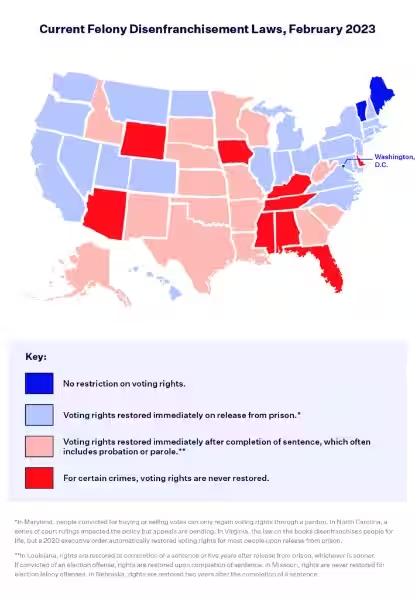
Losing rights after a felony conviction is a complex issue, and Washington State's approach is particularly noteworthy. While the specifics vary depending on circumstances, understanding the process for restoring rights is crucial for those affected and for ensuring the integrity of the electoral system. This article will explore the updated voting rights restoration policy in Washington State, shedding light on the rights that felons potentially lose and the pathways to regaining them.
- Automatic Restoration of Voting Rights: The Key Change
- Understanding the Restoration Process (For Incarcerated Individuals)
- Re-Registration and Maintaining Eligibility
-
Frequently Asked Questions about Felon Voting Rights in Washington State
- What are the voting rights of felons in Washington State?
- Does incarceration affect voting rights for felons?
- How do I re-register to vote after being incarcerated?
- What if I am not incarcerated?
- What about a certificate of discharge (COD)?
- What if I have a misdemeanor conviction?
- How can I check if my voting rights have been restored?
- How does the state verify voter eligibility?
- What are the consequences of failing to comply with the law?
Automatic Restoration of Voting Rights: The Key Change
Washington State's updated policy, effective January 1, 2022, introduced a significant change: automatic restoration of voting rights for those with felony convictions. This change is a noteworthy step towards reintegration and acknowledges the broader implications of this important civil right. Previously, the process was often cumbersome and required a certificate of discharge (COD), a time-consuming bureaucratic hurdle that often discouraged formerly incarcerated individuals from regaining their right to vote. The automatic restoration, however, signifies a shift toward a more streamlined and less onerous process. This naturally makes it easier for those who have completed their sentences to re-engage in the political and civic life of the community.
This automatic restoration applies to felony convictions in Washington, another state, or federal court, but it's a conditional restoration. Crucially, it only applies if the individual is not actively incarcerated. This distinction is essential as it prioritizes the security and integrity of the election system, and it aligns with the fundamental principles of justice in the state. The policy effectively shifts the onus from the returning citizen to the state to maintain accurate voter rolls.
Understanding the Restoration Process (For Incarcerated Individuals)
For those currently incarcerated, the process for restoring voting rights is slightly different but follows a similar principle of transparency and fairness. The state maintains a robust voter registration system, comparing lists of incarcerated individuals with active voter rolls. This ensures that individuals who are ineligible to vote (due to their status as incarcerated individuals) are not included on the voter rolls. This proactive approach is crucial for the fairness and accuracy of election processes.
This process involves a monthly comparison of incarcerated individual lists with voter rolls to identify any inconsistencies. This constant updating and monitoring are crucial in maintaining election integrity and avoiding the inclusion of inactive or ineligible individuals on voter rolls. Any discrepancies are immediately flagged, ensuring prompt notification of any potential registration suspension. This diligent approach also ensures that any changes to the voter's status are addressed promptly and efficiently.
Re-Registration and Maintaining Eligibility
Even with automatic restoration, re-registration is still required to exercise the right to vote. This re-registration is a straightforward process, offering several options to voters. From online to in-person registration, or even a mailed form, the state prioritizes accessibility to make the process easier for the returning citizen. This focus on accessibility is a vital component of the state's commitment to civic engagement.
Crucially, the new policy removes the COD requirement from the registration process. Removing this requirement significantly simplifies the process for individuals who have completed their sentences, allowing them to reintegrate into the democratic process more easily, and potentially increasing voter turnout. The state's focus on streamlining the restoration process is a testament to their commitment to promoting civic engagement and re-integration for formerly incarcerated individuals.
Maintaining Eligibility: Beyond Voting Rights
It's essential to understand that maintaining voting rights after restoration isn't solely about the initial registration. Consistency with the law is paramount. Failure to comply with court-ordered payments can lead to suspension of voting rights. However, a good-faith effort to comply with these orders can, in many cases, be considered by the court, and further review can potentially restore the right to vote. Similarly, challenges to voter registration must be made through the appropriate county elections department using a Voter Challenge form. This ensures that any disputes or challenges are addressed appropriately and efficiently.
Voting rights are not automatically restored if further felony convictions occur, and this highlights the importance of maintaining compliance with the law in order to retain fully restored voting rights.
The Importance of Voter Eligibility Review
The state actively monitors voter rolls using data from the Department of Corrections (DOC) and the court system to ensure accuracy. This triannual review aims to identify and potentially cancel the registration of individuals with ineligible felony convictions. The process is designed to be fair and transparent, and individuals who are deemed ineligible receive a 30-day notice before the cancellation takes effect, giving them the opportunity to dispute any inaccuracies. This demonstrates a commitment to maintaining election integrity, ensuring that only eligible voters are included on the rolls.
Washington State's updated policy on felon voting rights restoration represents a significant step forward. The automatic restoration of rights, combined with ease of re-registration, is designed to create a more welcoming environment for formerly incarcerated individuals to re-engage in civic life. Understanding the process, from automatic restoration to re-registration and maintaining eligibility, is crucial for individuals affected and for upholding the integrity of the democratic process. This policy naturally emphasizes the importance of a fair and accessible process that encourages participation from all eligible citizens.
Frequently Asked Questions about Felon Voting Rights in Washington State
What are the voting rights of felons in Washington State?
Felony convictions in Washington State, as well as other states and federal courts, generally restore voting rights automatically, unless the individual is actively incarcerated. This is a significant change from previous procedures. Misdemeanor convictions and juvenile court adjudications do not affect voting rights.
Does incarceration affect voting rights for felons?
Yes, if a felon is incarcerated, their voting rights are temporarily suspended. They must re-register to vote following release from incarceration.
How do I re-register to vote after being incarcerated?
Individuals who were incarcerated and whose voting rights were suspended must re-register to vote. This can be done online through the VoteWA portal, in person at a county elections office, or by mail. The process is similar to registering for the first time.
What if I am not incarcerated?
If you have a felony conviction in Washington (or another state/federal court), but aren't currently incarcerated, your voting rights are automatically restored. You must still re-register to vote using the VoteWA process.
What about a certificate of discharge (COD)?
Washington State no longer requires a Certificate of Discharge (COD) for restoring or registering to vote after a felony conviction. Automatic restoration and re-registration apply to most situations.
What if I have a misdemeanor conviction?
Misdemeanor convictions do not affect voting rights in Washington State. Only felony convictions are subject to the restoration process.
How can I check if my voting rights have been restored?
The best way to confirm your voting rights status is to register to vote using the VoteWA system. If you have any doubts, contacting your county elections office is recommended.
How does the state verify voter eligibility?
Washington State actively monitors voter rolls. The Secretary of State conducts reviews to identify and potentially cancel registrations of individuals with ineligible felony convictions. Registered voters are given 30 days' notice if their registration is cancelled, allowing for disputes.
What are the consequences of failing to comply with the law?
Failing to comply with the law, such as not making scheduled payments, or committing further felony offenses, can lead to revocation of voting rights. The process is court-driven, and a good faith attempt to comply can lead to restoration. Challenges to voter registration must be made through the county elections department using a Voter Challenge form.