
What Jobs Did Irish Immigrants Have in America?
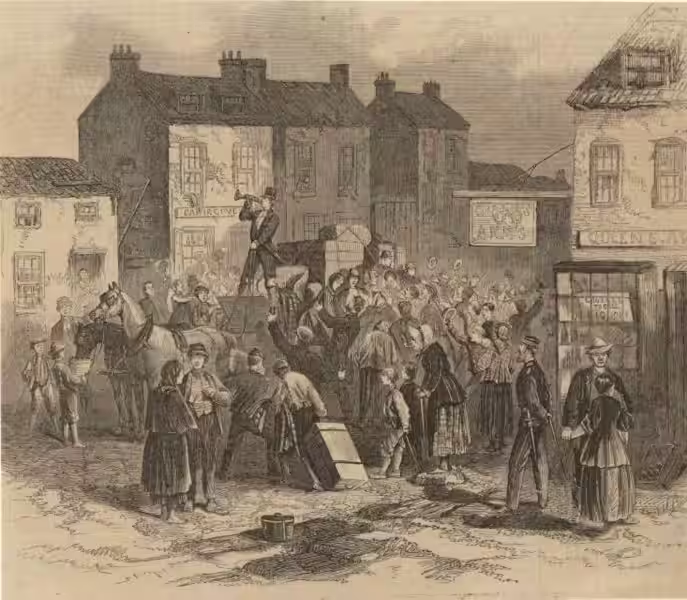
Irish immigration to America in the 19th century was a complex journey, marked by both hardship and surprising success. Understanding the diverse range of jobs these immigrants held, and how these jobs evolved over time, provides critical insight into their experiences, contributions to the nation's economy, and the social landscape of the era.
- Early Struggles and Initial Occupations
- The Impact of the Civil War and Changing Economic Landscapes
- Nativism and Political Responses
-
Beyond Alexandria: The Irish in Connecticut
- Continued Challenges Despite Progress
- What jobs did Irish immigrants have in America during the 19th century?
- How did the location of the Irish immigrants affect their job opportunities?
- What factors contributed to the changing job opportunities for Irish immigrants?
- What role did the Civil War play in shaping the employment of the Irish immigrants?
- What were the jobs that Irish women held?
- How did the rise of nativism affect Irish employment?
- How did the employment situation of the Irish change by the 1880s?
- What jobs did the Irish have in Connecticut?
Early Struggles and Initial Occupations
During the initial wave of Irish immigration, particularly in the 1840s and 1850s, the reality was often one of intense struggle. Irish immigrants, lacking many marketable skills and often facing strong prejudice, found themselves relegated to the lowest-paying and most demanding jobs. Naturally, this included unskilled labor in urban centers like New York and Philadelphia. Their experiences were frequently marked by low wages, poor working conditions, and discrimination.
These initial occupations were crucial to the burgeoning urban centers. Irish immigrants filled roles in construction, often working on infrastructure projects such as canals and roads. The demand for labor was high, and the willingness of Irish immigrants to work for comparatively low wages made them attractive to employers. This also included domestic service, where Irish women, in particular, were often employed in the homes of wealthier families. It is important to remember that these were not always easy jobs, and many faced exploitative conditions.
Regional Differences and the Impact of Slavery
An important distinction existed between the northern and southern experiences of Irish immigrants. While the North saw a persistent concentration of Irish immigrants in menial labor, the South, at least before the Civil War, presented different opportunities. The context of slavery allowed some Irish immigrants to enter white-collar professions or secure higher wages in comparison to their counterparts in the North. The existence of slavery in the South created a different economic hierarchy, impacting the available job opportunities.
Alexandria, Virginia: A Divergent Path to Success
The experience of Irish immigrants in Alexandria, Virginia, differed significantly from the general trend. Census data reveals a notable shift in occupational patterns. While early immigrants focused primarily on unskilled labor, by the 1870s, a substantial number had transitioned into skilled trades, merchant positions, and even white-collar jobs. This upward mobility was a critical factor, demonstrating that early struggles were not inevitably permanent. Factors contributing to this improvement included the end of the Civil War, which reduced the demand for unskilled labor and opened new opportunities in the changing southern economy. The integration of those displaying loyalty to the Confederacy into white society was also a potential reason for this improvement.
The Impact of the Civil War and Changing Economic Landscapes
The Civil War significantly shifted the American economic landscape. The war's conclusion had a profound impact on the labor market, potentially leading to a decline in the need for unskilled labor, a key factor driving increased opportunities for skilled trades. This shift created a surprising opening for Irish immigrants who were able to adapt and acquire new skills. The changing dynamics of the Southern economy, including the decline of the antebellum agrarian system and the shift towards industrialization, also played a crucial role. For example, the development of railroads and corresponding industries fostered demand for workers, which some Irish immigrants filled.
Nativism and Political Responses
The rise of nativism, particularly the Know-Nothing Party, posed a significant challenge for Irish immigrants. The party's anti-immigrant and anti-Catholic rhetoric likely contributed to prejudice against Irish immigrants who, in many ways, were echoing the historical struggles they had endured under English landlords. However, the influence of the Know-Nothing Party in Alexandria appears to have been less pronounced than in other parts of the South and the nation. The Irish rallied behind the Democratic Party, which offered a more welcoming stance towards immigrants, contributing to their political power and providing protection against nativism.
Success and Integration by the 1880s
By the 1880s, Irish immigrants in Alexandria had successfully integrated into the white middle class. The shift from primarily unskilled labor to skilled trades, commerce, and professional positions was striking. Irish immigrants held diverse occupations, including railroad workers, sailors, police officers, and even physicians. Irish women, too, were breaking out of traditional domestic roles, establishing boarding houses. This represented a remarkable departure from the initial struggles faced by these immigrants in the U.S.
Beyond Alexandria: The Irish in Connecticut
The experience of Irish immigrants in Connecticut mirrored some of the broader trends but also reveals unique aspects. They became crucial players in the state's growing infrastructure and industrial sectors. Initially, they filled roles as unskilled laborers, playing a vital part in canal and road construction as well as the burgeoning textile and manufacturing industries. However, as industries developed, Irish workers gained skills and found employment in mills, factories, and manufacturing plants. They worked in a variety of roles, from operating machinery to specialized tasks, illustrating a spectrum of opportunities within the economy. Women, while often employed in domestic service, also found work in mills, reflecting the evolving employment landscape.
Continued Challenges Despite Progress
Despite their remarkable progress, Irish immigrants faced various societal challenges, including prejudice and discrimination, across all regions. These challenges varied in intensity depending on location and time. The experiences in Alexandria, while positive, do not erase the pervasive hardship faced by many Irish immigrants during this period.
In conclusion, the occupational experiences of Irish immigrants in America provide a critical window into the social and economic history of the country. Their journey from unskilled laborers to skilled workers, merchants, and professionals reflects adaptability, resilience, and a determination to overcome significant obstacles. Their experiences were not uniform, and varied greatly depending on location, time period, and individual circumstances. This multifaceted approach to their experiences is essential to a complete understanding of their contributions and legacies.
What jobs did Irish immigrants have in America during the 19th century?
Irish immigration to America in the 19th century, particularly in urban centers like New York and Philadelphia, initially presented significant economic challenges. Lacking marketable skills and facing prejudice, many Irish immigrants found jobs in unskilled labor, including construction, and domestic service. However, the experience varied significantly across different regions and over time, and certain areas, like Alexandria, Virginia, experienced remarkably different outcomes.
How did the location of the Irish immigrants affect their job opportunities?
The North generally saw Irish immigrants concentrated in menial labor. In contrast, the South, before the Civil War, presented some opportunities for Irish immigrants to secure higher-paying jobs. However, this opportunity was often limited by the institution of slavery and the societal hierarchies it maintained. Alexandria, Virginia, stands out as an area where Irish immigrants experienced significant upward mobility. By the 1870s, a substantial number had transitioned from unskilled labor into skilled trades, merchandising, and white-collar professions. This contrasts sharply with the persistent struggles in cities like New York.
What factors contributed to the changing job opportunities for Irish immigrants?
Several factors influenced the evolving employment landscape for Irish immigrants. The end of the Civil War, along with the subsequent shift in the southern economy, likely contributed to the availability of skilled trades and higher-paying positions. The decline in demand for unskilled labor played a role. Irish immigrants who demonstrated loyalty to the Confederacy might have faced less discrimination, which could have opened more opportunities for them in white-collar jobs or skilled trades.
What role did the Civil War play in shaping the employment of the Irish immigrants?
The Civil War was a pivotal turning point. The conflict dramatically impacted the availability of unskilled labor jobs, creating new opportunities in skilled trades and industries that needed to be developed in the aftermath of the war. The changing labor market dynamics likely played a significant role in the successful transition of some Irish immigrants to higher-paying occupations.
What were the jobs that Irish women held?
Initially, Irish women were largely concentrated in domestic service, often as maids in wealthier households. However, as time passed and economic opportunities expanded, Irish women began to enter fields like grocery store ownership and even running boarding houses. The overall trend was one of expanding roles beyond traditional domestic servitude. In areas like Connecticut, this was a slower transition.
How did the rise of nativism affect Irish employment?
Nativist movements, like the Know-Nothing Party, created significant societal challenges for Irish immigrants. Their anti-immigrant and anti-Catholic rhetoric contributed to prejudice and discrimination that could impact employment opportunities. However, the Irish community often rallied behind the Democratic Party, which offered a more welcoming stance towards immigrants, bolstering their political power and protecting them against discrimination.
How did the employment situation of the Irish change by the 1880s?
By the 1880s, in areas like Alexandria, the Irish community had significantly integrated into the white middle class. The number of laborers had drastically decreased, and Irish immigrants held diverse occupations, including railroad work, maritime jobs, police work, and even medicine. This reflected a substantial and rapid economic advancement, in contrast to the persistent struggles reported in other areas of the country. This progress wasn't universal, however, and Irish immigrants still faced various societal challenges.
What jobs did the Irish have in Connecticut?
In Connecticut, Irish immigrants were crucial to the state's infrastructure and industrial development. Initially, they worked as unskilled laborers on construction projects, canals, roads, and in early factories. As industries expanded, Irish workers were employed in various roles, from unskilled labor to operating machinery in mills, factories, and manufacturing plants. They also worked in quarries, mines, and on farms, demonstrating economic adaptability. Irish women, however, were primarily employed in domestic service.