
Renew TPS for Haitian: Understanding the Automatic Extension and Future Steps
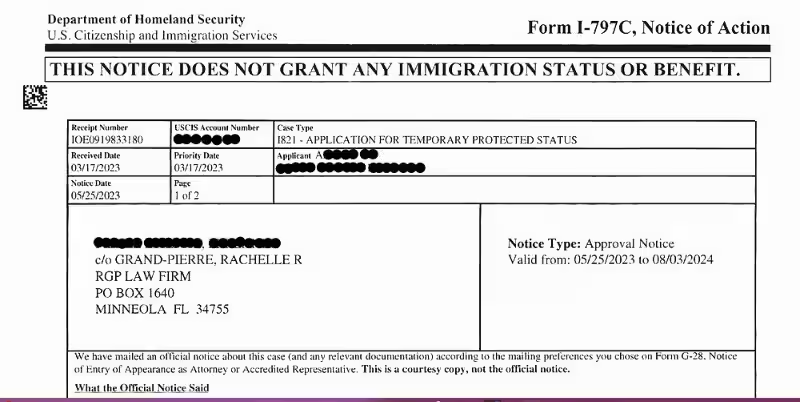
Many Haitian nationals in the United States under Temporary Protected Status (TPS) have questions about their work authorization. This article clarifies the recent automatic extension of Employment Authorization Documents (EADs) and outlines what you need to know for the future.
- The Automatic Extension of EADs for Haitian TPS Beneficiaries
- What You Need To Do: Action After the Automatic Extension
- Understanding TPS and Its Limitations
-
Frequently Asked Questions: Renewing TPS for Haitians
- What is the automatic extension for Haitian TPS EADs?
- Which EAD expiration dates are covered by the automatic extension?
- Do I need to apply for a new EAD?
- Can I continue working in the U.S.?
- What if my employer questions my EAD's validity?
- What happens after February 3, 2026?
- Where can I find more information about future application requirements?
- My EAD expiration date isn't listed. What should I do?
- Is this extension only for Haitians?
The Automatic Extension of EADs for Haitian TPS Beneficiaries
The United States Citizenship and Immigration Services (USCIS) has announced a final automatic extension for Employment Authorization Documents (EADs) for specific Haitian nationals under TPS. This means many individuals won't need to immediately apply for a new EAD.
This automatic extension simplifies the process significantly, offering a much-needed reprieve and avoiding the complexities and potential delays of individual renewal applications. It’s a crucial step providing stability and certainty for those already navigating a complex immigration system. This extension directly addresses the immediate concern of maintaining work authorization, allowing beneficiaries to focus on other essential aspects of their lives.
Which EADs are Automatically Extended?
This automatic extension applies only to EADs with specific original expiration dates and specific category and card codes. Crucially, this is the final automatic extension for Haiti TPS-based EADs. The specific expiration dates covered by this extension are:
- July 22, 2017
- January 22, 2018
- July 22, 2019
- January 2, 2020
- January 4, 2021
- October 4, 2021
- December 31, 2022
- February 3, 2023
- June 30, 2024
- August 3, 2024
- August 3, 2025
- September 2, 2025
All EADs with these original expiration dates are now automatically extended until February 3, 2026. The EAD must also have either the category code A-12 or C-19.
This means that if your EAD matches these criteria, you can continue working legally in the United States until February 3, 2026, without submitting a new application. This temporary reprieve ensures continued legality and avoids the immediate stress of a renewal process.
What You Need To Do: Action After the Automatic Extension
While this automatic extension provides temporary relief, it's vital to understand that it doesn't provide a long-term solution. This extension is a crucial step, but it's not a permanent fix. It buys time but necessitates proactive planning for the future.
The automatic extension offers a temporary solution; however, continued legal work authorization beyond February 3, 2026, requires subsequent action. Failing to plan for the future could put your work authorization at risk. It's essential to plan actively and seek advice as soon as possible.
Planning for the Future After February 3, 2026
After February 3, 2026, a new application process will be necessary to maintain your work authorization. USCIS will likely release information regarding this process in due course. It is highly recommended to:
- Monitor USCIS updates: Regularly check the USCIS website for announcements regarding new application procedures for Haitian TPS beneficiaries.
- Seek legal counsel: Consult with an immigration attorney to discuss your options and determine the best course of action to maintain your legal status. An attorney can provide personalized guidance based on your specific circumstances and help navigate the complexities of the immigration system. They can also help you understand your eligibility for alternative immigration pathways.
- Gather necessary documentation: Begin collecting any necessary documentation, such as proof of identity, proof of residence, and other supporting evidence that may be required for future applications. This proactive approach ensures you have the necessary materials ready when future application processes open. This will streamline the process and alleviate extra stress during that time.
Understanding TPS and Its Limitations
Temporary Protected Status (TPS) is a temporary form of protection from deportation granted by the U.S. government to nationals of designated countries facing temporary conditions that prevent their safe return. It does not lead to permanent residency.
While TPS offers protection from deportation and allows for work authorization, it's crucial to remember its temporary nature. The recent automatic extension for renew TPS for Haitian highlights this temporariness, emphasizing the need for proactive planning for the future. This temporary protection is not a pathway to permanent legal status, and beneficiaries should understand the need to actively pursue other avenues if permanent status is desired.
Exploring Alternative Pathways to Legal Status
Even with the automatic extension, it's prudent to consider other legal pathways to remain in the United States. These could include applying for asylum, adjusting your status, or exploring other immigration options available through family-based petitions or employment-based visas.
It's important to consult with an immigration attorney to assess your eligibility for these alternative pathways. Each option has specific eligibility requirements and a complex application process, and professional legal guidance is essential. This proactive approach will lead to a better understanding of available options and increase your chances of success. The attorney can provide a clearer path forward, navigating the complexities of the system for a more successful outcome.
In conclusion, the automatic extension for renew TPS for Haitian provides temporary relief but underscores the importance of proactive planning for the future. By staying informed, seeking legal counsel, and exploring alternative immigration options, Haitian TPS beneficiaries can better secure their long-term future in the United States.
Frequently Asked Questions: Renewing TPS for Haitians
This FAQ section addresses questions regarding the recent automatic extension of Employment Authorization Documents (EADs) for Haitian nationals under Temporary Protected Status (TPS) and the future of their work authorization. Please note that this information is for guidance only, and you should consult with an immigration attorney for personalized advice.
What is the automatic extension for Haitian TPS EADs?
The United States Citizenship and Immigration Services (USCIS) has automatically extended certain Employment Authorization Documents (EADs) for Haitian nationals with Temporary Protected Status (TPS). This extension applies to EADs with specific expiration dates listed below, extending their validity to February 3, 2026. This is the final automatic extension USCIS will provide for Haiti TPS-based EADs.
Which EAD expiration dates are covered by the automatic extension?
The following original EAD expiration dates are covered by the automatic extension to February 3, 2026: July 22, 2017; January 22, 2018; July 22, 2019; January 2, 2020; January 4, 2021; October 4, 2021; December 31, 2022; February 3, 2023; June 30, 2024; August 3, 2024; August 3, 2025; and September 2, 2025. This applies specifically to EADs with the notations A-12 or C-19.
Do I need to apply for a new EAD?
No, if your EAD has one of the expiration dates listed above and the notations A-12 or C-19, you do not need to apply for a new EAD. Your current EAD is automatically extended until February 3, 2026.
Can I continue working in the U.S.?
Yes, you can continue working legally in the United States until February 3, 2026, using your existing EAD. Employers should accept your existing EAD.
What if my employer questions my EAD's validity?
You can present a copy of the official Federal Register notice announcing this extension as further evidence of your authorized work status. Government agencies will also accept this documentation for verification purposes.
What happens after February 3, 2026?
This automatic extension is the final one. To maintain work authorization after February 3, 2026, you will need to apply for a new EAD through a separate application process. The specific requirements for this process will be announced closer to the date.
Where can I find more information about future application requirements?
USCIS will provide further information about future application requirements on their website and through official announcements. It is highly recommended to monitor the USCIS website regularly for updates. You may also wish to consult with an immigration attorney.
My EAD expiration date isn't listed. What should I do?
If your EAD expiration date is not listed above, this automatic extension does not apply to you. You should consult with an immigration attorney to determine your options for maintaining work authorization.
Is this extension only for Haitians?
Yes, this automatic extension specifically applies to Haitian nationals with TPS whose EADs meet the criteria specified above. Other TPS designations are subject to their own processes.