
Can an Undocumented Person Travel Within the US? A Complex Landscape
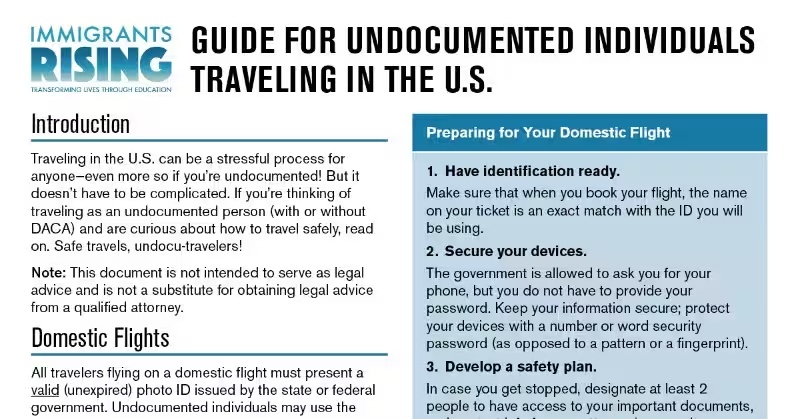
Domestic travel for undocumented immigrants in the U.S. presents a complex legal minefield, fraught with potential risks and varying degrees of danger. While technically possible, the process is fraught with challenges, and the potential consequences of encountering immigration authorities can be severe. This article aims to provide a useful overview of the multifaceted risks involved, emphasizing the crucial role of legal counsel.
- Understanding the Legal Framework
- The Impact of Geographic Location
- Risk Factors and Individual Circumstances
- Navigating the Complexities with Legal Counsel
-
FAQ: Can Undocumented People Travel Within the US?
- Can undocumented immigrants travel domestically by air?
- What is the REAL ID Act and how does it affect undocumented travelers?
- What are the risks of traveling within 100 miles of the US border?
- What are the risks associated with driving across state lines?
- Does immigration status influence the risk of travel?
- What is the role of legal counsel in navigating these complexities?
- What about using a foreign passport or state-issued driver's license?
- Should I avoid travel outside the contiguous 48 states?
Understanding the Legal Framework
The legal framework surrounding domestic travel for undocumented immigrants is constantly evolving, and navigating it without expert guidance is fraught with potential pitfalls. A key factor is the increasing stringency of regulations, particularly with regards to the REAL ID Act. The law's implementation on May 7, 2025, mandates specific identification requirements for domestic air travel, requiring a date of birth, social security number, full legal name, two proofs of address, and, crucially, proof of lawful status. Failure to comply could lead to significant limitations on travel.
The lack of valid identification documents, such as a REAL ID-compliant driver's license or passport, significantly increases the risk of encounters with immigration authorities. Even with a foreign passport or an existing, non-REAL ID compliant driver's license, individuals might be flagged and questioned about their immigration status by airport security. Moreover, the scope of the risk isn't uniform. Limited access to driver's licenses, particularly for undocumented immigrants, is further complicating matters. Currently, only a handful of states (16, plus the District of Columbia and Puerto Rico) permit them. This significantly impacts travel plans and creates a critical need for legal expertise.
The Impact of Geographic Location
The risk of encountering immigration authorities varies considerably depending on the location. Airports near international borders, particularly those in major metropolitan areas, are often subject to heightened immigration checkpoints, increasing the risk of questioning and potential detention. Traveling within 100 miles of the U.S. border is particularly risky.
High-Risk Areas:
- Airports near international borders: Increased scrutiny and potential checkpoints.
- Metropolitan areas: Higher likelihood of encountering immigration checkpoints.
- Within 100 miles of U.S. borders: Increased risk of encountering immigration authorities.
- States with stringent immigration policies: Laws like Florida's SB 1718 significantly increase the risk for undocumented individuals.
The complexity is further exacerbated by state-specific laws. Florida's SB 1718, for instance, significantly raises the risk for undocumented immigrants and those assisting them, creating liability for drivers transporting individuals who may have violated immigration laws. This criminalizes transportation of undocumented individuals, even if they entered the country previously. This law further complicates travel within Florida and highlights the need for comprehensive legal advice.
Risk Factors and Individual Circumstances
The level of risk also depends significantly on the individual's specific immigration status.
Factors influencing risk:
- Outstanding removal orders: Individuals with outstanding removal orders face a higher risk of immediate detention.
- New criminal charges or convictions: New criminal charges or convictions can drastically increase the risk and trigger detention.
- Deferred action status: Individuals with deferred action status can travel as long as their status is valid during the trip, but the possibility of revocation due to new criminal activity raises significant risk.
- Border zone residents: Undocumented individuals, especially those residing near the border, face the highest risk. A prior criminal history or immigration violations significantly increase this risk.
- Lack of REAL ID compliant documentation: Individuals lacking REAL ID compliant documentation face increased scrutiny and possible apprehension.
- Driving without a valid license: Driving without a license, particularly across state lines, is problematic, although some states offer temporary licenses.
Navigating these complexities requires expert legal guidance. The decisions surrounding domestic travel for undocumented immigrants are not straightforward. A consultation with an experienced immigration attorney is highly recommended. An immigration attorney can:
- Assess individual risk: Evaluate the specific risks based on immigration status, location, and past history.
- Develop travel strategies: Provide personalized recommendations and strategies for safe and compliant travel.
- Manage potential encounters: Advise on how to respond if encountered by immigration authorities at airports or border crossings.
- Stay updated on changes in laws: Remain informed about evolving regulations and policies, particularly with the implementation of the REAL ID Act.
Benefits of legal consultation:
- Reduced risk of apprehension and detention: Professional advice minimizes the risk associated with travel.
- Personalized strategies: Develop plans tailored to specific circumstances and needs.
- Compliance with laws: Ensure that travel complies with the most up-to-date legal requirements.
In conclusion, while undocumented individuals can naturally travel within the U.S., the process is fraught with potential risks. The implementation of the REAL ID Act and the variety of state laws significantly impact the landscape, making legal counsel an indispensable tool for safe and compliant travel. Proactive consultation with an immigration attorney is crucial to navigate the changing legal terrain and avoid potential legal consequences.
FAQ: Can Undocumented People Travel Within the US?
Can undocumented immigrants travel domestically by air?
While technically possible, domestic air travel for undocumented immigrants presents significant risks. The process is not straightforward and involves potential apprehension by federal authorities. The lack of valid identification documents compliant with the REAL ID Act, combined with a lack of permanent resident status or a valid visa, increases this risk significantly. Air travel near international borders carries a higher risk of immigration scrutiny. Consult with an immigration attorney before any air travel.
What is the REAL ID Act and how does it affect undocumented travelers?
The REAL ID Act establishes minimum standards for state-issued driver's licenses and identification documents used for domestic air travel. Effective May 7, 2025, these standards require specific information and proof of lawful status, which are often difficult for undocumented immigrants to obtain. Failure to comply with the REAL ID Act, coupled with a lack of a U.S. passport, could make domestic air travel problematic.
What are the risks of traveling within 100 miles of the US border?
Traveling within 100 miles of the U.S. border presents a higher risk for undocumented individuals, as some states fall entirely within this zone. This heightened risk is due to increased immigration scrutiny near these areas. This heightened scrutiny can result in questioning about immigration status, and a lack of legal documentation could lead to detention and deportation proceedings.
What are the risks associated with driving across state lines?
Driving across state lines without a valid driver's license, particularly for undocumented individuals, presents challenges. While some states may offer temporary licenses, these are not universally accepted and are often not permissible for air travel. The risk varies depending on state laws and local enforcement. Some states, like Florida with SB 1718, have implemented stricter laws criminalizing transportation of undocumented immigrants, further increasing the risk for those traveling or helping others travel.
Does immigration status influence the risk of travel?
Yes, immigration status significantly influences the risk of travel. Individuals in removal proceedings face a lower risk of immediate detention compared to undocumented individuals without pending issues. However, new criminal charges or convictions can drastically increase the risk and trigger detention for anyone. Those with deferred action can travel, provided their status remains valid during the trip, but the possibility of revocation due to new criminal activity raises significant risk. Undocumented individuals, especially within the border zone, face the highest risk, further exacerbated by prior criminal history or immigration violations.
Seeking legal counsel from experienced immigration attorneys is crucial for undocumented individuals considering domestic travel. They can provide personalized advice, assess individual risks, and develop strategies to mitigate potential consequences. Proactive consultation with an attorney is recommended to navigate changing laws and regulations and avoid potential legal issues.
What about using a foreign passport or state-issued driver's license?
A valid foreign passport or an enhanced state driver's license might technically allow for domestic air travel, but the TSA can still refer individuals to immigration authorities. This may lead to questioning about immigration status and, potentially, removal proceedings.
Should I avoid travel outside the contiguous 48 states?
The article suggests that traveling outside the contiguous 48 states is generally not recommended for undocumented individuals, due to the increased complexity and potential risks associated with international travel and border crossings.