
Why is it Important to Establish a Definition of Done?
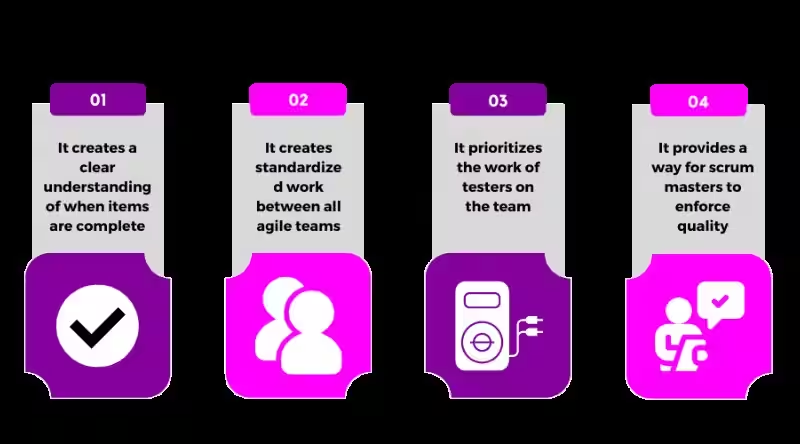
A well-defined "Definition of Done" (DoD) is crucial for successful product development. It's more than just a checklist; it's a compass guiding teams toward consistent quality, stakeholder satisfaction, and ultimately, business success. Without a clear DoD, projects can flounder in inconsistencies, misunderstandings, and unmet expectations. This article explores the profound importance of establishing a robust DoD, demonstrating how it's more than just a theoretical framework; it's a practical tool for boosting team performance and project outcomes.
- Understanding the Core Value of a Definition of Done
- The Definition of Done: A Quality Control Mechanism
- Aligning with Stakeholders and Enhancing Transparency
- The DoD and the Definition of Ready (DOR): Interconnected but Distinct
- The Importance of Continuous Improvement: Adapting the Definition
- The DoD in Agile Frameworks: A Key Principle
-
FAQ: Why is a Definition of Done (DoD) Important?
- What is a Definition of Done (DoD)?
- Why is a shared Definition of Done important in Agile, especially in scaled frameworks like SAFe?
- How does a DoD impact team collaboration?
- How does a DoD impact stakeholder expectations?
- How does a DoD enhance quality control?
- When should a Definition of Done be established?
- Who is responsible for creating a Definition of Done?
- What are some typical elements of a Definition of Done?
- How does a Definition of Done differ from a Definition of Ready?
- How does the DoD support transparency and quality control?
- Does the Definition of Done need to be static?
- How does a DoD impact the estimate of work?
- How does a DoD impact a product's reputation?
- How does a DoD ensure a high-quality final product?
- How does a DoD contribute to organizational goals?
- What happens to work that doesn't meet the Definition of Done?
- What is the role of the Scrum Guide in the Definition of Done?
- How can multiple Scrum teams use a shared Definition of Done?
Understanding the Core Value of a Definition of Done
A DoD serves as a shared understanding, a common language, and a set of benchmarks for completion. It clarifies exactly what criteria must be met before a piece of work is considered fully completed and ready for release. This shared understanding across teams, stakeholders, and individuals ensures that everyone is working towards the same goal, minimizing confusion and maximizing efficiency. A well-articulated DoD fosters a culture of quality and collaboration, allowing teams to seamlessly integrate their work within a larger project or product roadmap.
By outlining the specific criteria, a DoD transforms a vague concept of "completion" into a concrete set of steps. This clarity allows for more accurate estimations of work, reducing the risk of scope creep and contributing to more realistic timelines. It essentially creates a shared vision, ensuring everyone is on the same page about what constitutes a finished product and preventing unnecessary rework or delays.
The Definition of Done: A Quality Control Mechanism
A well-defined DoD is more than just a checklist for tasks; it's a cornerstone of quality control throughout the product development lifecycle. It encompasses not only functional aspects but also non-functional requirements like performance, security, and usability. These non-functional aspects are often missed if not explicitly included in the DoD, potentially leading to a product that meets bare minimum requirements but falls short of user expectations.
By defining testable criteria for addressing these non-functional requirements, the DoD ensures a high-quality final product. A strong DoD, therefore, safeguards the project against potential issues by anticipating and proactively addressing them in the development phase. This proactive approach saves time and resources, preventing the costlier rework that often accompanies last-minute fixes.
Aligning with Stakeholders and Enhancing Transparency
A robust DoD directly impacts stakeholder expectations and satisfaction. By clearly articulating the criteria for completion, the DoD provides transparency and trust. Stakeholders have a clear understanding of what constitutes a finished product, leading to fewer surprises and potentially reducing project risks. This transparency, in turn, fosters better communication and a more collaborative relationship between the development team and stakeholders.
Transparent communication and collaboration, facilitated by a shared DoD, significantly impact stakeholder satisfaction. A clear understanding, shared expectations, and evident commitment to quality all contribute to a positive stakeholder experience. Ultimately, greater stakeholder satisfaction translates into a greater probability of project success, as well as building trust and rapport within the project ecosystem.
The DoD and the Definition of Ready (DOR): Interconnected but Distinct
The Definition of Done (DoD) and the Definition of Ready (DOR) are distinct but interconnected concepts. While the DoD defines the state of completion, the DOR outlines the criteria for an item to be ready for the team to begin work. The DOR, often using the INVEST framework (Independent, Negotiable, Valuable, Estimable, Sized Appropriately, Testable), helps ensure that requirements are clear, valuable, and prepared for estimation and inclusion in a sprint or development cycle.
The DOR acts like a pre-flight checklist for incoming tasks, ensuring that they are well-defined and ready for successful implementation. These two concepts, while separate, complement each other, ensuring a streamlined and efficient development process. A well-defined DOR, coupled with a well-defined DoD, creates a robust foundation for successful product development.
The Importance of Continuous Improvement: Adapting the Definition
Crucially, the DoD is not a static document. It needs to be regularly reviewed and adapted to reflect changing project requirements, evolving user needs, and new technologies. The DoD is a living document that must adapt to new challenges and opportunities. Continuous improvement, by revisiting and updating the DoD, helps ensure its relevance and efficiency throughout the project's duration.
Incorporating feedback from stakeholders, team members, and users, the DoD should be a dynamic element within the development process, ready to be adjusted as the project evolves. This adaptability is crucial for remaining flexible and responsive to changing market demands or emerging technological trends. This adaptability ensures that the DoD remains a valuable tool throughout the development process.
The DoD in Agile Frameworks: A Key Principle
Agile frameworks, particularly Scrum and Scaled Agile Framework (SAFe), emphasize the importance of a DoD. The Scrum Guide, for example, highlights the DoD as a key element for defining the increment's quality. A shared DoD across teams within a larger agile framework is particularly vital for guaranteeing that all teams are working to the same standard, which directly translates to a unified quality product. This consistency avoids inconsistencies that can appear in deliverables, ensuring a consistent and high-quality user experience.
Key Benefits of a Strong Definition of Done
- Consistent Quality: The DoD ensures that all completed work is to a predefined standard.
- Reduced Errors: Clear criteria help eliminate ambiguity and prevent errors.
- Improved Communication: A shared understanding of what constitutes "done" streamlines communication.
- Increased Stakeholder Trust: Transparency and consistent quality build stakeholder trust.
- Improved Efficiency: Clear definitions streamline the process, reducing wasted effort and delays.
- Faster Time to Market: Precise estimations enable quicker delivery of high-quality products.
- Increased Team Morale: A well-defined DoD fosters a sense of clarity and accomplishment among team members.
- Reduced Project Risk: By addressing potential issues proactively, the DoD minimizes project risks.
- Enhanced Collaboration: The DoD promotes consistent collaboration across teams.
- Better User Experience: Consistent quality translates to a superior user experience and ultimately, customer satisfaction.
In conclusion, establishing a well-defined DoD is not merely a best practice; it's a fundamental requirement for successful product development. It provides a structured approach to quality control, fosters collaboration, aligns stakeholders, and ultimately, helps ensure the delivery of high-quality products that meet user needs and organizational objectives.
FAQ: Why is a Definition of Done (DoD) Important?
What is a Definition of Done (DoD)?
A Definition of Done (DoD) is a set of criteria that must be met before a piece of work is considered complete and ready for release. It defines the specific requirements for quality, documentation, testing, and stakeholder approvals needed for a deliverable to be considered finalized.
A shared Definition of Done fosters a common understanding of quality among team members and stakeholders, simplifying onboarding and cross-team collaboration in scaled environments. This ensures the work of every team aligns with organizational standards and expectations, resulting in a consistent user experience and product quality.
How does a DoD impact team collaboration?
A shared DoD creates a unified understanding of the quality standards that all team members must adhere to. This promotes consistency and reduces misunderstandings, leading to more effective and efficient collaboration within and across teams.
How does a DoD impact stakeholder expectations?
By clearly defining the criteria for completion, a DoD creates transparency and manages stakeholder expectations. Stakeholders have a clear understanding of what to expect, fostering trust and better communication between the team and its collaborators. This transparency leads to greater stakeholder satisfaction.
How does a DoD enhance quality control?
A DoD acts as a quality control measure, setting a benchmark for deliverables that ensures not just functionality, but also non-functional aspects like performance, security, and usability. This holistic perspective guarantees a high-quality end product, creating a satisfying user experience, which in turn enhances the reputation of the product and the organization.
When should a Definition of Done be established?
The DoD should be established early in the development process, ideally before the first sprint planning. This proactive approach helps accurately estimate the scope of work and prevents inconsistencies in quality that might only surface later.
Who is responsible for creating a Definition of Done?
The Scrum team, in consultation with stakeholders, is responsible for creating the Definition of Done. This involves defining criteria that address business requirements, quality assurance, and documentation.
What are some typical elements of a Definition of Done?
Typical elements include meeting acceptance criteria, completing necessary tests, obtaining multiple checks of the work, creating required documentation, and receiving approval from the Product Owner.
How does a Definition of Done differ from a Definition of Ready?
The Definition of Done defines the state of completion, while the Definition of Ready outlines the criteria for an item to be ready for the team to begin work. The Definition of Ready often uses the INVEST acronym (Independent, Negotiable, Valuable, Estimable, Sized Appropriately, Testable) to ensure requirements are clear, valuable, and ready for estimation.
How does the DoD support transparency and quality control?
The DoD serves as a formal description of the completed work, improving transparency and quality control. It ensures only high-quality work progresses and is delivered to the customer, maintaining product quality.
Does the Definition of Done need to be static?
No, the Definition of Done is not static; it should be regularly reviewed and adapted to reflect evolving product needs and processes. Changes might include incorporating new requirements like mobile responsiveness.
How does a DoD impact the estimate of work?
A clearly defined Definition of Done helps teams accurately estimate the scope of work by explicitly defining what needs to be included. This approach prevents inconsistencies in quality that might only surface during or after a sprint.
How does a DoD impact a product's reputation?
Consistent application of a robust Definition of Done leads to consistent quality, which builds a positive reputation and trust with customers and partners. This positive reputation attracts new clients and partnerships, positively impacting long-term organizational growth and sustainability.
How does a DoD ensure a high-quality final product?
A well-defined DoD ensures the final product meets all necessary quality criteria, leading to a high-quality user experience. It addresses not only functionality but also non-functional aspects like usability, performance, and security, ensuring overall product quality.
How does a DoD contribute to organizational goals?
A well-defined DoD aligns team efforts with broader organizational objectives, such as market expansion and customer satisfaction, by ensuring deliverables contribute to these strategic goals.
What happens to work that doesn't meet the Definition of Done?
Items not meeting the Definition of Done return to the Product Backlog, maintaining product quality as a core value, thus ensuring that only high-quality work progresses and is delivered to the customer.
What is the role of the Scrum Guide in the Definition of Done?
The Scrum Guide emphasizes the Definition of Done's role in defining the increment's quality. It's a formal description of the completed work and a critical element for transparency and quality control.
Multiple Scrum teams can agree upon and adhere to a shared Definition of Done, either using an organization-wide standard or a team-specific one that aligns with product needs, ensuring consistent quality across teams.