
What's the Difference Between Migrant and Immigrant?
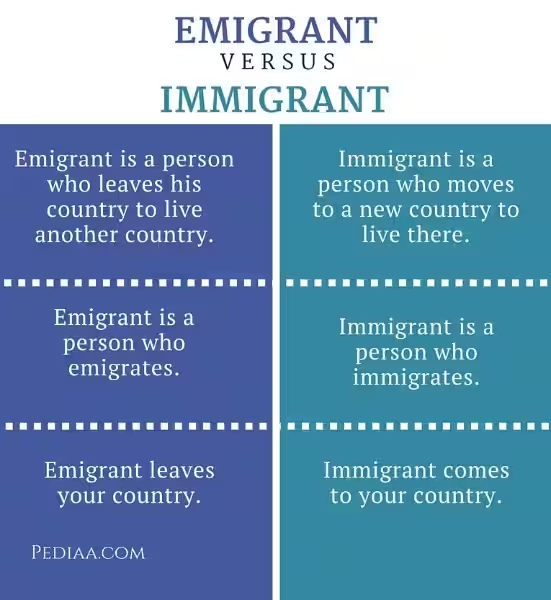
The terms "migrant" and "immigrant" often get used interchangeably, leading to confusion about the experiences and motivations behind people moving from one place to another. Understanding the nuances between these terms is crucial, particularly given the global increase in displacement. This article will delve into the distinctions, highlighting the complexities and motivations behind different types of relocation.
- Understanding the Core Differences
- Defining the Terms Clearly
- Navigating the Overlap: Migrants, Immigrants, and Asylum Seekers
- The Importance of Accurate Definitions: Migrant Education Program
-
Frequently Asked Questions about Migrants and Immigrants
- What is the difference between a migrant and an immigrant?
- Are all migrants immigrants?
- Are all immigrants migrants?
- What is the difference between a migrant and a refugee or asylum seeker?
- Can someone be both a migrant and an immigrant?
- How is the term "migrant" defined in various contexts?
- How does the legal status of a person affect their classification as a migrant or immigrant?
- What is the difference between an immigrant and an asylum seeker?
Understanding the Core Differences
The primary distinction lies in the reason for leaving one's home and the intended outcome of the move. A migrant, broadly speaking, moves from one place to another, often for economic reasons or to improve their circumstances. This could include seeking better job opportunities, seasonal work, or following family members. Crucially, the decision to move is often a conscious choice, albeit one often driven by factors like economic hardship or a desire for a better life. This contrasts with situations where people are forced to leave due to conflict, violence, or persecution.
The journey of a migrant often involves temporary or cyclical movements, and the intention isn't necessarily permanent relocation. On the other hand, an immigrant has a clearly defined intention to settle permanently in a new country. They generally go through various legal processes to gain residency or citizenship in their destination. This distinction is vital in understanding the different motivations and situations behind international movement.
Defining the Terms Clearly
Refugees and Asylum Seekers: Forced Displacement
The situation of refugees and asylum seekers is fundamentally different from that of immigrants and migrants. Refugees are those forced to flee their home countries due to war, violence, persecution, or other extraordinary circumstances. They are unable to return home until conditions are safe, which can take years or even decades. This forced displacement highlights the human cost of conflict and instability around the globe. The UNHCR, a crucial international body, plays a vital role in helping to identify refugees and provide them with vital assistance and protection.
Asylum seekers, similarly, are seeking protection from dangers in their home countries. However, their status as a refugee has not yet been legally determined. They must apply for asylum in the destination country, often at a border, and demonstrate a "well-founded fear" of persecution to qualify for refugee status. This process can be lengthy, complex, and often fraught with uncertainty. The key distinction is that the asylum seeker's status is pending legal review, while a refugee's status is already recognized.
Immigrants: Permanent Relocation
Conversely, immigrants make a conscious choice to relocate permanently to a new country. Their motivation is often diverse, ranging from economic opportunities to family reunification, to pursuing education or personal goals. A defining characteristic of immigration is the intention to permanently settle in the new country. They typically go through a rigorous vetting process, often including interviews, background checks, and fulfilling various legal requirements, determined by the destination country. This process is designed to ensure that immigrants meet the criteria for legal residency and contribute positively to the new society. They are essentially choosing to make a new life in a new land.
Migrants: Temporary or Cyclical Movements
Migrants are individuals who move from one place to another, often across borders, for a variety of reasons. These reasons can include seeking better economic opportunities, seasonal work, or following family members, among others. The key difference here is that the movement is not necessarily permanent. Migrants may move temporarily for employment or to take advantage of specific opportunities, or they may move cyclically, returning to their home countries after a period. Understanding this dynamic is crucial as it highlights the fluidity and complexity of many migration patterns.
It's important to understand that these categories aren't always mutually exclusive. A person may start as an economic migrant, but their circumstances might change, compelling them to seek asylum or refugee status. Similarly, a refugee may eventually choose to immigrate to another country. The reality of migration often involves complex and intertwining journeys, making simple categorizations difficult. The global displacement crisis, with over 120 million people displaced, highlights the significant overlap in experiences and the need for compassionate and nuanced understanding.
The Importance of Accurate Definitions: Migrant Education Program
The terms "migrant" and "immigrant" take on specific meanings in different contexts. The Migrant Education Program, for example, targets students whose families move frequently, often for seasonal farm or temporary employment. In this case, "migrant" refers to individuals who relocate across school district lines within a specific timeframe, predominantly due to work in agricultural or related industries. This definition highlights the particular challenges these students face, such as frequent school changes and often demanding work environments.
Conversely, "immigrant" in this context refers to individuals entering the country from another country, highlighting the legal status and international nature of the migration. This distinction is vital for providing appropriate support and resources to both groups, acknowledging the unique educational and social needs resulting from their different circumstances.
Understanding the distinctions between migrant, immigrant, refugee, and asylum seeker is crucial for fostering empathy, compassion, and effective policies. The complexities of these movements should not be overlooked. Each category represents a unique set of challenges and motivations, and ignoring the nuances can lead to misunderstandings and inadequate responses. By acknowledging the shared humanity and diverse motivations behind migration, we can build a more inclusive and supportive global community.
Frequently Asked Questions about Migrants and Immigrants
What is the difference between a migrant and an immigrant?
The terms "migrant" and "immigrant" are often used interchangeably, but they have distinct meanings. A key difference lies in the motivation and intent behind the move. An immigrant chooses to move to a new country with the intention of settling permanently. They typically undergo a process of vetting and may have the freedom to return to their home country. In contrast, a migrant moves from one place to another, often for economic reasons like seasonal work or better opportunities. This movement is typically temporary or cyclical, rather than with a permanent settlement goal.
Are all migrants immigrants?
No, not all migrants are immigrants. An immigrant is a specific type of migrant who intends to settle permanently in a new country. Many migrants move for temporary work or other reasons, without the intention of permanent residency.
Are all immigrants migrants?
Yes, all immigrants are migrants. Immigration is a specific type of migration, where the individual moves to a new country with the intent of settling permanently.
What is the difference between a migrant and a refugee or asylum seeker?
The key difference lies in the reason for leaving their home country. Refugees and asylum seekers are fleeing war, violence, persecution, or other threats to their safety and well-being. Migrants, on the other hand, typically move for economic reasons, such as seeking better opportunities or employment. While some migrants may be seeking refuge from persecution and facing similar challenges to asylum seekers, the motivation and the legal status are distinct.
Can someone be both a migrant and an immigrant?
Yes, a person can be both a migrant and an immigrant if they move from one place to another with the intention of becoming a permanent resident. The key is the intent of the move. If the movement is temporary, the person is primarily a migrant. If the goal is permanent settlement, then the person is primarily an immigrant.
How is the term "migrant" defined in various contexts?
The definition of "migrant" varies depending on the context. In some contexts, it's used broadly to encompass all people who move from one place to another. In other contexts, such as the Migrant Education Program, the definition is more specific and tied to certain factors like temporary work and geographic movement. There's no single universally accepted definition.
How does the legal status of a person affect their classification as a migrant or immigrant?
Legal status plays a crucial role in determining how a person is classified. An immigrant usually has a legal status that allows them to reside permanently in the new country, while a migrant may have a temporary visa or other legal arrangement. Refugees and asylum seekers also have distinct legal statuses tied to their specific circumstances.
What is the difference between an immigrant and an asylum seeker?
An immigrant chooses to move to a new country for permanent settlement. An asylum seeker is seeking international protection from dangers in their home country, but their status has not yet been legally determined. They must apply for asylum in the destination country and demonstrate a "well-founded fear" of persecution to qualify for refugee status.