
What Is the Main Argument for Agricultural Price Supports?
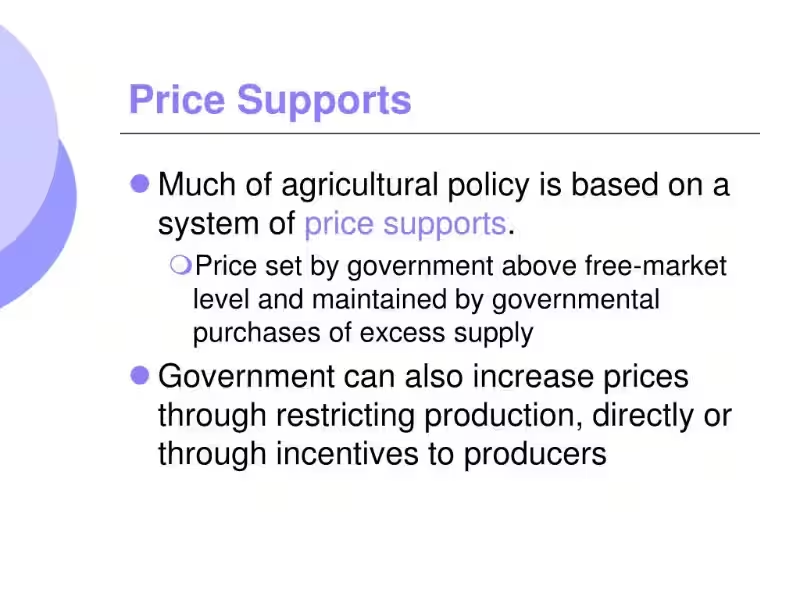
Agricultural price supports, a cornerstone of many nations' agricultural policies, aim to stabilize prices and ensure a consistent income for farmers. But what is the core justification for these interventions? This article delves into the arguments for agricultural price supports, exploring their historical context, mechanisms, and potential drawbacks.
The Argument for Stability: Supporting Farmers and Food Security
Price supports, in essence, aim to create a more stable and predictable market for agricultural products. Farmers face inherent uncertainties, from fluctuating weather patterns to unpredictable market demand. These fluctuations can lead to significant income instability, impacting their ability to invest in their farms and the overall sustainability of rural communities. A stable price environment is crucial for maintaining a consistent level of agricultural production, ensuring a reliable source of food, and fostering the long-term health of the agricultural sector. This stability is particularly important in the face of growing global food needs and the challenges posed by climate change. The inherent volatility in agricultural production necessitates government intervention to mitigate the risks faced by farmers and ensure consistent food availability.
A critical aspect of this argument revolves around food security. A stable food supply is essential for public health and social stability. Price supports, by aiming to maintain affordable food prices, directly contribute to this goal. By smoothing out the peaks and troughs in food prices, they help prevent shortages and assure a consistent availability of vital nutrients to populations worldwide. The natural variability of harvests, subject to factors beyond human control, requires a safety net to ensure consistent food production and distribution.
Mechanisms of Price Supports: Various Tools for Achieving Stability
Agricultural price supports utilize various mechanisms to achieve their goal of stability. These methods include loan supports, deficiency payments, and land banks.
Loan Supports: Borrowing Against Futures
Loan supports, often in the form of non-recourse loans, allow farmers to borrow against their projected crop yield. This system is typically based on a government-established "target price." Farmers can either sell their harvest in the market, repaying the loan with the proceeds, or deliver the crop to the government entity managing the program. This mechanism is designed to provide a guaranteed minimum price, encouraging farmers to produce, even in years when market prices might be significantly lower. This approach helps to ensure farmers have a consistent source of income and promotes the continuous production of food.
Deficiency Payments: Compensating for Price Shortfalls
Deficiency payments address the often-problematic storage of surplus crops, a potential drawback of loan support programs. Farmers are compensated for any price shortfall between the market and target price. This mechanism encourages farmers to sell their harvests in the market and compensates them for the gap in their expected income. This approach is intended to provide a safety net for farmers while maintaining the flexibility of market sales.
Land Banks: Managing Surplus Production
Land banks represent another tool used for managing surplus production. They incentivize farmers to take land out of production, thereby reducing overall supply and potentially stabilizing market prices. This approach is designed to manage instances where crop yield is significantly higher than market demand, which can frequently cause plummeting prices. Naturally, managing surplus production is crucial in maintaining stable agricultural markets.
Criticisms of Price Supports: Potential Drawbacks
While the aim of price supports is to create stability, they are not without potential drawbacks. Critics argue that these interventions can lead to overproduction and distort market dynamics.
Overproduction and Inefficient Allocation of Resources
A potential downside to price supports is the incentive they create for farmers to maximize output, regardless of market demand. This oversupply can depress prices, potentially undermining the very purpose of the support system. It also creates an inefficient allocation of resources, directing production toward goods that are not in high demand. The resulting excess inventory creates significant logistical problems, often requiring costly storage and disposal solutions.
Unequal Benefit Distribution: Favoring Larger Farms
Another critical point of concern is the potential for price supports to disproportionately benefit larger farms. The per-bushel compensation structure often means that larger farms, with greater production capacity, gain a larger share of the benefits. This can exacerbate existing inequalities in the agricultural sector, potentially hindering the development and sustainability of smaller farms, and exacerbating the economic disparities within the agriculture sector. This unequal distribution of benefits can lead to social and economic divides within the farming community and further limit farm viability.
Conclusion: Balancing Benefits and Drawbacks
Agricultural price supports play a multifaceted role in the global agricultural landscape. They aim to stabilize markets, ensure farmer income, and maintain food security. However, these programs present both advantages and disadvantages, and their impact can be influenced by various factors. The ongoing challenge lies in balancing the needs of farmers, the market, and consumers, while minimizing potential drawbacks and maximizing the benefits of such interventions. Finding the right approach, whether through price supports or other mechanisms, remains a subject of constant debate and adaptation in the face of changing agricultural conditions and evolving global needs.
What is the main argument for agricultural price supports?
The primary argument for agricultural price supports is market stabilization and ensuring a consistent income for farmers. This stability allows for more predictable and consistent production levels. Fluctuating prices can be detrimental to farmers, leading to income instability and potentially impacting food production. Price supports, therefore, aim to mitigate these risks and guarantee a minimum price for agricultural products, which in turn supports rural economies and provides a degree of stability in food production and prices for consumers.