
What Happens After an Executive Order Is Signed?
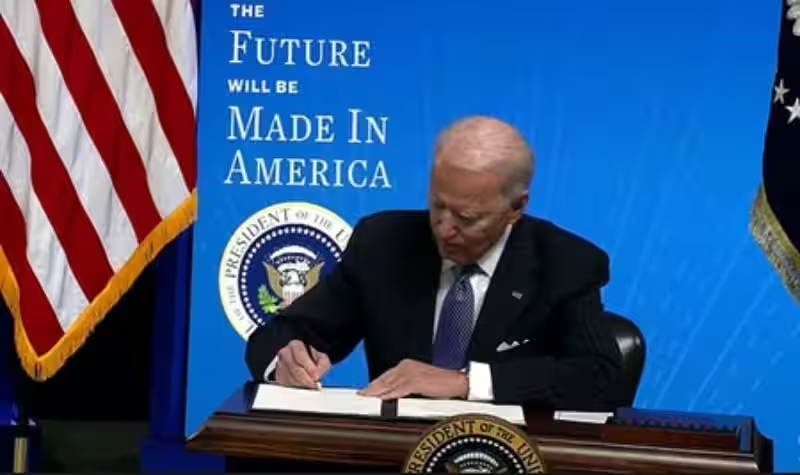
Executive orders, those directives issued by the President to federal agencies, are a powerful tool in the American political landscape. But what happens after a president signs one? This article delves into the intricate process that follows, examining its implications, potential challenges, and the vital role of checks and balances in the American system of government.
- The Immediate Aftermath: Implementation and Agency Action
- The Role of Agencies and Departments
- Navigating the Legal Landscape: Potential Challenges
- The Long-Term Implications
- The Importance of Historical Context
- Conclusion: A Dynamic Process
-
Frequently Asked Questions about Executive Orders
- What happens after an executive order is signed?
- What are the different ways an executive order can be carried out?
- What happens if an executive order is challenged?
- Can an executive order create new laws, or does it only apply to existing ones?
- Are there any timelines associated with the implementation of executive orders?
- How do subsequent presidents respond to executive orders issued by previous presidents?
- How does the legal system play a part in the process?
The Immediate Aftermath: Implementation and Agency Action
Immediately after an executive order is signed, it becomes legally binding and officially part of the federal register. This doesn't mean the order instantly transforms into tangible results; it's the beginning of a process that can be quite complex and lengthy. The order itself outlines the desired outcome, but the how is often left to the specific agency or agencies tasked with implementing it.
The implementation process often involves several key steps. Agencies must first understand and interpret the order's provisions. They then develop specific plans of action to execute the order's requirements. This might involve establishing new procedures, allocating resources, or training personnel. Natural delays and bureaucratic hurdles can occur at this stage. For example, if substantial new funding is required, securing that funding can take significant time.
The Role of Agencies and Departments
The executive branch, through its various government agencies, takes the lead in carrying out the specific directives within the executive order. Each agency has a different structure and operating procedures. This affects the speed and resources available for implementation. The order might assign specific responsibilities to different branches of government, leading to inter-agency coordination or conflict. For instance, if the order affects both the Department of Education and the Department of Labor, those agencies must collaborate to ensure their actions are aligned.
Moreover, resources are often essential for effective implementation. If an executive order mandates the creation of a new program or the expansion of an existing one, funding, personnel, and other necessary resources must be allocated. The availability of these resources can dramatically influence the speed and scope of the order's implementation.
Naturally, executive orders aren't immune to legal challenges. A significant aspect of the process involves navigating the complex legal landscape, as such orders can face scrutiny from both Congress and the judiciary.
Potential Challenges and Legal Review:
- Congressional Action: Congress can pass legislation to modify or overturn an executive order, effectively negating its impact.
- Judicial Review: Courts can review an executive order to assess its constitutionality or legality. If a court deems an order unconstitutional or unlawful, it effectively invalidates the order.
- Subsequent Executive Orders: A subsequent president can issue an executive order that either fully or partially rescinds or modifies a prior order. This demonstrates the inherent flexibility and dynamic nature of the system.
- Public Interest Litigation: Groups interested in challenging the order's impact can initiate legal action.
Examples of Challenges:
- Immigration Policies: Executive orders concerning immigration have frequently been challenged in court, raising questions about their constitutionality and the scope of presidential authority.
- Environmental Regulations: Executive orders impacting environmental policy can be met with legal challenges from environmental groups and businesses.
These potential challenges highlight the delicate balance between executive power and checks and balances in the U.S. government. A robust legal framework scrutinizes executive orders, safeguarding against potential abuses of power.
The Long-Term Implications
The consequences of an executive order can extend far beyond the initial implementation phase. The impact of an order can ripple through various sectors of society, influencing policies, regulations, and ultimately, everyday life.
- Policy Shifting: Executive orders can significantly alter the direction of public policy in specific areas, potentially altering government priorities for years to come.
- Economic Impact: Orders related to economic policy can trigger significant economic shifts, influencing job growth, investment, or market conditions.
- Public Opinion: Executive orders frequently provoke strong public reactions, creating political divides and influencing future political campaigns.
- Legislative Changes: Executive orders can have a profound influence on legislative action. Potential responses to an order might include introducing new legislation to either counteract or build upon its provisions.
The Importance of Historical Context
Understanding the historical context of a given executive order is crucial for assessing its potential impact. Examining past executive orders, particularly those that encountered significant legal or political challenges, provides valuable insights. For example, the historical context of executive orders related to civil rights, national security, or economic policy can offer crucial lessons about the potential ramifications.
Conclusion: A Dynamic Process
The process that unfolds after an executive order is signed is a dynamic interplay of implementation, legal challenges, and long-term effects. Understanding this complex process is critical for evaluating the true impact of presidential directives and the intricate balance of power in the American system of government. Naturally, the path and outcome of each executive order are unique, reflecting the specific context, political climate, and legal challenges of the time.
Frequently Asked Questions about Executive Orders
What happens after an executive order is signed?
Once an executive order is signed by the President, it becomes a directive to federal agencies. The order outlines specific actions or policies that these agencies are required to implement. The process of implementation can vary depending on the nature of the order.
What are the different ways an executive order can be carried out?
Executive orders can be straightforward, requiring immediate action from designated agencies. However, other orders might necessitate a more complex and time-consuming process. This could involve the development of new guidelines, regulations, or procedures by the relevant agencies. The implementation phase can take months or even years, depending on the scope and complexity of the order.
What happens if an executive order is challenged?
Executive orders are not above the law. They can be challenged in court if they are deemed unconstitutional, unlawful, or violate federal laws. Congress can also pass legislation to counter the order's impact. Subsequent presidents can issue orders that rescind or amend earlier ones. These mechanisms serve as crucial checks and balances against potential abuses of presidential power.
Can an executive order create new laws, or does it only apply to existing ones?
Executive orders are directives to federal agencies to implement existing laws, not create new ones. They cannot amend statutes or override congressional legislation. Congress retains the power to create new laws on issues like taxation, spending, and other crucial matters.
Are there any timelines associated with the implementation of executive orders?
That depends on the complexity of the order. Some orders have immediate effects, while others require extensive agency action. Implementation timelines can vary significantly, potentially delaying the order's impact for months or even years. This delay gives other branches of government opportunities to intervene.
How do subsequent presidents respond to executive orders issued by previous presidents?
Subsequent presidents can issue executive orders that either rescind or amend earlier ones. This demonstrates the dynamic nature of executive orders and how presidential administrations can modify or overturn policies put in place by their predecessors.
How does the legal system play a part in the process?
Courts can play a critical role in reviewing the legality of an executive order. If a court finds that an order violates federal law or the Constitution, it may rule the order unconstitutional or unlawful. This reinforces the importance of the judicial branch's role in upholding the rule of law.