
What Challenges Does South Africa Face Today as a Democracy?
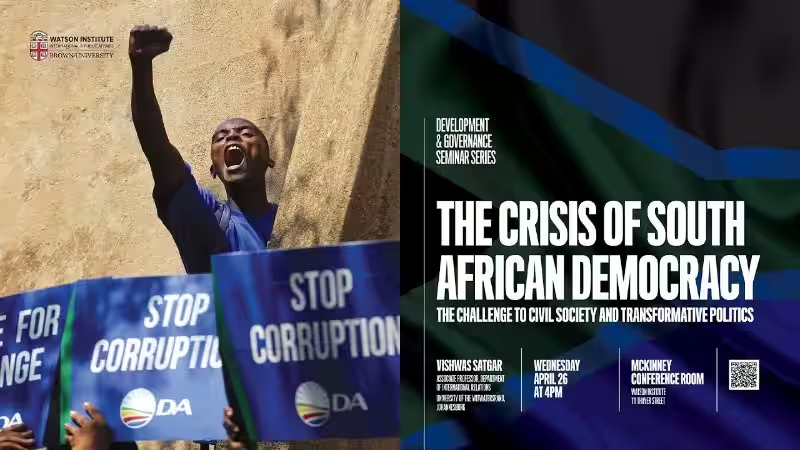
South Africa, a nation brimming with potential, confronts a complex web of challenges as it navigates its democratic journey. The transition from apartheid to democracy presented unprecedented opportunities, but also introduced a host of intertwined problems that continue to test the nation's resilience and progress. Understanding these challenges is crucial for fostering a more informed and engaged citizenry, capable of contributing meaningfully to the country's future.
Economic Inequality: A Deep-Rooted Problem
South Africa, despite its democratic foundations, grapples with stark economic inequality. A legacy of apartheid-era discrimination has left a significant portion of the population struggling with poverty, limited access to quality education and healthcare, and inadequate housing. This inequality manifests in vast disparities in wealth distribution, employment opportunities, and social mobility. It's a persistent cycle that undermines the very principles of equality and justice that underpin South Africa's democratic structure, creating significant social unrest and impacting the fabric of the nation. This entrenched inequality poses a significant threat to South Africa's ability to realize its full potential as a thriving democracy.
The impact of this inequality is far-reaching. It fuels crime, breeds social unrest, and hampers the development of human capital. Addressing this deeply entrenched problem requires a multi-pronged approach that targets education, skills development, and job creation, while also promoting equitable access to resources and opportunities. Crucially, it necessitates a robust and effective social safety net to support vulnerable communities and break the cycle of poverty.
Unemployment and Job Creation: A Critical Hurdle
High unemployment, particularly amongst youth, is a significant concern in South Africa. The lack of job opportunities exacerbates inequality and contributes to social unrest. A large and growing segment of the population lacks the skills and experience needed to compete in the modern job market. The need for innovative and adaptable strategies to create jobs is paramount to building a more robust and inclusive economy. The government’s efforts to create jobs are often hampered by the country's extensive bureaucratic processes, making it hard to support business growth and job creation.
Addressing this challenge requires a concerted effort from government, business, and civil society. Programs focusing on vocational training, entrepreneurship development, and skills upgrading are crucial. Support for small businesses and the promotion of entrepreneurship can play a significant role in creating jobs and fostering economic growth. The private sector, as well as the government, must work together to foster a more dynamic and inclusive economy that generates employment opportunities.
Corruption and Governance: Erosion of Trust
Corruption remains a significant obstacle to South Africa's development and the realization of its democratic ideals. It undermines public trust in institutions, erodes government effectiveness, and diverts resources from essential services. Corruption can be found in various sectors, from the public service to the private sector, and it perpetuates a cycle of inequality and injustice. Addressing this requires a strong commitment from all stakeholders to transparency, accountability, and ethical leadership.
Corruption often stems from a lack of transparency in decision-making processes and a lack of accountability for those in positions of power. The need for independent institutions, such as the anti-corruption agencies, is crucial in fostering trust and supporting the rule of law. Strengthening these institutions and empowering them to investigate and prosecute corruption effectively is a key element in building a more just and equitable society. Furthermore, education plays a crucial role in instilling ethical values and responsible behavior.
Crime and Violence: A Threat to Security
Crimes like violent crime, property crime, and corruption are widespread in South Africa and create significant anxiety and fear among citizens. This poses a challenge to the safety and security of the population and negatively impacts economic activity and social cohesion. Crime and violence often intersect with issues of inequality and unemployment, creating a vicious cycle that perpetuates social unrest.
Addressing the crime problem requires a multi-faceted approach. This includes strengthening law enforcement agencies and providing them with adequate resources and training, improving the justice system, and preventing crime through social interventions. Community policing initiatives, crime prevention programs, youth development projects, and social support systems are crucial to addressing the root causes of crime and violence. It's essential to address the socio-economic factors that contribute to crime, while also ensuring that crime prevention programs are well-resourced and effective.
South Africa faces the ongoing challenge of fostering social cohesion and reconciliation between different communities, given its history of racial division and conflict. Building bridges of understanding and mutual respect is essential to sustaining the democratic process and ensuring that the principles of equality and justice are upheld for all citizens. This necessarily involves addressing past injustices and promoting a culture of tolerance and understanding.
Addressing this issue requires a multifaceted approach, including promoting inclusive education that teaches about different cultures and histories, fostering dialogue and interaction between communities, and implementing policies that promote social justice and equality. The media also plays a critical role in promoting understanding and in avoiding the perpetuation of prejudices. Building bridges requires ongoing commitment and collective effort from individuals, communities, organizations, and the government.
South Africa's democratic journey is fraught with significant challenges, but these issues are not insurmountable. By focusing on improving economic opportunity, strengthening governance, addressing social issues, and fostering social cohesion, the nation can overcome these obstacles and build a more just, equitable, and prosperous society for all its citizens. The challenges faced by South Africa as a democracy are deeply intertwined and require a comprehensive and sustainable solution. A holistic approach that tackles the root causes of these issues is essential to create a truly equitable and prosperous future for all South Africans. With resilience, determination, and a shared commitment to its democratic ideals, South Africa can navigate these challenges and build a more inclusive and prosperous future.