
Understanding Washington Sanctuary Cities: Fact vs. Fiction
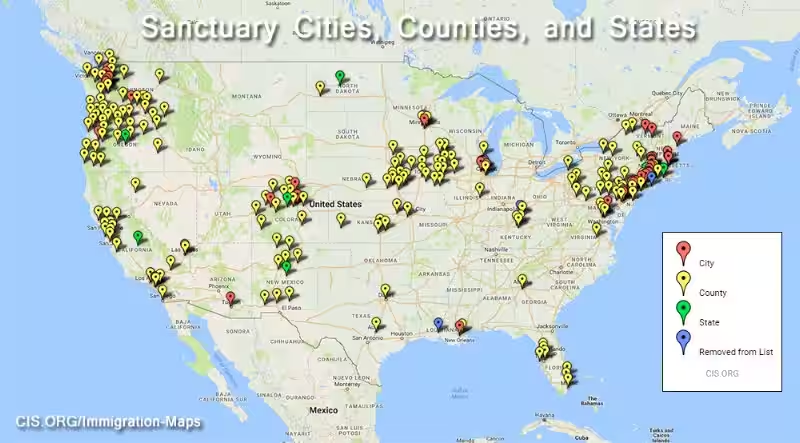
Are Washington state's counties and cities truly "sanctuary jurisdictions," or is the label misleading? The Trump administration's designation of numerous Washington locations as such sparked significant debate, raising questions about the accuracy and fairness of the process. This article delves into the complexities surrounding the controversial list of Washington sanctuary cities and counties, examining the claims and counterarguments.
- The DHS List: A Controversial Designation
- Questionable Inclusions and Methodological Flaws
- The Definition of "Sanctuary Jurisdiction": A Shifting Landscape
- Washington's Response: A Battle of Narratives
- The Impact of the Designation: Beyond the Label
- Moving Forward: The Need for Clarity and Transparency
- The List of Washington Counties and Cities Designated
- Conclusion: Beyond the Labels, a Need for Dialogue
-
Washington State and the "Sanctuary City" Designation: Frequently Asked Questions
- What is a "sanctuary jurisdiction"?
- Which Washington counties and cities were designated as "sanctuary jurisdictions"?
- Is the DHS list accurate?
- Why is the accuracy of the list important?
- What are the criticisms of the DHS's designation process?
- What are the potential consequences of being labeled a "sanctuary jurisdiction"?
- Where can I find the full DHS list?
- Does being labeled a "sanctuary jurisdiction" mean a jurisdiction is defying federal law?
- What is the current status of the "sanctuary jurisdiction" designation?
The DHS List: A Controversial Designation
The Department of Homeland Security (DHS) under the Trump administration released a list of over 500 jurisdictions nationwide deemed "sanctuary jurisdictions." This designation implied non-compliance with federal immigration enforcement, a claim that Washington state vehemently disputed. The list included 35 out of Washington's 39 counties and five major cities: Everett, Olympia, Tacoma, Seattle, and Yakima.
The rationale behind the designation was that these jurisdictions allegedly "undermine the rule of law and endanger the lives of Americans and law enforcement." However, the lack of clear, consistent criteria for inclusion raised immediate concerns about the legitimacy of the accusations. Many questioned whether the label "sanctuary city" accurately reflected the policies and practices of the listed counties and cities.
Questionable Inclusions and Methodological Flaws
The DHS list's accuracy was severely challenged from the outset. Several Washington counties included on the list, surprisingly, were known for their support of President Trump's immigration policies and demonstrated a history of cooperation with Immigration and Customs Enforcement (ICE). Their inclusion seemed arbitrary and inconsistent with the stated rationale for the designation.
This lack of transparency and consistency extended beyond Washington state. The list contained numerous errors, including misspellings and the inclusion of jurisdictions that had a documented history of cooperating with ICE. Examples included Shawano County, Wisconsin (erroneously included due to its unrelated "Second Amendment Sanctuary" designation), Alexandria, Virginia, and Huntington Beach, California. These glaring errors seriously undermined the credibility of the entire DHS list.
The Definition of "Sanctuary Jurisdiction": A Shifting Landscape
The very definition of a "sanctuary jurisdiction" remains ambiguous and hotly debated. There's no single, universally accepted definition. Some interpret it as jurisdictions that actively obstruct federal immigration enforcement, while others view it as simply jurisdictions that prioritize local law enforcement over immigration enforcement. This lack of clarity contributes to the confusion and controversy surrounding the DHS list.
The absence of a clear definition allowed for inconsistent application. Some counties and cities might have policies that limit cooperation with ICE, but this doesn't necessarily equate to actively obstructing federal law. The broad brushstroke approach of the DHS list failed to account for the nuanced differences in local policies and practices.
Washington's Response: A Battle of Narratives
Washington state officials strongly contested the DHS designation, arguing that the label was inaccurate and unfairly penalized communities that were simply prioritizing their own local law enforcement strategies and the wellbeing of their immigrant populations. They highlighted instances where their counties and cities had collaborated with federal authorities when necessary, while simultaneously maintaining their commitment to protecting their residents' rights.
The Washington state government emphasized its commitment to upholding the rule of law while also creating a welcoming environment for immigrants. This response highlights the fundamental tension between federal immigration enforcement and local autonomy, a tension that continues to shape the debate surrounding "sanctuary jurisdictions."
The Impact of the Designation: Beyond the Label
The impact of the "sanctuary jurisdiction" label extends beyond symbolic political posturing. The designation was used to justify the withholding of federal funding and to create a climate of fear and uncertainty for immigrant communities. The potential loss of federal funds for counties and cities labeled as "sanctuary jurisdictions" created significant financial and logistical pressures.
The psychological impact on immigrant communities should also not be understated. The fear of increased scrutiny and potential deportation caused anxiety and distress, making it more difficult for immigrants to access essential services and fully integrate into their communities. This created a climate of fear, hindering the social and economic fabric of the affected areas.
Moving Forward: The Need for Clarity and Transparency
The controversy surrounding Washington sanctuary cities underscores the need for a more transparent, evidence-based, and consistent approach to defining and addressing concerns about cooperation between local and federal authorities on immigration enforcement. The current system lacks clarity, leading to unfair labeling and potentially harmful consequences for communities.
The ongoing debate emphasizes the importance of open dialogue and collaboration between federal and local governments to find a balance between upholding federal law and protecting the rights and well-being of all residents. A more nuanced approach that acknowledges the diversity of local policies and practices is needed to replace the simplistic and often inaccurate labeling of "sanctuary jurisdictions." Ultimately, fostering trust and building collaborative relationships between federal and local authorities will be crucial to ensuring the safe and effective management of immigration enforcement.
The List of Washington Counties and Cities Designated
Here's a list of the Washington counties and cities included on the DHS list of "sanctuary jurisdictions":
Counties: Asotin, Benton, Chelan, Clallam, Clark, Columbia, Cowlitz, Ferry, Franklin, Garfield, Grant, Grays Harbor, Island, Jefferson, King, Kitsap, Kittitas, Lewis, Lincoln, Mason, Okanogan, Pacific, Pend Oreille, Pierce, San Juan, Skagit, Skamania, Snohomish, Spokane, Stevens, Thurston, Wahkiakum, Walla Walla, and Whatcom.
Cities: Everett, Olympia, Tacoma, Seattle, and Yakima.
It's crucial to understand that this list, as discussed, was highly contested and the designation itself remains controversial.
Conclusion: Beyond the Labels, a Need for Dialogue
The debate surrounding Washington sanctuary cities highlights a deeper issue: the complex interplay between federal immigration policy and local governance. The inaccurate and inconsistent application of the "sanctuary jurisdiction" label serves as a cautionary tale, exposing the need for a more transparent and evidence-based approach to addressing concerns about immigration enforcement. Moving forward, open dialogue, consistent criteria, and a commitment to transparency are essential to resolving this complex issue and fostering a more equitable and just system for all.
Washington State and the "Sanctuary City" Designation: Frequently Asked Questions
Here's a FAQ addressing the controversy surrounding Washington state and its designation as a "sanctuary jurisdiction" by the Trump administration:
What is a "sanctuary jurisdiction"?
The term "sanctuary jurisdiction" is applied by the Department of Homeland Security (DHS) to jurisdictions perceived as not fully cooperating with federal immigration enforcement. The DHS argues that these jurisdictions undermine the rule of law. However, there's no single, legally defined definition, leading to significant controversy over which jurisdictions qualify.
Which Washington counties and cities were designated as "sanctuary jurisdictions"?
The DHS list included 35 of Washington's 39 counties and five cities: Asotin, Benton, Chelan, Clallam, Clark, Columbia, Cowlitz, Ferry, Franklin, Garfield, Grant, Grays Harbor, Island, Jefferson, King, Kitsap, Kittitas, Lewis, Lincoln, Mason, Okanogan, Pacific, Pend Oreille, Pierce, San Juan, Skagit, Skamania, Snohomish, Spokane, Stevens, Thurston, Wahkiakum, Walla Walla, and Whatcom counties; and the cities of Everett, Olympia, Tacoma, Seattle, and Yakima. Adams, Douglas, Klickitat, and Yakima counties were excluded.
Is the DHS list accurate?
The accuracy of the DHS list is highly questionable. Many included Washington counties reportedly supported President Trump's immigration policies and had minimal interactions with immigration authorities. The list also contains errors, including misspellings and the inclusion of jurisdictions known for cooperating with ICE, raising concerns about the methodology and reliability of the DHS's process.
Why is the accuracy of the list important?
The accuracy of the list is crucial because the "sanctuary jurisdiction" designation carries significant implications, potentially affecting federal funding and relations between state and local governments and federal agencies. Inaccurate designations unfairly target jurisdictions and undermine the credibility of the entire initiative.
What are the criticisms of the DHS's designation process?
Criticisms include the lack of transparency in the selection criteria, the absence of evidence-based justification for the inclusion of specific jurisdictions, the presence of numerous errors and inconsistencies, and the subjective nature of defining "non-compliance" with federal immigration enforcement.
What are the potential consequences of being labeled a "sanctuary jurisdiction"?
The consequences are unclear and subject to ongoing legal challenges. Potential consequences could include the loss of federal funding, although this has been a subject of legal battles and has not been consistently applied. The designation also carries political ramifications, impacting public perception and intergovernmental relations.
Where can I find the full DHS list?
The complete list of jurisdictions designated as "sanctuary jurisdictions" by the DHS was available on the DHS website (although availability may vary over time).
Does being labeled a "sanctuary jurisdiction" mean a jurisdiction is defying federal law?
This is a matter of ongoing debate and legal interpretation. The term itself is not a legal designation, and the actions of various jurisdictions labeled as "sanctuary jurisdictions" vary widely. Some argue that certain policies may limit cooperation with ICE, while others maintain full compliance with federal law.
What is the current status of the "sanctuary jurisdiction" designation?
The legal and political landscape surrounding the "sanctuary jurisdiction" designation is constantly evolving. Legal challenges and changes in administration have influenced the enforcement and impact of the designation.
This FAQ provides a concise overview. For more detailed information, consult legal experts and review official government documents and news reports.