
Undocumented Immigrants May Not Pay Which Type of Taxes? A Look at Tax Contributions
Undocumented immigrants contribute significantly to the US economy, despite not being eligible for certain government benefits. But what types of taxes do they pay, and what are the implications for public revenue? This article will explore the critical role undocumented immigrants play in funding US government services and examine the impact of their legal status on their tax contributions.
- Understanding the Tax Contributions of Undocumented Immigrants
- Specific Taxes Undocumented Immigrants May Not Pay
- Geographic Distribution of Tax Contributions
- The Burden of High Tax Rates
- The Economic Impact of Legalization
- Methodology and Data Challenges
- Conclusion: Navigating the Complexities
-
Frequently Asked Questions about Taxes Paid by Undocumented Immigrants
- What types of taxes do undocumented immigrants pay?
- Do undocumented immigrants pay all types of taxes?
- How much do undocumented immigrants pay in taxes?
- Which states have the highest tax contributions from undocumented immigrants?
- Why do undocumented immigrants pay taxes if they don't receive benefits?
- How would legalizing the status of undocumented immigrants impact tax contributions?
- What is the methodology used to estimate undocumented immigrant tax contributions?
- How does this impact public services?
Understanding the Tax Contributions of Undocumented Immigrants
Undocumented immigrants in the US pay a substantial amount in taxes. The ITEP report estimates that in 2022, they paid a combined $96.7 billion in federal, state, and local taxes. This isn't a small sum and represents a considerable portion of the public revenue stream. This suggests that undocumented immigrants, despite their lack of legal status, are already actively contributing to the US economy.
Critically, this massive sum isn't just general taxes, but also substantial contributions to Social Security, Medicare, and Unemployment Insurance programs. The fact that they pay into these systems, without receiving benefits, highlights the significant economic impact they have on the country. This is a key point for many people to consider.
Specific Taxes Undocumented Immigrants May Not Pay
While undocumented immigrants contribute significantly through various taxes, they are excluded from certain government programs and, consequently, do not pay the corresponding taxes. Importantly, they aren't eligible for benefits like Social Security, Medicare, or unemployment insurance. This means they do not pay taxes to fund those specific programs.
This is a critical distinction in the debate about undocumented immigrants' financial contribution. They pay taxes supporting government services but are not part of the system that receives benefits from these programs.
Geographic Distribution of Tax Contributions
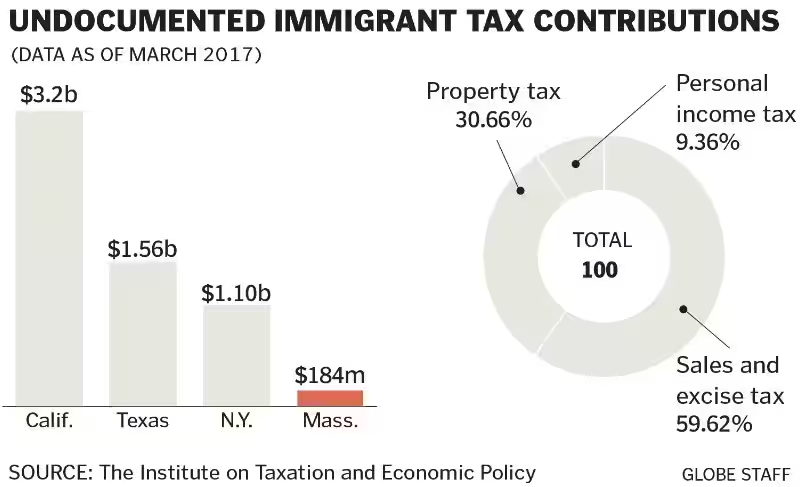
The report shows that a disproportionate share of undocumented immigrant tax revenue comes from a few key states. California, Texas, New York, Florida, Illinois, and New Jersey stand out, accounting for nearly two-thirds of the state and local tax revenue generated by this population. This concentration highlights the economic impact of this group in these specific regions. The data clearly shows the significant economic role undocumented immigrants play in sustaining specific states' budgets and infrastructure.
This geographic distribution has substantial implications for state-level politics and policy decisions. The economic contributions of this population are not evenly distributed across the nation.
The Burden of High Tax Rates
A shocking finding is that in 40 states, undocumented immigrants pay higher state and local tax rates, relative to their income, than the top 1% of households in those states. This points to a substantial financial burden borne by this population despite their lack of legal status. It underscores the economic reality for many undocumented immigrants.
This highlights a complex social and economic issue, demanding careful consideration. The financial burden borne by undocumented immigrants is significant and needs to be taken into consideration when evaluating their economic contribution.
The Economic Impact of Legalization
The report estimates that if undocumented immigrants were granted work authorization, their tax contributions could skyrocket by $40.2 billion annually. This increase would be due to higher wages and improved tax compliance rates. This is a crucial point because it directly connects immigration policy with public revenue.
This increase is not simply due to a larger population; it's because an increase in legal status creates a more reliable and robust tax base. The implications for the US economy are substantial, and this must be considered within the broader immigration policy debate.
Methodology and Data Challenges
The ITEP report's methodology is carefully designed to address the challenges of data collection on this population. The report combines estimates of the undocumented population with data from the American Community Survey and other sources. Key adjustments include accounting for income underreporting in census data, adjusting for remittances, consumption patterns, and differences in access to tax credits.
The authors acknowledge the challenges in accurately measuring the tax contributions of undocumented immigrants. However, they use established techniques and adjustments to minimize biases and improve the accuracy of their estimates. This provides a solid foundation for understanding this complex issue.
The evidence strongly indicates that undocumented immigrants make substantial tax contributions to the US economy, despite their lack of legal status and exclusion from certain programs. While they may not pay taxes associated with government programs they are not eligible for, they pay a significant amount of other taxes. The report's findings underscore the substantial economic contributions of this group and the potential benefits of legalizing their status. By understanding the nuances of undocumented immigrants' tax contributions, policymakers and researchers alike can engage in a more informed dialogue about immigration policy and its economic consequences. This is a complex issue with significant implications, and a nuanced understanding is essential for any meaningful discussion.
```markdown
Frequently Asked Questions about Taxes Paid by Undocumented Immigrants
What types of taxes do undocumented immigrants pay?
Undocumented immigrants in the US pay federal, state, and local taxes. This includes a significant portion of Social Security, Medicare, and Unemployment Insurance taxes, even though they are ineligible for those benefits. The report indicates that they pay a substantial amount of income taxes; however, it does not specifically name all taxes paid by undocumented immigrants, because it is not a focus of the analysis. The overall tax payments are a combination of income taxes and payroll taxes.
Do undocumented immigrants pay all types of taxes?
The provided report focuses on the taxes undocumented immigrants do pay, not on those they are exempt from. It does not state which taxes they are definitively not paying. The report emphasizes the substantial amount of taxes paid, rather than focusing on tax exemptions.
How much do undocumented immigrants pay in taxes?
In 2022, undocumented immigrants paid a combined $96.7 billion in federal, state, and local taxes. This averages to approximately $8,889 per undocumented immigrant. The report emphasizes that this is a significant amount.
Which states have the highest tax contributions from undocumented immigrants?
California, Texas, New York, Florida, Illinois, and New Jersey account for nearly two-thirds of state and local tax revenue generated by undocumented immigrants.
Why do undocumented immigrants pay taxes if they don't receive benefits?
The report highlights the significant financial contribution of this population, despite their lack of legal status. It emphasizes that this contribution directly impacts funding for public services.
How would legalizing the status of undocumented immigrants impact tax contributions?
The report estimates that providing work authorization to the entire undocumented population would boost their tax contributions to $136.9 billion annually. This increase is projected to be driven by higher wages and improved tax compliance rates under legal employment.
What is the methodology used to estimate undocumented immigrant tax contributions?
The study employs a sophisticated methodology combining estimates of the undocumented population with data from the American Community Survey (ACS) and other sources. Adjustments are made for income underreporting, remittances, consumption patterns, and differences in access to tax credits. The authors acknowledge data collection challenges but aim to minimize biases.
How does this impact public services?
The significant tax contributions of undocumented immigrants directly impact the funding of public services at all levels of government. The report emphasizes the financial benefits of legalizing the status of undocumented workers.
```