
Understanding the Gravity of Us: A Critical Look at a YA Romance
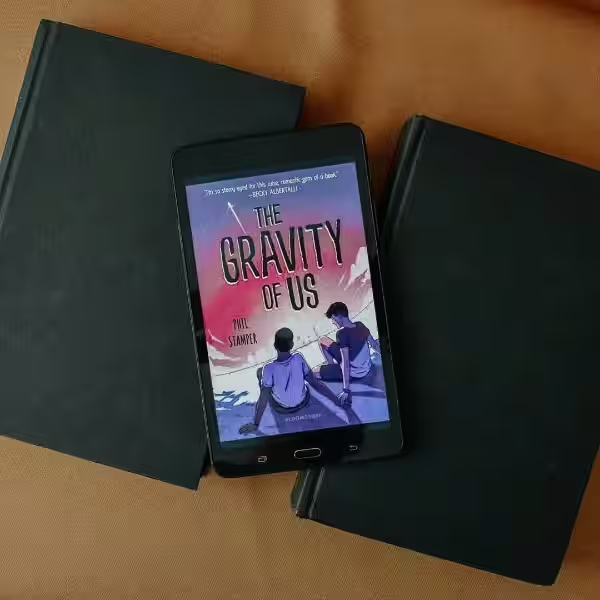
This article explores the reasons behind the mixed reception of the young adult novel, "The Gravity of Us," focusing on the critical points raised in reviews and examining why a book with such a promising premise ultimately fell short for many readers. We'll delve into the unrealistic elements, unconvincing character development, and the overall impact on the reader's experience.
- Unrealistic Portrayals and Forced Relatability
- Awkward Dialogue and Unconvincing Characterization
- The "Instalove" Romance and its Shortcomings
- Cal: A Self-Absorbed Protagonist
- Conclusion: Managing Expectations and the Importance of Authenticity
-
Frequently Asked Questions about the Reception of "The Gravity of Us"
- Why did the reviewer dislike "The Gravity of Us"?
- What specific unrealistic elements were criticized?
- Was the dialogue well-received?
- How did the reviewer describe the central romance?
- What was the main criticism of the protagonist, Cal?
- Did the book deliver on its promising premise?
- What should readers expect based on this review?
Unrealistic Portrayals and Forced Relatability
One of the most significant criticisms leveled against "The Gravity of Us" centers on its unrealistic portrayal of social media and the protagonist's online persona. Cal, the main character, is depicted as a livestreamer with an impossibly high viewership, disproportionate to his follower count. This immediately creates a sense of disconnect for the reader, hindering immersion in the story's world.
The attempt at relatability often backfires, with the author inserting seemingly random details that feel forced and unnatural. The suggestion that Cal, a young person immersed in the digital world, is unfamiliar with iconic musical artists like Nirvana or Dolly Parton rings particularly false. These details serve only to undercut the character's credibility and make him seem less authentic.
Awkward Dialogue and Unconvincing Characterization
Beyond the unrealistic setting, the dialogue itself is frequently cited as a major weakness. The conversations feel clunky and unnatural, failing to achieve the relatable tone the author was aiming for. The overuse of slang, such as the repeated use of "stan," comes across as forced and detracts from the flow of the narrative.
Character traits are also criticized for their lack of depth and believability. Leon's preference for Calvin Harris, for example, is deemed unconvincing and doesn't contribute to his characterization in a meaningful way. The characters often feel like archetypes rather than fully realized individuals, hindering emotional connection with the reader.
The "Instalove" Romance and its Shortcomings
The central romance between Cal and Leon is arguably the most problematic aspect of the novel. Described as "instalove," the relationship's rapid progression from initial meeting to passionate kissing lacks the necessary build-up and tension to be believable. This jarring speed prevents the reader from connecting emotionally with the burgeoning relationship. The lack of organic development makes the passionate moments feel unearned and unconvincing.
The absence of genuine conflict and obstacles to overcome further weakens the romantic plotline. A compelling romance often hinges on overcoming shared challenges and navigating obstacles together. The absence of this crucial element leaves the relationship feeling shallow and ultimately unsatisfying to the reader.
Cal: A Self-Absorbed Protagonist
Perhaps the most damaging criticism centers on the protagonist, Cal, who is depicted as deeply self-absorbed and insensitive. His actions consistently prioritize his own needs and desires over the well-being of others. This is exemplified by his prioritizing of personal plans over a friend's eviction crisis, disregard for his mother's anxiety, and emotionally manipulative behavior towards Leon.
His lack of empathy extends to his treatment of his online audience. He's far more concerned with online metrics and his public image than with genuine fan connection. This prioritization contributes to his unlikeable character and makes it difficult for the reader to root for him, even within the context of the romantic narrative. The gravity of us, as a whole, is impacted by this central character flaw. Publicly announcing his relationship with Leon without consent and prioritizing kissing over genuine concern after a serious accident involving their parents further solidifies this negative portrayal.
The Impact of Cal's Actions
The cumulative effect of Cal's self-absorbed behavior is a significant detriment to the overall reading experience. It's difficult to empathize with a character who repeatedly demonstrates a lack of consideration for others. This lack of empathy undermines the reader's ability to connect with him on an emotional level, even when the narrative attempts to portray him as vulnerable or relatable in other contexts.
His actions ultimately create a distance between the reader and the story, diminishing the impact of the intended plot points and leaving many feeling dissatisfied with the overall narrative. The potential for a compelling queer romance is squandered by this flawed characterization.
Conclusion: Managing Expectations and the Importance of Authenticity
"The Gravity of Us," despite its appealing premise, ultimately falls short due to a combination of unrealistic elements, unconvincing characterization, forced dialogue, and a rushed, unconvincing romance. The protagonist's self-absorbed nature overshadows any positive aspects of the story, hindering emotional investment and overall enjoyment.
This serves as a reminder that even books with initially promising concepts require careful execution. Authenticity in character portrayal, realistic settings, and well-developed relationships are crucial for creating a compelling and engaging narrative. Readers should manage their expectations, recognizing that a captivating premise doesn't automatically equate to a successful book. The gravity of us, as a concept, is lost without careful plotting and believable characters.
Frequently Asked Questions about the Reception of "The Gravity of Us"
Here are some frequently asked questions regarding the reception of the young adult novel, "The Gravity of Us," based on critical reviews:
Why did the reviewer dislike "The Gravity of Us"?
The reviewer expressed significant disappointment, citing several flaws that overshadowed the book's appealing premise of a queer romance set during a NASA mission. These flaws included unrealistic portrayals, unconvincing characterization, forced dialogue, and a rushed romance.
What specific unrealistic elements were criticized?
The reviewer highlighted the protagonist's implausibly high online viewership despite a low follower count, and his unrealistic lack of familiarity with iconic musicians, as examples of forced relatability that damaged the book's credibility. The character Leon's musical preferences were also deemed unrealistic.
Was the dialogue well-received?
No. The dialogue was criticized as inauthentic and clunky, with an overuse of slang and unconvincing depictions of musical taste failing to achieve its intended relatable tone.
How did the reviewer describe the central romance?
The reviewer described the romance as "instalove," lacking the necessary build-up and tension to be believable or compelling. The rapid progression of the relationship was seen as jarring and lacking emotional depth.
What was the main criticism of the protagonist, Cal?
The most significant criticism focused on Cal's portrayal as deeply self-absorbed and insensitive. He prioritized his personal plans over a friend's needs, disregarded his mother's anxiety, engaged in emotionally manipulative behavior towards Leon, and obsessed over online metrics rather than genuine fan connection. His actions, such as publicly announcing his relationship without consent and prioritizing kissing over genuine concern after an accident, solidified this negative portrayal.
Did the book deliver on its promising premise?
No. The review argues that "The Gravity of Us" failed to deliver on its initially appealing premise due to a combination of unrealistic elements, unconvincing characterization, forced dialogue, and a rushed, unconvincing romance. The reviewer stressed the importance of managing expectations, even with initially appealing concepts.
What should readers expect based on this review?
Based on this review, readers should expect a book that falls short of its potential due to several significant narrative and character flaws. The unrealistic elements and unlikeable protagonist might significantly detract from the reading experience, despite the intriguing premise.