
Ensuring Effective Operation and Support of the 3M Program
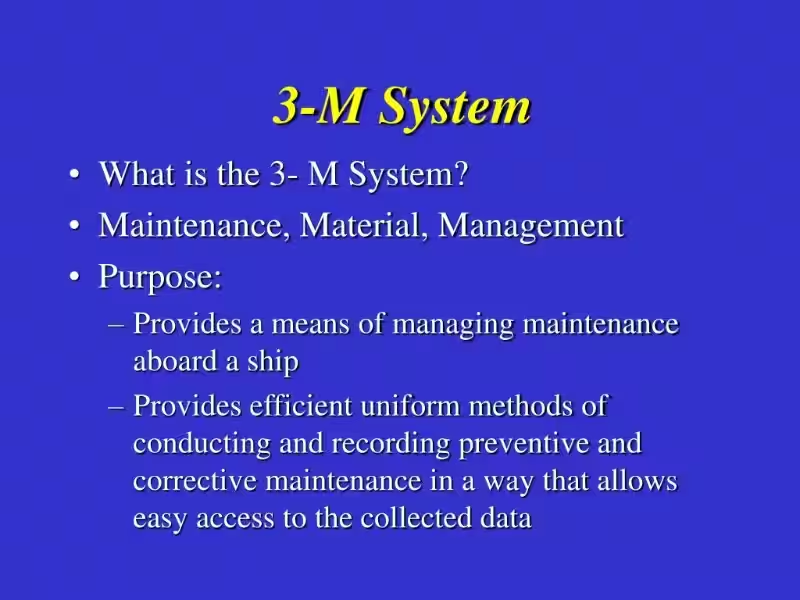
Naval ships rely heavily on the meticulous maintenance of their equipment to ensure operational readiness. A comprehensive program like the 3M (Maintenance Management System) is critical for this. But how is the 3M program best implemented and supported to achieve maximum efficiency and safety?
- Understanding the 3M Program Structure
- Effective Operation of the 3M Program
-
Support for the 3M Program
- Maintaining Documentation and Compliance
- Addressing Challenges and Feedback
- Training and Awareness
- 3M Program FAQ
- What is the 3M Program?
- What are the key personnel roles in the 3M Program?
- What key documents are used in the 3M program?
- How does the 3M program schedule maintenance?
- What reporting mechanisms are used?
- How do the different documents in the 3M program relate to each other?
- What are the key steps to take in hazardous maintenance situations?
- How is preventive and corrective maintenance handled?
- What is the purpose of the 13-week accountability log?
- How are changes to the PMS managed?
- How does the program handle inactive equipment?
- How is material identification handled?
- What is the role of the periodicity codes?
- What is the purpose of the Equipment Guide List (EGL)?
- How does the program ensure safety during maintenance?
- What is the significance of the Work Center PMS Manual (43P1)?
Understanding the 3M Program Structure
The 3M program isn't just a collection of documents; it's a meticulously designed system with clearly defined roles and responsibilities. This structural framework ensures accountability and efficiency in carrying out maintenance tasks. A robust system requires a strong foundation, and the 3M program is no exception. This structured approach minimizes errors and enhances overall effectiveness.
Key Personnel and Responsibilities
The 3M program's success hinges on the dedication and adherence to responsibilities of key personnel. From the top down, this program is well-defined. The Type Commander (TYCOM) provides the ultimate oversight, while the Executive Officer (XO) manages the program's practical application. A 3M Coordinator (307) directs the administrative aspects, ensuring smooth operations. Department Heads (306) oversee 3M activities within their respective departments. Lower-level support staff like the 3M Assistant (305), Division Officer (304), Group Supervisor, and Work Center Supervisor (303) are the crucial middle managers involved in the day-to-day execution of maintenance tasks. The Repair Parts Petty Officer (302) is vital for ensuring the timely availability of necessary repair parts. This clear delegation of tasks is fundamental to the effective operation of the 3M program.
Maintenance Categories and Documentation
The 3M program categorizes maintenance into two crucial types: Preventive and Corrective. Preventive maintenance aims at proactively preventing equipment failures, prolonging its lifespan, and minimizing downtime. Corrective maintenance, on the other hand, addresses equipment failures after they occur, ensuring the systems can be restored to proper operational condition.
The 3M program relies on a comprehensive suite of documents to streamline and track maintenance activities. The Maintenance Requirement Card (MRC) acts as the detailed instruction manual for carrying out specific maintenance tasks. The Equipment Guide List (EGL) groups similar equipment requiring identical maintenance procedures, simplifying the process. Maintenance Index Pages (MIPs) provide an index of all MRCs for specific equipment or systems, enabling easy access to maintenance procedures. The List of Effective Pages (LOEP) identifies the relevant MIPs for specific work centers, further streamlining the process. The Work Center PMS Manual (43P1) is the central repository, compiling LOEPs, MIPs, Feedback Reports (FBRs), Change Pages, and other essential information.
Effective Operation of the 3M Program
The effective operation of the 3M program is dependent on the seamless integration and proper use of every component. Clear communication protocols and well-defined processes are crucial.
Scheduling and Accountability
The program utilizes various scheduled maintenance activities (weekly, quarterly, and cycle), ensuring systematic and regular inspections and maintenance. The 13-week accountability log is a critical element in ensuring that all scheduled maintenance tasks are completed and documented. This log enhances accountability and visibility for the entire program.
Reporting and Feedback Mechanisms
Accurate and informed reporting is crucial for the effective operation of the 3M program. The Feedback Report (FBR) is a formal request for changes to the overall maintenance program (e.g., adding, deleting, or modifying MRCs/MIPs). Urgent reports are prioritized when safety is a concern. Specific periodicity codes (daily, weekly, quarterly) dictate the frequency of maintenance reports, ensuring updates are timely. Inactive Equipment Maintenance (IEM) outlines procedures for maintaining equipment out of immediate use. This system provides a robust framework for monitoring and improving the 3M program regularly.
Interconnected Documents and Safety
The 3M program emphasizes the interconnectedness of its various documents. For instance, the LOEP references MIPs, the EGL simplifies maintenance for similar equipment, the TGL ensures safety procedures are followed. MRC and MIP numbers provide unique identifiers, ensuring there are no discrepancies. Change Pages and LOEPs are synchronized to reflect any modifications to the PMS. Safety precautions are prominently displayed in MRCs. The Standard PMS Material Identification Guide (SPMIG) helps in procuring the correct materials. All safety procedures are carefully integrated into the maintenance process.
Support for the 3M Program
Robust support is essential for ensuring a smooth and effective operation of the 3M program.
Maintaining Documentation and Compliance
Maintaining the accuracy and currency of all documents, from the MRC to the SPMIG, is vital. Regular updates and revisions are necessary to reflect changes in the PMS and incorporate new safety procedures.
Addressing Challenges and Feedback
The 3M program's effectiveness is enhanced by an open system for addressing challenges, concerns, and feedback. This ensures that the program remains efficient and adapts to emerging needs. Regular reviews of the 3M program's effectiveness are imperative in identifying areas where improvements in efficiency are necessary.
Training and Awareness
Adequate training and awareness programs help personnel understand and efficiently execute their roles and responsibilities within the 3M framework. Safety training is crucial in preventing accidents and ensuring adherence to procedures. This training leads to personnel being better equipped to handle potential challenges.
By focusing on these elements, the 3M program can be effectively operated and supported, ensuring optimal equipment readiness and safety on naval ships.
3M Program FAQ
This FAQ section addresses common questions regarding the effective operation and support of the 3M (Maintenance Management System) program.
What is the 3M Program?
The 3M program is a comprehensive system designed to maximize equipment readiness on naval ships. It encompasses various roles and responsibilities, categorized maintenance types (preventive and corrective), and utilizes key documents and reporting mechanisms to ensure efficient and safe maintenance procedures.
What are the key personnel roles in the 3M Program?
The Type Commander (TYCOM) has ultimate oversight, the Executive Officer (XO) manages the program. A 3M Coordinator (307) directs administrative aspects, Department Heads (306) oversee 3M within their departments, and support staff like the 3M Assistant (305), Division Officer (304), Group Supervisor, and Work Center Supervisor (303) ensure execution at lower levels. The Repair Parts Petty Officer (302) manages parts ordering and tracking.
What key documents are used in the 3M program?
Key documents include the Maintenance Requirement Card (MRC) detailing procedures, the Equipment Guide List (EGL) grouping similar equipment, Maintenance Index Pages (MIPs) indexing MRCs, the List of Effective Pages (LOEP) listing relevant MIPs for work centers, the Work Center PMS Manual (43P1) containing essential information, the Tag Guide List (TGL) outlining safety procedures, and the Standard PMS Material Identification Guide (SPMIG) for material identification.
How does the 3M program schedule maintenance?
The system uses various schedules (weekly, quarterly, cycle) to plan and track maintenance activities. A 13-week accountability log ensures tracking of completed maintenance.
What reporting mechanisms are used?
The Feedback Report (FBR) is a formal request for PMS changes, prioritized for urgent safety concerns. Specific periodicity codes (daily, weekly, quarterly) dictate maintenance frequency. Inactive Equipment Maintenance (IEM) outlines procedures for maintaining unused equipment.
How do the different documents in the 3M program relate to each other?
The LOEP references MIPs, the EGL simplifies maintenance for identical equipment, the TGL ensures safety protocols, and the MRC and MIP numbers provide unique identification. Change Pages and LOEPs are synchronized to reflect PMS changes. Safety precautions are incorporated into MRCs, and the SPMIG assists in material procurement.
What are the key steps to take in hazardous maintenance situations?
The system emphasizes specific steps to be taken by personnel when hazardous conditions arise during maintenance, as detailed in the system documents.
How is preventive and corrective maintenance handled?
Preventive maintenance aims to prolong equipment lifespan, while corrective maintenance addresses repairs after failure. The 3M program outlines procedures for both types of maintenance.
What is the purpose of the 13-week accountability log?
The 13-week accountability log tracks completed maintenance activities, ensuring accountability and verification of tasks performed.
How are changes to the PMS managed?
Changes to the PMS (e.g., adding, deleting, or modifying MRCs/MIPs) are formally managed through the Feedback Report (FBR) process, with urgent reports prioritized for safety-related concerns.
How does the program handle inactive equipment?
The Inactive Equipment Maintenance (IEM) process outlines procedures for maintaining equipment not currently in use.
How is material identification handled?
The Standard PMS Material Identification Guide (SPMIG) ensures standardized identification for maintenance materials.
What is the role of the periodicity codes?
Periodicity codes (daily, weekly, quarterly) dictate the frequency of maintenance activities.
What is the purpose of the Equipment Guide List (EGL)?
The EGL groups identical equipment needing the same maintenance, streamlining maintenance procedures.
How does the program ensure safety during maintenance?
The Tag Guide List (TGL) outlines safety procedures related to maintenance, and safety precautions (warnings and cautions) are incorporated into MRCs.
What is the significance of the Work Center PMS Manual (43P1)?
The 43P1 manual is the central document, containing LOEPs, MIPs, FBRs, Change Pages, and other vital information for effective work center maintenance.