
Temporary Guardianship Without Court in California: Alternatives to Formal Proceedings
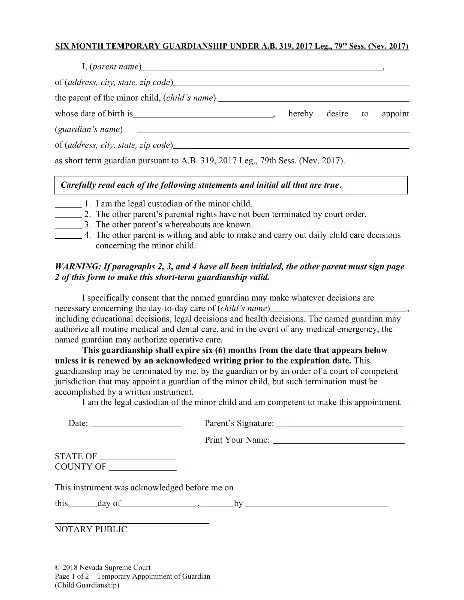
Seeking temporary care for a child in California without court intervention can seem daunting, but it's not always necessary to proceed with a formal guardianship. In many cases, alternative legal tools like caregiver authorization affidavits and written care agreements offer viable solutions, providing a framework for temporary care while maintaining parental rights. Understanding these options and their limitations is critical for parents, family members, and caregivers navigating these situations.
- Caregiver's Authorization Affidavit: Limited Scope, Simple Implementation
- Written Child Care Agreement: Broad Scope, Complex Considerations
- Key Differences Between Temporary Guardianship and Alternative Options
-
Temporary Guardianship in California Without Court Involvement: Frequently Asked Questions
- What is a Caregiver's Authorization Affidavit, and what are its limitations?
- What is a Written Child Care Agreement (Power of Attorney), and what are its limitations?
- What are the key differences between these options and a court-ordered guardianship?
- What are some common reasons for needing a temporary guardianship arrangement (without court involvement)?
- Who is typically eligible to be a temporary guardian (without court involvement)?
- Do I need a lawyer for these arrangements?
- How can I ensure the agreement is legally binding?
- What are the responsibilities of a temporary guardian?
- What are the potential challenges of using these options?
- How do I ensure all parties are properly notified if I'm pursuing a temporary guardianship via a court order?
- Is a written agreement preferred over a verbal agreement?
A Caregiver's Authorization Affidavit allows a designated caregiver, typically a relative, to handle certain tasks related to a child's school and health care. This document is invaluable for situations like a parent's temporary absence or illness, allowing the caregiver to consent to school enrollment, vaccinations, and routine medical check-ups. Crucially, this authority is constrained to school-related matters and doesn't extend to independent medical decisions.
This simple, non-court-filed document often requires annual renewal. It provides a reliable framework for school and medical providers, ensuring the caregiver's authority is recognized for these specific actions. However, its validity is entirely contingent on the child's continued residency with the caregiver. It is essential to note that parental rights are retained within this framework, meaning parents can revoke the caregiver's authority at any time. This temporary aspect should be carefully considered and understood.
Written Child Care Agreement: Broad Scope, Complex Considerations
A Written Child Care Agreement (analogous to a power of attorney) offers broader authority compared to the affidavit. This document allows parents to legally delegate various care decisions to a designated individual, covering aspects of daily care typically within a guardian's purview. Crucially, the agreement must explicitly outline the specific delegated powers. This agreement is not a substitute for court-ordered guardianship; the parents maintain full parental rights and the caregiver does not assume legal custody.
This agreement is also revocable by the parents at any time. While potentially beneficial in situations such as temporary parental absences, this approach is generally more complex than a simple affidavit and necessitates careful legal consultation to ensure proper delegation of authority. A key point of concern is the potential difficulty in obtaining acceptance from service providers unfamiliar with this type of document. It's essential to contact legal professionals to understand how to handle this type of agreement.
Key Differences Between Temporary Guardianship and Alternative Options
It's crucial to understand that both the caregiver's authorization affidavit and the written child care agreement are fundamentally different from a court-ordered temporary guardianship. A formal guardianship, a court-ordered arrangement, grants legal custody and broad authority to the appointed guardian. In contrast, these alternative options do not grant legal custody and are not a substitute for a court order. Only a court order can legally remove parental custody and grant it to another individual.
This distinction is critical because these informal agreements do not affect parental rights. The parents retain the right to revoke these arrangements at any time, and the caregiver's authority is limited to the specified scope of the document. This temporary aspect should not be disregarded, especially in situations where healthcare decisions are of particular concern.
Several practical challenges and considerations arise when considering temporary guardianship in California without court involvement. First, these alternatives do not typically allow a child to be added to the caregiver's health insurance. Furthermore, child safety concerns, which are always paramount, may not be adequately addressed without a court order.
Careful consideration of parental capacity is critical in these situations. Temporary guardianship without court involvement is often used during times of parental incapacity, such as illness or deployment. These situations necessitate a thorough understanding of the limitations of the alternative arrangements.
Important Considerations: Parental Consent and Legal Counsel
For any of these alternative arrangements to be valid, the agreement must be based on parental consent. This makes having legal counsel crucial, ensuring the document adheres to all relevant California laws and protects the rights of all involved parties. Consultations with legal professionals are highly recommended to understand the implications of these agreements and to ensure they effectively address the specific needs of the situation.
Practical Steps: Documentation and Legal Validation
The process of creating these alternative legal documents usually involves the following steps:
- Detailed Documentation: Ensure a meticulously detailed written agreement outlining the rights and responsibilities of all parties involved.
- Notarization: Notarization is critical for legal validation. Online notarization services can streamline this process.
- Legal Consultation: Contact and consult with legal counsel to establish the appropriate framework for the situation.
- Awareness of State Laws: California laws regarding temporary guardianship vary, necessitating legal consultation.
Temporary guardianship without court involvement in California offers viable alternatives to formal guardianship proceedings. Caregiver's Authorization Affidavits and Written Child Care Agreements can be suitable for specific situations, but their limitations should be understood. These options are not substitutes for court-ordered guardianships and do not transfer legal custody. Understanding these limitations, seeking professional legal advice, and carefully documenting all agreements are crucial steps for navigating the complexities of temporary care arrangements in California. The practical implications of these arrangements should be thoroughly investigated before any decisions are made.
Temporary Guardianship in California Without Court Involvement: Frequently Asked Questions
This FAQ section provides information about alternative legal options to formal court-ordered guardianship in California, focusing on Caregiver's Authorization Affidavits and Written Child Care Agreements. It's crucial to remember these alternatives do not grant legal custody and are not a replacement for a court-ordered guardianship.
A Caregiver's Authorization Affidavit is a document allowing a designated caregiver (typically a relative) to make decisions regarding a child's school enrollment and related medical care (like vaccinations and exams). This authority is limited to school-related needs and does not extend to medical decisions outside of that context for non-relatives. It's a simple, non-court-filed document that requires annual renewal and is contingent on the child's continued residence with the caregiver. Crucially, the affidavit is revocable by the parents at any time. While legally binding for schools and medical providers in California, its practical acceptance may vary.
What is a Written Child Care Agreement (Power of Attorney), and what are its limitations?
A Written Child Care Agreement (similar to a Power of Attorney) allows parents to delegate various care decisions to a designated individual. This agreement grants the caregiver the power to make decisions typically within a guardian's purview, but only those specifically outlined within the agreement. The agreement does not grant legal custody; parental rights remain with the parents. Like the Affidavit, this agreement is revocable by the parents. Practical acceptance by service providers can be a challenge, as they may not be familiar with these types of agreements.
What are the key differences between these options and a court-ordered guardianship?
A court-ordered guardianship grants legal custody and broad authority to the appointed guardian, whereas these alternative documents do not. Only a court order can legally remove parental custody and transfer it to another individual.
What are some common reasons for needing a temporary guardianship arrangement (without court involvement)?
Common reasons for temporary guardianship without court involvement include parental illness, death, incarceration, deployment, or other incapacitation. These circumstances may necessitate temporary care arrangements for the child.
Who is typically eligible to be a temporary guardian (without court involvement)?
Temporary guardians are generally family members, close friends, or approved individuals. Eligibility often includes being 18 years or older and having no criminal record.
Do I need a lawyer for these arrangements?
While not always legally required, legal counsel is highly recommended for navigating the process and ensuring proper documentation. The potential complexities and legal nuances should be addressed by a qualified attorney.
How can I ensure the agreement is legally binding?
Notarization makes the documents legally binding. Online notarization services like BlueNotary can streamline the process.
What are the responsibilities of a temporary guardian?
Responsibilities include providing care and adhering to the agreement terms, as outlined in the specific document. It's critical that this is clearly defined in the agreement.
What are the potential challenges of using these options?
Potential challenges include parental revocation of the agreement, difficulty in adding the child to the caregiver's health insurance, and the inherent limitations on authority compared to court-ordered guardianship. Understanding these potential limitations is crucial before proceeding with these arrangements.
How do I ensure all parties are properly notified if I'm pursuing a temporary guardianship via a court order?
A petition for temporary guardianship requires proper notification of the child's parents, the child (if 12 or older), anyone with legal custody or a valid visitation order, and any nominated or existing guardians of the child's estate. Failure to properly notify all affected parties could invalidate the court proceedings. Consulting the court or a self-help center is essential for accurate and complete identification of all necessary parties.
Is a written agreement preferred over a verbal agreement?
Yes, a written agreement is preferred for clarity, legal validity, and accountability.