
Demystifying the Should-Cost Model: A Key to Procurement Success
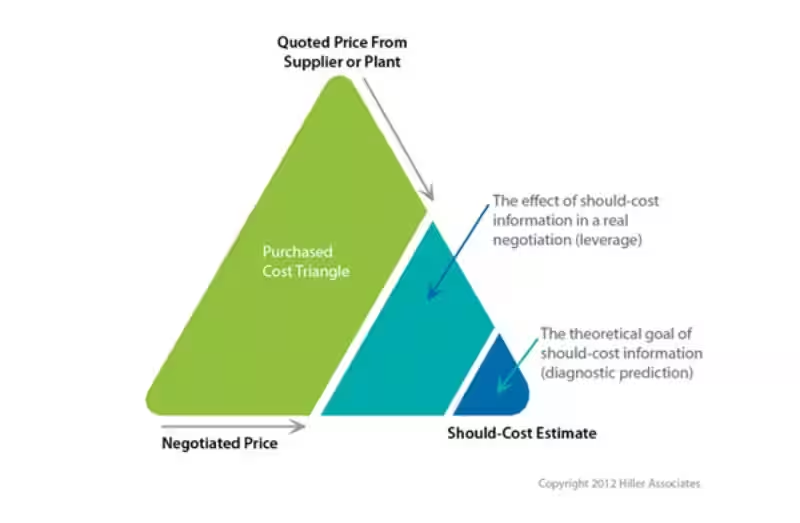
Is your procurement process leaving money on the table? Are you struggling to negotiate favorable prices with suppliers, or feeling uncertain about the true cost of your products? If so, understanding the should-cost model could be the key to unlocking significant cost savings and improving your bottom line.
What is Should-Cost Analysis?
Should-cost analysis is a powerful methodology for determining the accurate cost of a product or service, not based on historical data or supplier quotes, but on a meticulous bottom-up assessment of all its components. It's a sharp contrast to traditional "top-down" approaches that can lead to inaccurate cost projections and missed opportunities. This process dives deep into the production process, examining every aspect from raw materials to manufacturing, labor, and overhead, to arrive at a realistic cost projection. This granular approach ensures a more accurate cost estimate, setting a foundation for robust supplier negotiations. It's more than just a cost calculation; it's a strategic tool for optimizing your entire supply chain.
Instead of relying on previous estimates, the should-cost model meticulously analyzes the individual components and processes. This involves a comprehensive breakdown of all cost drivers, including direct materials, labor, manufacturing overhead, quality control, and even waste management. This detailed examination allows you to uncover hidden efficiencies and potential savings within the product's lifecycle.
The Bottom-Up Approach to Cost Accuracy
The strength of the should-cost model lies in its bottom-up approach. This meticulous examination of individual cost elements, rather than relying on the often-flawed aggregated data of previous orders, ensures a more accurate and comprehensive view of the true cost of production. It's like dissecting a machine to understand how each part contributes to the final output, enabling a deeper understanding of the cost structure and potential for improvement. No aspect is overlooked, leading to a more realistic and reliable estimate.
This detailed methodology aims to uncover all the potential cost savings that might otherwise be hidden. By scrutinizing each cost element, the should-cost model helps you see where modifications or alternative solutions could significantly reduce expenditure without compromising quality. This approach goes beyond simple cost-cutting; it's about optimizing the entire process.
Key Elements of Should-Cost Modeling
- Material Costs: Analyzing the current market price of raw materials and exploring potential alternative suppliers.
- Labor Costs: Evaluating the efficiency of the current labor process, examining the need for specialized skills, and potential automation opportunities.
- Manufacturing Overhead: Identifying and quantifying all indirect costs associated with production, including facility expenses, maintenance, and utilities.
- Quality Control Costs: Assessing the cost of quality assurance measures, including inspections and rework.
- Waste Management Costs: Analyzing the costs of waste disposal and the potential for reducing waste through process improvements.
This detailed breakdown is crucial for an accurate should-cost analysis. It underscores that cost is not simply the price paid; it encompasses all associated expenses throughout the entire product lifecycle.
The Power of Should-Cost Analysis in Procurement
The benefits of should-cost analysis extend far beyond the negotiation table. This detailed understanding of costs empowers more informed decisions at every stage of the product lifecycle.
Enhanced Negotiation Power: By having a precise "should cost" figure, you're equipped with a strong foundation for negotiations. Suppliers are presented with a fact-based analysis of production costs, enabling more rational and efficient discussions.
Improved Budgeting and Planning: An accurate should-cost model allows for more accurate budgeting and forecasting, enabling proactive planning and resource allocation throughout the product lifecycle. This helps to identify and mitigate potential cost overruns, ensuring a smoother and more predictable production schedule.
Optimized Design and Development: The insights gained from a should-cost analysis can identify potential design improvements to reduce costs without compromising quality. This can lead to faster time-to-market and a more efficient product development process.
Improved Supplier Relationships: By approaching negotiations with a clear understanding of costs and potential improvements, you build a more collaborative and transparent relationship with suppliers. A detailed "should cost" analysis can create a win-win situation for both parties, leading to stronger and more reliable supplier relationships.
The Future of Should-Cost Modeling
Should-cost modeling is continuously adapting to meet the demands of the modern business environment. The incorporation of innovative technologies, such as AI and machine learning, is automating the analysis process, increasing accuracy, and reducing errors. This integration is vital in today's fast-paced market, where speed and accuracy are paramount.
By embracing this dynamic methodology, businesses can gain a significant competitive advantage. Should-cost modeling empowers procurement teams to make informed decisions, negotiate more effectively, and ultimately reduce costs while fostering stronger supplier relationships. The key is to see beyond the initial cost and delve into the detailed breakdown of each cost driver, ultimately leading to a more effective and profitable procurement strategy.
Should Cost Analysis: A Comprehensive Guide
Introduction:
Should cost analysis is a vital tool in procurement and supply chain management. It differs from traditional top-down methods by employing a bottom-up approach, meticulously examining all aspects of a product's creation to determine its accurate cost. This detailed evaluation leads to a precise "should cost" target, which forms the basis for effective supplier negotiations, ultimately driving cost reductions, improved budgeting, and faster time to market.
What is Should Cost Analysis?
Should cost analysis is a structured approach to determining the true cost of producing a product or service. Instead of relying on historical data or existing orders, it meticulously breaks down each component of the product's creation, including materials, labor, manufacturing processes, and all associated costs (e.g., overhead, quality control). This bottom-up approach ensures a comprehensive understanding of all cost elements, uncovering potential savings and inefficiencies.
Key Benefits of Should Cost Analysis:
- Accurate Cost Targets: Establishes a precise cost benchmark for negotiations, avoiding reliance on outdated or inaccurate data.
- Improved Supplier Negotiations: Provides strong, fact-based evidence for achieving desired prices from suppliers.
- Enhanced Profitability: Leads to proactive cost reductions, enabling higher profitability for the organization.
- Better Budgeting and Planning: Creates a more accurate forecast of production costs, facilitating effective resource allocation and budget management.
- Faster Time to Market: Provides insights into potential process improvements and cost-effective designs, accelerating the time it takes to bring products to market.
- Improved Product Design: Uncovers areas for potential improvement in the manufacturing process, resulting in more efficient and cost-effective designs.
- Stronger Supplier Relationships: By fostering transparency and mutual understanding of costs, should cost analysis builds stronger relationships with suppliers.
How Does Should Cost Analysis Work?
The process involves a detailed breakdown of each component and stage of production. This includes not only direct materials and labor costs, but also indirect costs such as overhead, quality control, and waste management. Each cost element is analyzed individually to ensure accuracy. The analysis aims to uncover potential cost savings and inefficiencies in the product's lifecycle, allowing for the identification of more cost-effective solutions.
Key Considerations in Should Cost Analysis:
- Understanding Cost Drivers: Identifying factors that impact costs (e.g., material price fluctuations, labor rates, manufacturing processes).
- Dynamic Data Updates: Incorporating internal and external data changes (e.g., market conditions, material costs) to keep cost estimates current.
- Cross-Functional Collaboration: Bringing together different teams (e.g., product development, cost engineering, supply chain) to ensure a comprehensive analysis.
- Market-Driven Projections: Adapting models to changing market conditions, such as fluctuating raw material prices.
Conclusion:
Should cost analysis is a powerful tool for procurement and supply chain management, empowering organizations to make informed decisions, negotiate effectively, and ultimately drive cost-effective manufacturing strategies. By adopting this data-driven approach, companies can achieve greater profitability, optimize resource allocation and speed up the time it takes to get products to market.