
Sample Motion for Ineffective Assistance of Counsel: A Critical Tool in Federal Criminal Sentencing
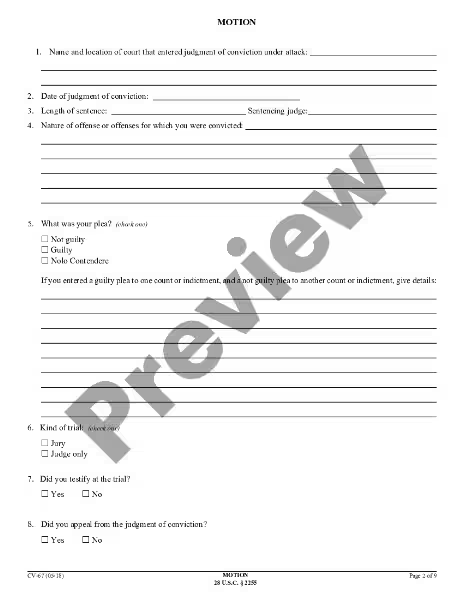
A federal criminal defendant's fate often hinges on the sentencing phase. This crucial juncture, where the punishment is determined, necessitates meticulous legal representation. Often, the quality of legal counsel during sentencing can be the difference between a significantly lighter sentence and a harsher one. Failing to have effective representation at sentencing can lead to a substantial injustice. This article will examine this issue and provide a useful framework for understanding a sample motion for ineffective assistance of counsel.
- The Significance of Ineffective Assistance of Counsel at Sentencing
- Key Areas of Ineffective Assistance at Sentencing:
- Structuring a Sample Motion for Ineffective Assistance of Counsel:
- Conclusion:
-
Ineffective Assistance of Counsel (IAC) Sample Motion FAQs
- What is Ineffective Assistance of Counsel (IAC)?
- When is IAC relevant in federal criminal sentencing?
- What are some examples of IAC in federal sentencing?
- How does a defendant demonstrate IAC in a sentencing context?
- What are the procedural steps in filing an IAC motion?
- What should I do if I believe I have a claim of IAC?
- Is a sample motion a substitute for legal counsel?
- What is the role of a higher court in reviewing an IAC motion?
The Significance of Ineffective Assistance of Counsel at Sentencing
Federal criminal cases, by their nature, almost always involve sentencing. This fact underscores the critical importance of effective assistance from defense counsel during this stage. Inadequate preparation and participation can lead to detrimental outcomes, potentially impacting a defendant's freedom and future. The Sixth Amendment guarantees the right to effective assistance of counsel, and this right extends to the sentencing phase, ensuring a fair and just process.
The argument often centers on the defense counsel's failure to adequately address crucial aspects of the sentencing process. This failure can take various forms, ranging from overlooking legal arguments to neglecting crucial evidence. This article aims to address the fundamental issues associated with ineffective assistance of counsel during sentencing, focusing on how certain types of failures can potentially lead to unfair or prejudicial outcomes.
Key Areas of Ineffective Assistance at Sentencing:
A critical analysis of ineffective assistance of counsel claims often revolves around specific failures during the sentencing process. The following examples are crucial to understand in the context of crafting a sample motion:
1. Miscalculation of Sentencing Guidelines:
Defense attorneys must meticulously scrutinize the application of the Sentencing Guidelines, ensuring accurate calculations of base offense levels and enhancements. A substantial misstep, like failing to object to a miscalculated base offense level, could have significant consequences. This issue is a common theme in ineffective assistance cases and has been addressed in several key court decisions, demonstrating a persistent problem.
2. Failure to Object to Inappropriate Enhancements:
Enhancements, such as the career offender enhancement, can substantially increase a defendant's sentence. A crucial part of a defense attorney's role is to challenge the appropriateness of these enhancements, demonstrating that they don't apply. Failure to do so can be a substantial error, potentially leading to a significantly harsher sentence.
3. Failure to Address Procedural Errors:
Procedural errors, such as delays in receiving presentence reports or a lack of adherence to filing requirements, often go unnoticed by the defense. These seemingly small procedural errors can have a consequential impact on the outcome. A comprehensive sample motion for ineffective assistance of counsel will naturally include procedural errors.
4. Failure to Argue for Mitigation:
A successful defense often hinges on presenting mitigating circumstances. This can include arguments for downward departures based on factors like minor participation in the crime. Failing to utilize these arguments can be detrimental to the defendant's case.
5. Failure to Object to Exceeding Statutory Maximums:
Sentences must adhere to statutory maximum limits. Failure to object when a sentence exceeds these limits constitutes a serious error in judgment, needing careful consideration in a sample motion.
6. Failure to Object to Incriminating, Immunized Statements:
A defense attorney must closely examine the admissibility of any incriminating statements, especially those made under immunity agreements. A failure to appropriately challenge the use of such statements can have a significant impact on the final sentence.
Structuring a Sample Motion for Ineffective Assistance of Counsel:
Successfully arguing for ineffective assistance requires a meticulous and nuanced approach. A sample motion will typically follow these structural elements, focusing on demonstrating the deficient performance of counsel and the prejudice it caused. The motion naturally needs to outline the specific grounds for the argument in a clear and concise manner.
- Case Overview: A concise summary of the case's background and the defendant's conviction.
- Performance Deficiency: Specific instances where counsel's performance fell short of the expected standard, providing detailed evidence and citations. This will often include a detailed and documented history of the attorney's shortcomings.
- Prejudice: Demonstrating that the alleged deficiencies in performance caused prejudice to the defendant. This requires showing how the outcome would likely be different with effective counsel.
- Legal Standard: Clear application of the Strickland v. Washington standard, detailing the objective standard of reasonableness and the required prejudice.
- Supporting Documentation: Including relevant legal documents, transcripts, and other evidence to support the claims.
- Relief Requested: Clearly stating what remedy the defendant seeks, such as a new sentencing hearing or resentencing.
Conclusion:
Ineffective assistance of counsel during sentencing is a serious concern in federal criminal cases. A sample motion for ineffective assistance of counsel serves as a valuable tool for defendants who believe their rights were violated. It's crucial to remember that even minor errors at sentencing can have significant Sixth Amendment implications. If you believe you were prejudiced by ineffective assistance at sentencing, seeking the guidance of an experienced attorney is essential. This article serves as a guide to understanding the potential avenues for recourse in such situations.
Ineffective Assistance of Counsel (IAC) Sample Motion FAQs
This FAQ section addresses common questions about motions for ineffective assistance of counsel, specifically in the context of federal criminal sentencing.
What is Ineffective Assistance of Counsel (IAC)?
IAC occurs when a defense attorney's performance falls below an objective standard of reasonableness and this deficient performance prejudiced the defendant, potentially impacting the outcome of the case. This is typically evaluated through the lens of Strickland v. Washington.
When is IAC relevant in federal criminal sentencing?
IAC is a significant concern in federal criminal sentencing because nearly all federal defendants face sentencing, and inadequate preparation or participation by defense counsel during this crucial stage can lead to prejudicial outcomes.
What are some examples of IAC in federal sentencing?
Examples include:
- Miscalculation of Sentencing Guidelines: Failure to object to incorrect base offense levels or enhancements.
- Failure to Object to Inappropriate Enhancements: Failing to challenge enhancements like career offender status when not applicable.
- Failure to Address Procedural Errors: Missing deadlines, procedural errors regarding presentence reports, or failing to challenge filing requirements for enhancements.
- Failure to Argue for Mitigation: Missing opportunities for downward departures based on mitigating circumstances.
- Failure to Object to Exceeding Statutory Maximums: Allowing a sentence to exceed legally permissible limits.
- Failure to Object to Incriminating, Immunized Statements: Not challenging the use of statements obtained through cooperation agreements.
How does a defendant demonstrate IAC in a sentencing context?
A motion for IAC must demonstrate both deficient performance and prejudice. Under the performance prong, the defendant must show their attorney's actions fell below the expected standard of care, supporting this with factual evidence like court transcripts, witness statements, or investigative records. Under the prejudice prong, the defendant must show a reasonable probability that the outcome would have been different but for the deficient performance. This often involves outlining alternative scenarios where a more effective strategy might have led to a more favorable outcome.
What are the procedural steps in filing an IAC motion?
The specific procedural steps vary by jurisdiction, but generally include:
- Identifying the grounds for the motion: Clearly articulating the specific instances of deficient performance and their impact on the case.
- Legal citations and support: Citing relevant legal precedents like Strickland v. Washington.
- Narrative of the case: Providing context by outlining the defendant's conviction and the procedural history.
- Relief sought: Clearly outlining what the defendant wants the court to do (e.g., a new sentencing hearing, a reduction in sentence).
What should I do if I believe I have a claim of IAC?
Seek legal counsel. An attorney experienced in federal sentencing and IAC claims can thoroughly evaluate the situation, ensure compliance with procedural requirements, and represent your interests effectively.
Is a sample motion a substitute for legal counsel?
No. A sample motion is a tool to understand the elements of an IAC claim, but it's crucial to have legal counsel tailor a motion that specifically addresses your case's unique circumstances.
What is the role of a higher court in reviewing an IAC motion?
A higher court reviewing an IAC motion will assess whether the lower court properly applied the Strickland v. Washington standard and whether the defendant's claims are supported by sufficient evidence.
This FAQ provides general information and should not be considered legal advice. Consult with an attorney for guidance on any specific legal matter.