
Understanding Sample Motion to Dismiss: When and How to Use One
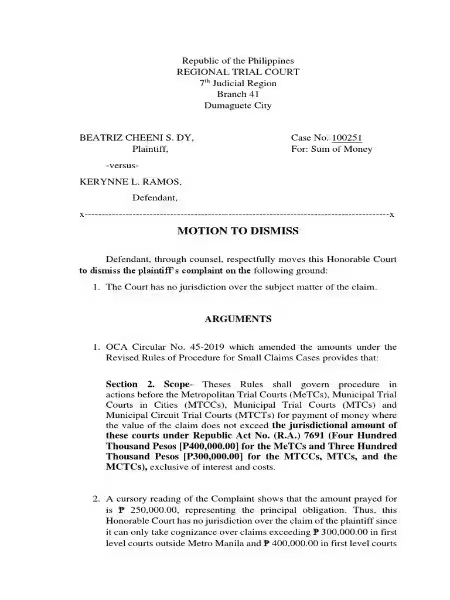
Facing a lawsuit can be daunting. One of the earliest strategic moves a defendant might make is filing a motion to dismiss. This document argues that the plaintiff's complaint is legally insufficient and should be dismissed by the court. Understanding this process is crucial, especially when you are considering using a sample motion to dismiss as a guide. This article will explore the intricacies of crafting and filing such a motion.
- What is a Motion to Dismiss?
- Grounds for a Motion to Dismiss
- Using a Sample Motion to Dismiss: A Cautious Approach
- Crafting a Compelling Motion to Dismiss
-
Frequently Asked Questions: Sample Motion to Dismiss
- What is a Motion to Dismiss?
- What are the common grounds for a Motion to Dismiss?
- What does a sample motion to dismiss typically include?
- How do I find a sample motion to dismiss?
- Can I use a sample motion to dismiss as-is?
- What happens after a motion to dismiss is filed?
- Are there different types of motions to dismiss?
- Should I represent myself in filing a motion to dismiss?
What is a Motion to Dismiss?
A motion to dismiss, also known as a demurrer in some jurisdictions, is a formal request to a court to dismiss a case because of legal insufficiency. It's not about arguing the facts of the case – that comes later, if the motion fails. Instead, it focuses on whether the complaint, as written, states a legally valid claim. This process allows for early resolution of cases that lack merit, saving time, money, and resources for both parties involved.
The core argument in a motion to dismiss rests on the idea that even if everything the plaintiff states is true, it still doesn't meet the legal requirements to proceed. This could be due to various reasons, which we will explore further.
Grounds for a Motion to Dismiss
Several grounds can support a motion to dismiss. These grounds often overlap and can be used in combination. A successful motion to dismiss often requires a careful analysis of the specific laws and precedents relevant to the case.
Lack of Subject Matter Jurisdiction
This is a fundamental ground. The court must have the authority to hear the type of case presented. If the court lacks jurisdiction, the case must be dismissed, regardless of the merits of the claims. This is often a preliminary issue addressed early in the litigation process.
The plaintiff must prove the court has jurisdiction. This might involve demonstrating the correct venue or showing that a specific federal law grants the court authority to hear the claim. A defendant can use a sample motion to dismiss to clearly articulate why a court lacks jurisdiction.
Lack of Personal Jurisdiction
This relates to the court's power over a specific defendant. A court must have personal jurisdiction over a defendant before it can hear a lawsuit against them. This typically involves demonstrating that the defendant has sufficient contacts with the state where the court sits.
For example, if a company is sued in a state where it has no physical presence or significant business activity, it might file a motion to dismiss for lack of personal jurisdiction. This argument hinges on the defendant's connection (or lack thereof) to the jurisdiction.
Failure to State a Claim Upon Which Relief Can Be Granted
This is perhaps the most common ground for a motion to dismiss. It argues that even if all the facts alleged by the plaintiff are true, those facts do not constitute a legally recognized cause of action. The plaintiff simply hasn't presented a legally sufficient claim.
A sample motion to dismiss based on this ground would meticulously analyze each element of the alleged cause of action. It would show how the plaintiff’s complaint fails to adequately plead each necessary element according to the relevant legal standard.
Insufficient Service of Process
This ground alleges the defendant was not properly served with the complaint and summons, a critical step in initiating a lawsuit. Proper service ensures the defendant receives adequate notice of the lawsuit.
The rules governing service of process can be complex and vary by jurisdiction. A motion to dismiss based on this ground would detail the specific failings of the service of process, demonstrating that the defendant was not properly notified of the legal action against them.
Using a Sample Motion to Dismiss: A Cautious Approach
While a sample motion to dismiss can be a helpful starting point, it's imperative to understand that it's not a fill-in-the-blank form. Directly copying a sample without tailoring it to the specific facts and legal issues of your case is highly discouraged. Courts expect motions to be precisely tailored to the individual case.
Using a generic sample without modification can lead to a motion that is irrelevant, unconvincing, and ultimately unsuccessful. It could even reflect poorly on the legal representation.
Instead, think of a sample motion as a framework, a guide to the structure and elements a successful motion should include. It provides insight into the legal arguments, the required format, and the proper citation of legal authorities.
Crafting a Compelling Motion to Dismiss
A strong motion to dismiss should be:
- Clearly written and concise: Avoid unnecessary jargon and lengthy explanations.
- Well-organized: Follow a logical structure, making it easy for the judge to understand your arguments.
- Factually supported: Base your arguments on the facts presented in the plaintiff's complaint.
- Legally sound: Thoroughly research and cite relevant case law and statutes.
- Specifically tailored to your case: Do not simply copy a sample motion; adapt it to your unique circumstances.
A well-crafted motion to dismiss, even if unsuccessful, can significantly impact the course of litigation. It can narrow the issues in dispute, force the plaintiff to refine their claims, and potentially lead to a settlement.
Understanding the intricacies of a motion to dismiss is crucial for any defendant facing a lawsuit. While a sample motion to dismiss can serve as a useful educational tool and a framework for construction, it should never be used as a direct template. Always seek professional legal advice to ensure your motion is tailored to your specific situation, compliant with all relevant rules, and effectively presents your arguments to the court. A well-prepared motion can be a powerful tool in defending against a lawsuit, and this process, though complex, is a cornerstone of the legal system.
Since no content regarding a "sample motion to dismiss" was provided, I will create a hypothetical FAQ section based on general knowledge of motions to dismiss in legal proceedings. Remember, this is for informational purposes only and should not be considered legal advice. Consult with a legal professional for advice on your specific situation.
Frequently Asked Questions: Sample Motion to Dismiss
What is a Motion to Dismiss?
A Motion to Dismiss is a request to a court to dismiss a lawsuit or specific claims within a lawsuit. The moving party argues that even if all the allegations in the complaint are true, the plaintiff still cannot legally prevail. This can be due to various reasons, such as insufficient facts to state a claim, lack of jurisdiction, or improper venue.
What are the common grounds for a Motion to Dismiss?
Common grounds include failure to state a claim upon which relief can be granted (often shortened to "failure to state a claim"), lack of subject-matter jurisdiction (the court lacks the power to hear the type of case), lack of personal jurisdiction (the court lacks the power over the defendant), improper venue (the case is filed in the wrong location), and insufficient service of process (the defendant wasn't properly notified of the lawsuit).
What does a sample motion to dismiss typically include?
A sample motion to dismiss usually contains: (1) A formal heading identifying the court, case name, and the motion itself; (2) A statement of the grounds for the motion, clearly explaining why the case should be dismissed; (3) A concise statement of facts, focusing only on those relevant to the motion; (4) Legal arguments supporting the dismissal, citing relevant case law and statutes; (5) A request for relief, specifically asking the court to dismiss the case or specific claims; and (6) A conclusion.
How do I find a sample motion to dismiss?
You can find sample motions to dismiss online through legal research databases (like Westlaw or LexisNexis – subscription required), legal websites offering sample forms, or by searching for "[state] sample motion to dismiss" – replacing "[state]" with your relevant jurisdiction. However, remember that these are samples and should be adapted to your specific case facts and legal arguments. Using a generic sample without modification is risky.
Can I use a sample motion to dismiss as-is?
No. A sample motion is just a template. It must be adapted to fit the specific facts and legal arguments of your case. Simply changing the names and dates is insufficient. Improperly adapting a sample motion can weaken your argument or even lead to sanctions from the court. Legal counsel is recommended.
What happens after a motion to dismiss is filed?
After filing the motion, the opposing party (the plaintiff) will typically file an opposition brief. The court will then consider both the motion and the opposition before making a ruling. The court might grant the motion (dismissing the case), deny the motion (allowing the case to proceed), or grant the motion in part (dismissing some, but not all, claims).
Are there different types of motions to dismiss?
While the term "motion to dismiss" is often used broadly, there can be nuances depending on the specific rule or statute being invoked in the jurisdiction. For example, a Rule 12(b)(6) motion to dismiss (in federal court) challenges the legal sufficiency of the complaint, while a motion to dismiss for lack of personal jurisdiction challenges the court's power over the defendant.
Should I represent myself in filing a motion to dismiss?
While you can represent yourself (pro se), it’s highly recommended to seek legal counsel, especially for complex cases. Motion practice involves intricate legal rules and procedures, and a lawyer can significantly increase your chances of success.