
Progress on the Border Wall: A 2025 Update
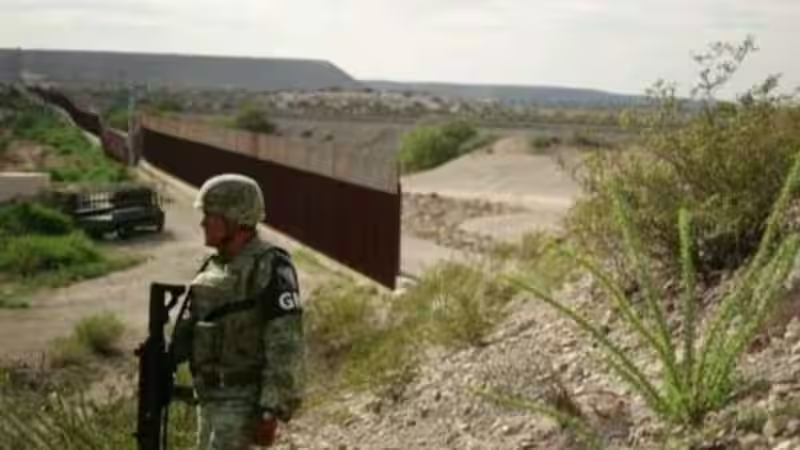
The ongoing construction of the border wall between the United States and Mexico remains a complex and highly debated topic. While significant progress has been made, the project's ultimate scope and completion remain uncertain, influenced by political will, funding, and legal challenges. This article will provide an overview of recent developments, focusing on the progress made in 2025.
- Major Construction Projects and Contracts
- Environmental Concerns and Waivers
- The Ongoing Political Landscape and Funding
- Impacts on Wildlife and the Environment: A Broader Perspective
- Conclusion: Progress, Challenges, and Uncertainties
-
Frequently Asked Questions: Border Wall Progress
- What is the current status of border wall construction?
- How is the government accelerating construction?
- Which areas are seeing the most significant wall construction?
- What is the funding source for these projects?
- What are the stated goals of the border wall construction?
- What are the potential environmental impacts of the wall?
- What is the total length of wall constructed or planned?
- Is the wall fully funded?
Major Construction Projects and Contracts
The Department of Homeland Security (DHS) has undertaken several large-scale construction projects in 2025, signaling a renewed commitment to expanding border wall infrastructure. These projects represent a substantial financial investment and demonstrate a clear prioritization of physical barriers within the overall border security strategy.
One significant undertaking is the awarding of a substantial contract to Fisher Sand & Gravel Co. This $309,463,000 contract covers the construction of approximately 27 miles of new border wall in Santa Cruz County, Arizona, within the Tucson Sector. This sector is known for high levels of illegal crossings and smuggling activities, making it a strategically important location for enhanced border security measures. The project utilizes funds allocated in Fiscal Year 2021, addressing gaps left by previously canceled contracts. The focus on this specific area highlights the government's efforts to target high-traffic zones for illegal entry.
Further emphasizing the administration’s commitment to rapid border wall expansion, Secretary Kristi Noem issued a waiver to expedite construction of another ~17 miles of border wall in the Rio Grande Valley Sector of Texas. This represents the fifth such waiver issued, showcasing a willingness to bypass certain environmental regulations, including the National Environmental Policy Act (NEPA), to accelerate project timelines. This aggressive approach prioritizes what the administration views as immediate security needs over potentially lengthy environmental review processes. This use of waivers highlights a deliberate policy choice to prioritize rapid wall construction.
Environmental Concerns and Waivers
The expedited construction of border wall segments, facilitated by the use of waivers to bypass environmental regulations, has introduced significant controversy. While proponents argue that the enhanced border security outweighs potential environmental impacts, critics point to potential harm to wildlife habitats and ecosystems.
The waivers, granted under Section 102 of the Illegal Immigration Reform and Immigrant Responsibility Act of 1996, allow for quicker construction, minimizing potential delays, but this comes at the potential cost of thorough environmental review and mitigation efforts. The long-term environmental consequences of this approach remain a subject of ongoing debate and scrutiny. The administration's justification centers on the urgent need to address what it views as a critical security situation. However, this justification is often challenged by environmental groups and conservation organizations.
The Ongoing Political Landscape and Funding
The progress on the border wall is inextricably linked to the political landscape and available funding. The success of the project depends significantly on the continued allocation of resources and political will. While significant funds have been dedicated to the project, potential funding constraints or shifts in political priorities could significantly impact ongoing and future construction efforts. The sustainability of the current pace of progress hinges on the continued support of these factors.
The completion of the wall, as originally envisioned, remains contingent on factors beyond current construction efforts. The project's ultimate scope and timeline are still subject to change due to budgetary limitations and political considerations. Any significant shifts in political views or funding priorities could lead to substantial alterations in the wall’s overall development.
Impacts on Wildlife and the Environment: A Broader Perspective
Beyond the immediate construction efforts, a broader consideration of the environmental and ecological consequences is crucial. The construction of the border wall has generated significant concern among wildlife conservation groups. The wall disrupts natural wildlife migration patterns, leading to habitat fragmentation and potential negative impacts on the populations of various species.
The construction of the wall, especially in sensitive regions, is causing significant fragmentation of habitats, affecting the movement of various animal species such as deer, pronghorn, black bears, and Mexican gray wolves. This impedes their natural behaviors, including breeding and foraging, potentially threatening their long-term survival. The potential for long-term disruption to delicate ecosystems is a major area of ongoing study and concern.
The completion of the wall in certain areas, such as the San Rafael Valley, creates a nearly impassable barrier spanning almost 99 miles, posing an unprecedented obstacle to wildlife movement in North American history. This significant disruption to natural migration patterns underscores the gravity of the situation, prompting calls for comprehensive mitigation strategies and long-term monitoring of wildlife populations affected by the wall. The long-term consequences for biodiversity and the delicate balance of the region’s ecosystems will require extensive monitoring and assessment for years to come. Organizations like the Wildlands Network are actively tracking these impacts and advocating for measures to minimize harm.
Conclusion: Progress, Challenges, and Uncertainties
The progress on the border wall in 2025 is substantial, marked by significant contract awards and the completion of several miles of new barriers. However, the project's future remains uncertain, contingent on continued funding, political support, and the navigation of ongoing environmental concerns. The wall's impact on wildlife and ecosystems demands careful consideration and mitigation strategies. The ongoing debate surrounding the project's broader implications underscores the need for informed and balanced discussions to ensure a responsible approach to border security while minimizing potential harm to the environment. The long-term consequences of this monumental undertaking will continue to be debated and analyzed for years to come.
Frequently Asked Questions: Border Wall Progress
What is the current status of border wall construction?
Significant progress is being made on the construction of new border wall sections. Recent contracts awarded by the Department of Homeland Security (DHS) include a $309,463,000 contract to Fisher Sand & Gravel Co. for approximately 27 miles of wall in Santa Cruz County, Arizona, and a separate project in the Rio Grande Valley sector of Texas, totaling approximately 17 miles. These projects address gaps in existing barriers and focus on areas with high illegal entry and smuggling activity. Additional projects are underway in various sectors, with a combination of permanent and temporary barriers being installed.
How is the government accelerating construction?
The administration is utilizing waivers to bypass certain environmental regulations, specifically the National Environmental Policy Act (NEPA), to expedite construction timelines. This approach prioritizes the immediate security benefits of the wall over potentially lengthy environmental review processes. This authority is granted under Section 102 of the Illegal Immigration Reform and Immigrant Responsibility Act of 1996.
Which areas are seeing the most significant wall construction?
Currently, major construction is focused on the Tucson Sector in Arizona (Santa Cruz County) and the Rio Grande Valley Sector in Texas. Additional projects are ongoing in various other sectors along the border.
What is the funding source for these projects?
The projects are primarily funded by Fiscal Year 2021 appropriations. Further funding is contingent upon the passage of additional legislation.
What are the stated goals of the border wall construction?
The stated goal is to impede illegal entry and smuggling, thereby supporting DHS efforts to combat transnational criminal organizations involved in drug and human trafficking. The wall is intended as a key component of a broader border security strategy.
What are the potential environmental impacts of the wall?
The expedited construction, achieved through waivers bypassing NEPA, has raised concerns regarding potential environmental impacts. These concerns involve the potential disruption of wildlife migration patterns and other ecological effects. Comprehensive environmental reviews have been largely bypassed in favor of swift construction.
What is the total length of wall constructed or planned?
While precise figures fluctuate due to ongoing projects and the use of temporary barriers, the current construction and planned additions represent a substantial increase in border wall length. Precise totals are difficult to state definitively due to the ongoing and evolving nature of the projects.
Is the wall fully funded?
The funding for the wall is ongoing and subject to the passage of additional legislation, namely the "One Big Beautiful Bill," which is currently pending in the Senate. The completion of the wall depends on the passage of this bill.