
Understanding Military Citizenship: A Guide to Naturalization for U.S. Military Personnel
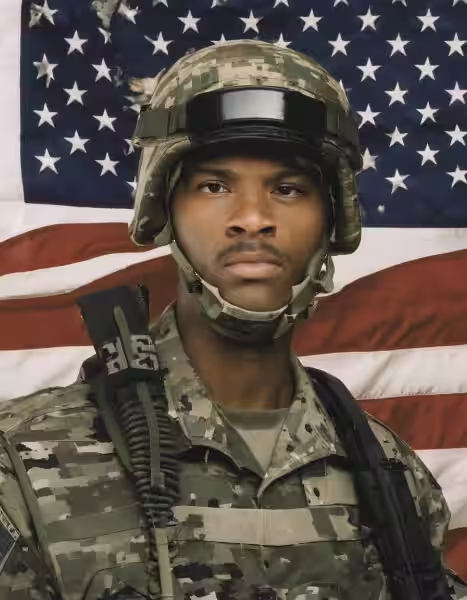
Obtaining U.S. citizenship can be a complex process, but for members of the U.S. military, the path is often expedited. This article explores the concept of military citizenship, detailing the legal pathways and processes available to those who have served or are currently serving in the armed forces. We'll break down the key aspects of the process to make it easier to understand.
- Expedited Pathways to Citizenship: INA Sections 328 and 329
- The Application Process: A Step-by-Step Guide
-
Posthumous Citizenship: Honoring the Sacrifice
- What is Military Citizenship?
- What are the Requirements for Military Citizenship under INA Section 328?
- What are the Requirements for Military Citizenship under INA Section 329?
- What forms do I need to apply for Military Citizenship?
- What is the application process?
- What if the service member died during a period of hostility?
- Where can I find more information?
Expedited Pathways to Citizenship: INA Sections 328 and 329
The Immigration and Nationality Act (INA) offers two primary avenues for military personnel seeking expedited naturalization: sections 328 and 329. These sections provide significant advantages over the standard naturalization process, streamlining the requirements and reducing the waiting time.
The key difference between these sections lies in the duration and nature of military service. Section 328 is broader, applying to those who have served honorably for at least one year at any point in their military career. This section, while offering expedited processing, still requires applicants to meet certain general naturalization requirements. This includes demonstrating good moral character for the five years preceding application, passing English and civics tests, and maintaining lawful permanent resident status.
However, section 329 offers even greater benefits. This section is specifically designed for those who served honorably during designated periods of hostility, encompassing various conflicts from World War I to the present-day Global War on Terror. The most significant benefit here is the waiver of the typically stringent continuous residence and physical presence requirements. While good moral character, English proficiency, and civics knowledge are still mandatory, the residency requirements are significantly lessened, making it a more accessible path for those who served during wartime.
Specific Requirements Under Each Section
Let's delve deeper into the specifics of each section:
Under Section 328: You must have served honorably for at least one year, be a lawful permanent resident at the time of the interview, and provide proof of honorable service (like a DD Form 214 or equivalent). You'll also need to meet standard requirements such as demonstrating good moral character for five years, passing the English and civics tests, and fulfilling specific residence and physical presence requirements.
Under Section 329: You must have served honorably during a designated period of hostility. The requirement for continuous residence and physical presence is waived. However, you must demonstrate good moral character for one year prior to application, pass the English and civics tests, and provide proof of honorable service during a period of hostility. It's important to note that your status as a lawful permanent resident or your physical presence in the US, Canal Zone, American Samoa, Swains Island, or aboard a US public vessel at the time of your enlistment, re-enlistment, extension of service, or induction is crucial.
The Application Process: A Step-by-Step Guide
The application process, regardless of the section used (328 or 329), begins with Form N-400 (Application for Naturalization). Currently serving members use Form N-426 for service certification; former members submit their discharge documentation. Fingerprinting is a mandatory step, often utilizing existing records or through application support centers (ASCs).
A crucial stage is the naturalization interview, where your eligibility is assessed, and your English and civics knowledge are tested. Many military installations have dedicated USCIS liaisons to assist service members throughout this process, providing invaluable support and guidance. Upon approval, you'll take the Oath of Allegiance, officially becoming a U.S. citizen.
The key to a successful application is meticulous attention to detail. Ensure you gather all necessary documentation well in advance, including proof of honorable service and evidence supporting your claim of good moral character. Familiarizing yourself with the specific requirements for either Section 328 or 329, based on your service history, is paramount. Don't hesitate to utilize available resources, such as the USCIS Policy Manual and the assistance of military liaisons. Their expertise can significantly aid in navigating the complexities of the application.
Posthumous Citizenship: Honoring the Sacrifice
The INA also addresses posthumous citizenship for service members who died due to injuries or illnesses incurred during a designated period of hostility (Section 329A). Form N-644 allows for the granting of citizenship posthumously, within two years of death. This provision extends beyond the individual, often benefiting surviving family members. This demonstrates the government's commitment to acknowledging the ultimate sacrifice made by those who served their country. This process underlines the significance placed on military service within the framework of U.S. citizenship.
In conclusion, military citizenship offers a unique and often simpler path to naturalization for those who have served or are currently serving in the U.S. military. By understanding the nuances of INA sections 328 and 329 and utilizing the available resources and support, military personnel can successfully navigate this process and achieve their goal of becoming U.S. citizens. The provisions for posthumous citizenship further highlight the profound respect and recognition afforded to those who have served their nation with distinction.
What is Military Citizenship?
Military citizenship refers to the expedited naturalization process available to eligible members of the U.S. armed forces. This process, outlined in sections 328 and 329 of the Immigration and Nationality Act (INA), streamlines the path to citizenship for those who have served honorably, often reducing or eliminating some standard naturalization requirements.
What are the Requirements for Military Citizenship under INA Section 328?
INA Section 328 applies to individuals who have served honorably in the U.S. armed forces for at least one year. While general requirements like good moral character (for five years prior to application), English proficiency, and civic knowledge still apply, some may be modified or waived. Crucially, applicants must be lawful permanent residents at the time of their naturalization interview and provide proof of honorable service (DD Form 214, NGB Form 22, or equivalent). Specific residence and physical presence requirements must also be met.
What are the Requirements for Military Citizenship under INA Section 329?
INA Section 329 covers those who served honorably during specific periods of hostility, ranging from World War I to the present. A key benefit is the exemption from the usual continuous residence and physical presence requirements. However, good moral character (for one year prior to application), English proficiency, and civic knowledge are still necessary. Proof of honorable service during a designated period of hostility is required. Applicants must have been a lawful permanent resident or physically present in the U.S., certain U.S. territories, or aboard a U.S. public vessel at the time of enlistment.
What forms do I need to apply for Military Citizenship?
All applicants must complete Form N-400 (Application for Naturalization). Currently serving members also use Form N-426 for service certification; former members submit their discharge documentation.
What is the application process?
The process involves submitting the necessary forms and documentation, fingerprinting (potentially using existing records), and a naturalization interview to assess eligibility and test English and civics knowledge. Upon approval, the applicant takes the Oath of Allegiance and becomes a U.S. citizen. Many military installations have USCIS liaisons to assist with the process.
What if the service member died during a period of hostility?
For service members who died due to injuries or illnesses incurred during a designated period of hostility, posthumous citizenship may be granted via Form N-644, filed within two years of death. This can also extend benefits to surviving family members.
Where can I find more information?
For detailed information and the most up-to-date requirements, consult the USCIS website and the USCIS Policy Manual. Military liaisons at your installation can also provide valuable assistance. It's crucial to carefully review the specific requirements of INA sections 328 or 329 to determine your eligibility.