
Understanding Migration in Technology: A Guide to Seamless Transitions
Migration in technology is a broad term encompassing the process of moving data, applications, or entire IT infrastructures from one system to another. This isn't simply a matter of copying files; it's a strategic initiative requiring careful planning, execution, and validation to ensure minimal disruption and maximum efficiency. This article will delve into the various aspects of technology migration, offering valuable insights for individuals and organizations undertaking such projects.
- Why Migrate? The Driving Forces Behind Technological Change
- The Three Pillars of Successful Migration: Planning, Execution, and Validation
- Types of Migration in Technology
- Conclusion: Embracing Change Through Strategic Migration
-
Frequently Asked Questions: Technology Migration
- What is technology migration?
- Why would a company undertake technology migration?
- What are the stages of a technology migration?
- What factors influence the complexity of a technology migration?
- What is the difference between online and offline migration?
- What is database migration, and how does it differ from general data migration?
- How can I minimize risks during a technology migration?
- What are the benefits of technology migration?
Why Migrate? The Driving Forces Behind Technological Change
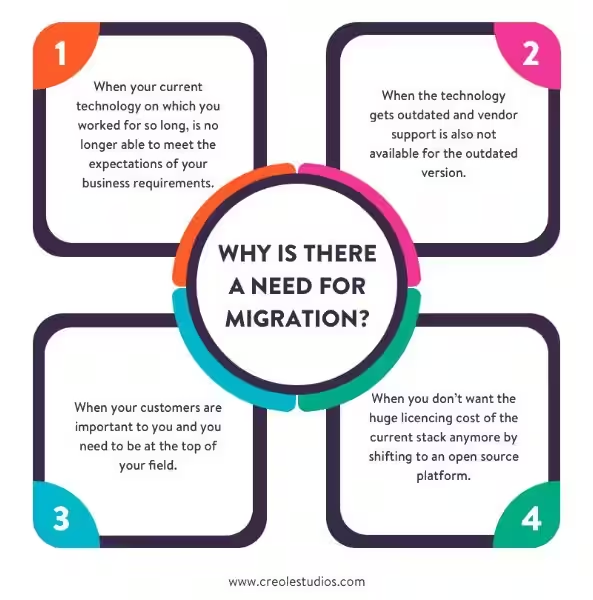
Many factors can necessitate a technology migration. Sometimes, it's about upgrading to newer, more powerful hardware or software. Other times, it's a shift to a different platform altogether—perhaps moving from an on-premise system to the cloud, or switching to a new database management system.
The decision to migrate is often driven by a combination of factors: improving performance and efficiency, reducing costs, enhancing security, increasing scalability, and gaining access to new capabilities. For example, a company might migrate to the cloud to reduce infrastructure costs, leverage scalable resources, or access advanced analytics tools. Conversely, they might migrate from an outdated legacy system to a modern platform to improve security and user experience.
The Three Pillars of Successful Migration: Planning, Execution, and Validation
The success of any technology migration hinges on three crucial stages:
Planning: Laying the Foundation for a Smooth Transition
Thorough planning is paramount. Neglecting this stage often leads to costly delays, unexpected complications, and even complete project failure. This phase involves a comprehensive assessment of the current system, defining clear objectives, and developing a detailed migration plan.
Key aspects of the planning stage include:
- Data Assessment: Determining the volume, types, and structure of data to be migrated.
- Timeline Definition: Establishing a realistic timeframe for the entire process, considering potential delays and contingencies.
- Resource Allocation: Identifying and securing the necessary human resources, tools, and budget.
- Risk Assessment: Identifying potential risks and developing mitigation strategies.
- Testing Strategy: Defining a robust testing plan to ensure data integrity and system functionality after the migration.
Proper planning also includes choosing the right migration approach. This could be a big bang migration, where everything is moved at once, or a phased migration, where the system is moved in stages. The best approach depends on factors like the size and complexity of the system, the acceptable level of downtime, and the overall risk tolerance.
Execution: The Act of Migration
Once the planning phase is complete, the execution phase begins. This is where the actual data and application transfer occurs. This phase can be complex and require specialized skills, depending on the type of migration. For instance, migrating a large database might involve specialized scripting and database administration expertise.
This is also where the chosen migration method takes center stage. As mentioned before, a big bang approach involves a full cutover to the new system at a pre-defined point in time. This is the fastest but also the riskiest approach as it can result in significant downtime. Conversely, a phased migration allows gradual transition, minimizing downtime but extending the overall project duration. There are also options like a parallel migration, running both old and new systems simultaneously, and a staged migration, where different parts of the system are migrated sequentially.
Validation: Ensuring a Successful Outcome
The final stage is validation, which ensures that the data has been migrated correctly and that the new system is functioning as expected. This involves rigorous testing and verification to confirm data integrity, system stability, and performance.
This stage often includes:
- Data Integrity Checks: Verifying that all data has been transferred accurately and completely.
- System Performance Testing: Assessing the performance of the new system under various load conditions.
- User Acceptance Testing: Allowing users to test the new system and provide feedback.
- Post-Migration Monitoring: Continuously monitoring the new system's performance and stability after the migration.
Types of Migration in Technology
While the three-stage process remains constant, the specifics vary depending on the type of migration:
- Data Migration: This involves moving data from one storage system to another, often driven by the need for increased capacity, improved performance, or reduced costs.
- Database Migration: A specialized subset of data migration focusing on transferring data between different database systems. This often requires schema conversion and careful planning to ensure compatibility.
- Application Migration: This involves moving applications from one platform or environment to another, often driven by the need for modernization, improved scalability, or enhanced security.
- Server Migration: Moving server workloads from one physical or virtual server to another, often to improve performance, consolidate resources, or migrate to the cloud.
Conclusion: Embracing Change Through Strategic Migration
Migration in technology is an inevitable part of the evolution of any IT infrastructure. By understanding the driving forces behind migration, following a structured approach, and prioritizing careful planning and validation, organizations can minimize risks and maximize the benefits of this strategic initiative. A well-executed migration can result in significant improvements in efficiency, performance, security, and cost-effectiveness, ultimately paving the way for future growth and innovation.
Frequently Asked Questions: Technology Migration
What is technology migration?
Technology migration, specifically focusing on data migration, is the process of strategically moving data and applications from one storage system, platform, or application to another. It's more than just copying; it's a comprehensive initiative aimed at improving performance, reducing costs, enhancing security, and integrating new functionalities. This can include migrating databases, servers, or entire applications.
Why would a company undertake technology migration?
Companies migrate their technology for various reasons, including:
- Increased storage capacity: Handling growing data volumes requires a more robust storage solution.
- Improved performance and efficiency: Outdated systems can be slow and inefficient. Migration to newer technologies can significantly improve data management speed and responsiveness.
- Reduced operational costs: New systems can lower infrastructure and maintenance costs.
- Minimized physical infrastructure: Cloud migration, for example, eliminates the need for large server rooms and on-site hardware.
- Integration of new functionalities: Migration allows companies to adopt new features and capabilities unavailable in their existing systems.
- Enhanced security: Moving to a more secure platform strengthens data protection and reduces vulnerability to threats.
- Addressing vendor lock-in: Moving away from a vendor whose support is ending or whose pricing is becoming prohibitive.
- Compliance requirements: Meeting new industry regulations or standards.
What are the stages of a technology migration?
Technology migration typically involves three key phases:
-
Planning: This crucial phase involves assessing the existing system, defining goals, selecting the target platform, developing a detailed migration plan, establishing a budget and timeline, and outlining risk mitigation strategies. Data volume, timeframe, workload impacts, and security protocols are all carefully considered.
-
Execution: This is where the actual data and application transfer takes place. This can be done online (with continuous access to the system) or offline (requiring downtime).
-
Validation: This final phase verifies data integrity and confirms that the migrated data and applications function correctly in the new environment. Testing and quality assurance are critical to ensure a seamless transition.
What factors influence the complexity of a technology migration?
The complexity of a technology migration varies depending on several factors:
- Scale of data: Larger datasets naturally require more time and resources.
- Speed requirements: The need for minimal downtime during the migration impacts the chosen approach.
- Workload compatibility: Ensuring applications function seamlessly in the new environment is essential.
- Security concerns: Protecting data during the migration process is paramount.
- Type of migration: Database migrations, for instance, often require schema conversions and pose unique challenges.
What is the difference between online and offline migration?
-
Online migration uses network connections to transfer data, allowing continued access to the system throughout the process. This minimizes downtime but requires robust network infrastructure.
-
Offline migration involves physically moving storage media, often resulting in system downtime. This method might be preferable for very large datasets or when network bandwidth is limited. However, it requires careful planning to minimize disruption.
What is database migration, and how does it differ from general data migration?
Database migration is a specialized type of data migration focusing specifically on transferring data between different database systems. It's often triggered by upgrades, vendor changes, or infrastructure shifts (like cloud adoption). A critical aspect is ensuring schema compatibility between the source and target databases, which may involve schema conversion. While the three-phase process (planning, execution, validation) remains fundamental, the complexities of schema mapping and potential data transformation add a layer of intricacy.
How can I minimize risks during a technology migration?
Effective risk mitigation involves:
- Thorough planning: A comprehensive plan anticipates potential problems and outlines solutions.
- Robust testing: Rigorous testing at each stage ensures data integrity and application functionality.
- Data backup and recovery: Having a solid backup strategy safeguards against data loss.
- Security protocols: Implementing strong security measures prevents unauthorized access and data breaches.
- Experienced professionals: Engaging experienced professionals minimizes the risk of errors and delays.
- Phased approach: Migrating data in stages reduces the impact of potential issues.
What are the benefits of technology migration?
Successful technology migration can lead to numerous benefits, including:
- Improved business agility: Adapting to changing market conditions more quickly.
- Enhanced customer experience: Faster, more reliable services.
- Increased employee productivity: More efficient tools and workflows.
- Better security posture: Reduced vulnerability to cyber threats.
- Lower IT costs: Reduced maintenance, licensing fees, and infrastructure expenses.
- Scalability: Easier adaptation to increasing business demands.
This FAQ provides a general overview. Specific considerations will vary depending on your individual circumstances. Consult with IT professionals for guidance tailored to your organization's needs.