
Understanding Your Massachusetts Warrant Search Options
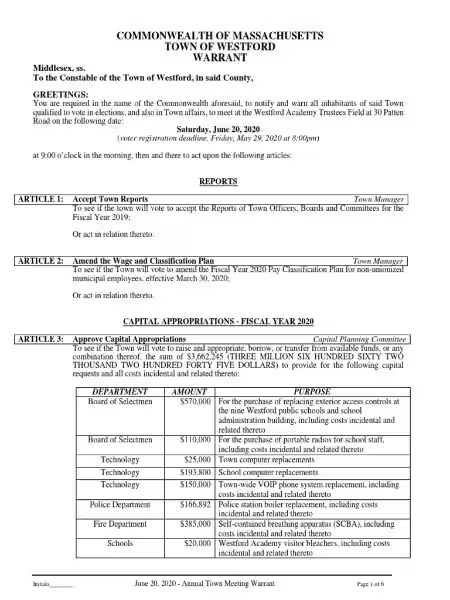
Finding information about warrants in Massachusetts can feel like navigating a maze. This guide aims to clarify the process and provide you with the tools to conduct a successful Massachusetts warrant search, whether it's for yourself or someone else. Understanding the different avenues available and the legal limitations is crucial.
- Types of Warrants in Massachusetts
- Where to Conduct a Massachusetts Warrant Search
- Free vs. Paid Massachusetts Warrant Searches
- Understanding Public Records Laws
-
Massachusetts Warrant Search FAQ
- What is a warrant and how do I find one?
- What types of warrants exist in Massachusetts?
- Are there restrictions on search warrants?
- How long are warrants valid?
- How can I check for a warrant against myself?
- Can I search for warrants on others? And are there free options?
- What about the iCORI database?
- What should I do if I find a warrant against myself or someone I know?
- Disclaimer:
Types of Warrants in Massachusetts
Massachusetts utilizes various types of warrants, each with its specific purpose and legal requirements. The most common include:
Arrest Warrants: These authorize law enforcement to apprehend and detain an individual suspected of committing a crime. The issuance of an arrest warrant requires a finding of probable cause by a judge. This means there must be sufficient evidence to suggest that a crime has been committed and that the individual in question likely committed it. The details in the warrant, while needing to be accurate, don't need to be perfectly precise to remain valid.
Search Warrants: These warrants grant law enforcement the authority to search a specific person or location for evidence related to a crime. Obtaining a search warrant necessitates demonstrating probable cause to a judge through a sworn affidavit. Crucially, the Fourth Amendment of the U.S. Constitution protects against unreasonable searches and seizures, making the probable cause requirement a cornerstone of the process. There are also limitations; for instance, a search warrant cannot be used to seize documents held by protected professionals like attorneys or clergy unless there's an immediate risk of evidence destruction. These warrants, generally, expire after five working days.
Default (Bench) Warrants: These are issued when an individual fails to appear in court as ordered, violates a court order, or violates probation terms. These warrants remain active until the individual fulfills their court obligations, the warrant is canceled by a judge, or they are apprehended.
Other Warrant Types
While less common in everyday discussions, Massachusetts also utilizes witness and capias warrants, each serving specific legal functions within the court system. Understanding the nuances of each warrant type is critical for anyone navigating the legal complexities involved.
Where to Conduct a Massachusetts Warrant Search
Several resources exist for conducting a Massachusetts warrant search, each with its own advantages and limitations. The best approach depends on your specific needs and the information you're seeking.
Official Government Sources: Your primary resource should be official government channels. These include:
-
Local Police and Sheriff's Departments: Contacting the relevant police or sheriff's department in the jurisdiction where you believe the warrant might exist is often the most direct route. Many departments offer online warrant lookups, though the availability varies widely.
-
County Court Websites: Massachusetts county court websites often contain searchable databases of court records, potentially including information on warrants. However, the accessibility of this information can be inconsistent across counties.
-
iCORI Database (EOPSS): The iCORI database, maintained by the Executive Office of Public Safety and Security (EOPSS), contains criminal record information, including warrant data. Access requires an account and a fee. This is a reliable source, but it comes with a cost.
-
DCJIS (Department of Criminal Justice Information Services): For comprehensive information, the DCJIS can provide details, though direct access may require specific procedures.
Third-Party Websites: While numerous private websites offer statewide Massachusetts warrant searches, be cautious. These services often charge fees, and the accuracy and reliability of their data can vary significantly. Always verify information obtained from third-party sources with official government records. It’s essential to remember that a Massachusetts warrant search through private means should be viewed as supplemental to, not a replacement for, confirmation from official sources.
Free vs. Paid Massachusetts Warrant Searches
Many agencies offer free access to warrant information, particularly for in-person inquiries at local police stations or courthouses. However, obtaining copies of official documents may incur fees. Paid services, both private websites and the iCORI database, provide broader search capabilities but come with associated costs. Weigh the costs against the necessity of a broader or more convenient search when deciding which option is best for your situation. Remember that a successful Massachusetts warrant search doesn't automatically guarantee the validity of the information found. Always verify through official channels.
Understanding Public Records Laws
In Massachusetts, warrant information is generally considered public record under Chapter 66, Section 10, unless sealed by a court order due to the sensitivity of the case, such as those involving minors or ongoing investigations. This public access is crucial for transparency and accountability but also necessitates careful consideration of privacy concerns.
This guide provides a foundation for understanding Massachusetts warrant searches. Remember to always approach this topic with respect for the law and individual privacy. Conducting a Massachusetts warrant search requires careful consideration of the available resources and the legal implications.
Massachusetts Warrant Search FAQ
Here are some frequently asked questions about searching for warrants in Massachusetts:
What is a warrant and how do I find one?
A warrant is a court order authorizing law enforcement to take specific actions, such as making an arrest or conducting a search. Locating a warrant can be done through several avenues. You can check with local police departments and sheriff's offices, visit courthouses directly, utilize the iCORI database (maintained by the Executive Office of Public Safety and Security – EOPSS, though this requires an account and a fee), or use private search services (note that these services often charge fees and the accuracy of their information should be independently verified). Remember that warrants are generally public records in Massachusetts unless sealed by court order or deemed confidential due to the nature of the case (e.g., involving minors or ongoing sensitive investigations).
What types of warrants exist in Massachusetts?
Massachusetts utilizes various warrant types, including arrest warrants (also known as "straight" warrants), search warrants, and default (bench) warrants. Arrest warrants authorize the apprehension of an individual suspected of a crime, while search warrants permit the search of a person or place for specific items or individuals. Default warrants are issued when someone fails to appear in court or violates a court order. Other types, such as witness and capias warrants, also exist.
Are there restrictions on search warrants?
Yes. Search warrants are subject to the Fourth Amendment's protections and cannot be used to seize documents held by certain protected professionals (such as psychotherapists, attorneys, and clergy) unless there's an imminent risk of evidence destruction. Additionally, search warrants in Massachusetts typically expire after five working days.
How long are warrants valid?
The validity of a warrant depends on its type. Search warrants have a limited lifespan (typically five working days). Arrest and bench warrants remain active until canceled by a judge, the obligation is fulfilled (e.g., the individual appears in court), or the subject is apprehended.
How can I check for a warrant against myself?
To check for a warrant against yourself, contact the police or sheriff's department in your jurisdiction. Some agencies may have online warrant lists. You should also check county court websites for relevant cases. The Department of Criminal Justice Information Services (DCJIS) can also provide information (contact details available online).
Can I search for warrants on others? And are there free options?
Some police and sheriff's departments publish online warrant lists, offering free access to warrant information. However, many agencies may charge fees for copies of documents. In-person searches are often free. While some private websites offer broader searches, they typically charge fees and their reliability should be approached cautiously; independent verification from official sources is recommended.
What about the iCORI database?
The iCORI database, maintained by EOPSS, contains warrant information, but access requires an account and a fee. It's a valuable resource, but not a free or immediately accessible option.
What should I do if I find a warrant against myself or someone I know?
If you discover a warrant against yourself or someone you know, it's crucial to contact the issuing agency immediately to understand the situation and take appropriate action. Ignoring a warrant can lead to serious consequences.
Disclaimer:
This FAQ is for informational purposes only and should not be considered legal advice. Always consult with legal counsel for specific legal questions. This information is based on publicly available information and may not reflect all nuances of Massachusetts law.