
Navigating the Maze: Your Letter to Immigration Regarding EAD Errors
Many immigrants in the US hold Employment Authorization Documents (EADs), crucial for legal work. However, sometimes USCIS, the agency responsible for issuing these cards, makes errors. This article guides you through the process of correcting these mistakes, focusing on writing an effective letter to immigration when necessary. Understanding the process can significantly reduce stress and expedite the correction of your EAD.
- Understanding EAD Errors and Correction Procedures
- Correcting Simple EAD Errors: The Online Service Request
- Addressing Complex EAD Errors: Crafting Your Letter to Immigration
- Following Up on Your Request
- Preventing Future EAD Errors
-
Frequently Asked Questions: Correcting Errors on Employment Authorization Documents (EADs)
- What should I do if there's a simple error on my EAD, like a typo?
- What if the error on my EAD is more complex, such as an incorrect validity period?
- What information should my letter include when describing a complex error?
- Where should I mail my incorrect EAD and supporting documents?
- How long will the correction process take?
- Is electronic submission preferred over mailing?
- What should I do if USCIS contacts me after submitting my request?
- What if the error on my EAD wasn't USCIS's fault?
- Should I keep copies of everything I submit?
- Where can I find more information about the Service Request Management Tool (SRMT)?
Understanding EAD Errors and Correction Procedures
USCIS errors on EADs can range from simple typos to more complex mistakes affecting the card's validity. The correction process depends heavily on the nature of the error. Minor errors, like misspelled names or incorrect addresses, typically require a simpler correction process. More significant errors, such as discrepancies in the employment authorization period or incorrect categories, demand a more detailed approach, often involving a formal letter to immigration.
Knowing the type of error is the first step to choosing the correct path for remediation. This understanding will determine whether you need to submit a simple service request online or a more formal letter to immigration with supporting documentation. Always keep copies of everything you send.
Correcting Simple EAD Errors: The Online Service Request
For minor errors such as typographical mistakes, the USCIS website offers a streamlined service request option. This is generally the quickest and easiest way to resolve the issue. You'll select the "EAD Replacement due to USCIS Error" option, clearly describe the specific error, and provide the corrected information.
Crucially, this process typically requires you to mail your incorrect EAD card to the designated USCIS Lee's Summit Production Facility. USCIS will then issue a corrected EAD. Remember to keep a copy of your tracking number and proof of mailing. The entire process, excluding mailing time, usually takes about 30 days.
Addressing Complex EAD Errors: Crafting Your Letter to Immigration
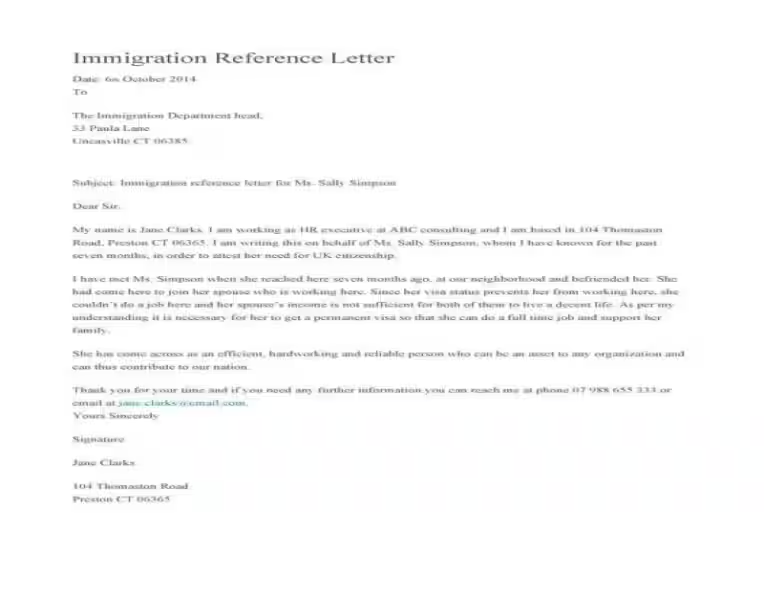
More complex errors demand a more formal approach. This usually involves writing a detailed letter to immigration explaining the error and providing substantial supporting documentation. This documentation might include copies of previous applications, receipts, or any other relevant evidence.
The letter to immigration should be clear, concise, and professional. Begin by stating your case number and the specific error on your EAD. Then, systematically explain the mistake, providing concrete evidence to support your claims. Conclude by respectfully requesting a corrected EAD and expressing your willingness to cooperate fully with the process.
Essential Components of Your Letter
Your letter to immigration should include:
- Your full name and A-Number: This ensures USCIS can quickly identify your case.
- Your current mailing address and contact information: This aids efficient communication.
- The specific error on your EAD: Clearly describe the mistake, using precise language.
- Supporting documentation: Attach any relevant documents that prove the error and your eligibility for correction.
- A clear request for a corrected EAD: State your request explicitly and professionally.
- A copy of your EAD: Include a photocopy of your incorrect EAD with your letter.
Remember to maintain a professional tone throughout the letter, avoiding emotional language or accusations. Accuracy and clarity are paramount.
Choosing Your Submission Method: Electronic vs. Mail
You can submit your letter to immigration and supporting documents either electronically or by mail. The preferred method is electronic submission, ideally through the USCIS Service Request Management Tool (SRMT), described in detail in the USCIS Policy Manual, Chapter 4.
Electronic submission is faster, more efficient, and provides a record of your submission. However, if you lack access to electronic submission methods, mailing your documents to the Lee's Summit address remains an option. Regardless of your chosen method, keep copies of everything for your records.
Following Up on Your Request
After submitting your letter to immigration, it's essential to follow up. USCIS provides online tools to check the status of your case. Regularly monitor your case status to stay informed about its progress.
If you haven't received an update within a reasonable time frame (consider the estimated processing time plus some buffer), you can contact USCIS directly through their designated channels for inquiries. Maintain a record of all communications with USCIS.
Preventing Future EAD Errors
While errors can happen, proactive steps can minimize the risk. Carefully review your EAD application before submission, ensuring all information is accurate and complete. Double-check your personal details, employment information, and any other relevant data.
If you discover an error before receiving your EAD, contact USCIS immediately to correct it. Addressing inaccuracies early can significantly simplify the correction process and save time.
In conclusion, correcting errors on your EAD might seem daunting but by understanding the process and following the outlined steps, you can navigate the system effectively. Remember to remain organized, keep thorough records, and maintain professional communication with USCIS throughout the process. A well-written letter to immigration, accompanied by appropriate documentation, significantly increases your chances of a swift and successful resolution.
This FAQ section addresses common questions about correcting errors on Employment Authorization Documents (EADs) made by United States Citizenship and Immigration Services (USCIS).
What should I do if there's a simple error on my EAD, like a typo?
For simple errors such as typos or minor mistakes, you can submit a service request electronically through the USCIS website. Select the "EAD Replacement due to USCIS Error" option, clearly explain the error, provide the correct information, and mail your incorrect EAD card to the specified USCIS Lee's Summit Production Facility address. The processing time is approximately 30 days, excluding mail transit time. USCIS will contact you if the error was not their fault and a different correction procedure is needed.
What if the error on my EAD is more complex, such as an incorrect validity period?
More complex errors require submitting a letter explaining the error along with supporting evidence. You can do this electronically, preferably through the Service Request Management Tool (SRMT) detailed in the USCIS Policy Manual, Chapter 4, or by mail to the Lee's Summit address. Electronic submission via the SRMT is strongly recommended for efficiency. Remember to keep copies of all submitted documents.
What information should my letter include when describing a complex error?
Your letter should clearly and concisely describe the specific error on your EAD. Include all relevant details and supporting evidence that demonstrates the error originated with USCIS. The more detail you provide, the smoother and faster the correction process will be.
Where should I mail my incorrect EAD and supporting documents?
For both simple and complex errors, the incorrect EAD card and any supporting documentation should be mailed to the specified USCIS Lee's Summit Production Facility address (this address should be readily available on the USCIS website).
How long will the correction process take?
For simple errors corrected electronically, processing takes about 30 days, excluding mailing time. Complex errors may take longer, depending on the nature of the error and the time required to process the supporting evidence.
Is electronic submission preferred over mailing?
Yes, electronic submission, especially through the SRMT, is strongly preferred for efficiency and to minimize delays. However, mailing remains an option if electronic submission is not feasible.
What should I do if USCIS contacts me after submitting my request?
Carefully review any communication from USCIS and promptly respond with any requested information or documentation. Following their instructions is crucial for a successful correction.
What if the error on my EAD wasn't USCIS's fault?
If USCIS determines the error wasn't their fault, they will notify you and outline the appropriate correction procedure. You will likely need to follow a different process to address the issue.
Should I keep copies of everything I submit?
Yes, absolutely. Retain copies of your letter, supporting documents, and any communication with USCIS for your records. This will be helpful if there are any questions or delays in the process.
Where can I find more information about the Service Request Management Tool (SRMT)?
Refer to Chapter 4 of the USCIS Policy Manual for detailed information about the SRMT. You can likely find this information on the USCIS website.