
Navigating the Labor Shortage Act: A Path Forward for the American Workforce
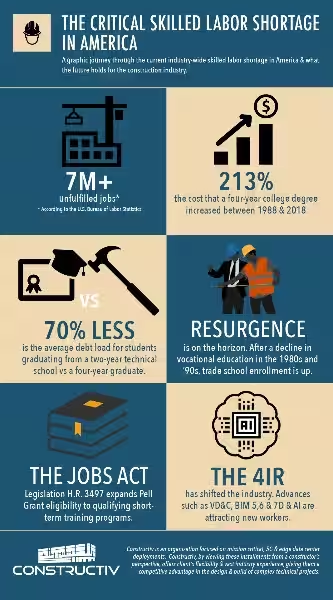
Is the current labor shortage a temporary blip or a long-term trend? The answer likely lies in a multifaceted approach that examines the root causes and creates sustainable solutions. The need for a robust, comprehensive strategy is evident, and the Labor Shortage Act, as well as other similar initiatives, aims to address this critical issue. Let's dive into the complexities and potential solutions.
- The Commission on the American Workforce Act: A Comprehensive Approach
- A Deep Dive into Specific Sectors: Addressing the Needs of Construction
- Examining the Wider Picture: The CONSTRUCTS Act and Workforce Development
- Beyond the Bills: A Holistic Approach to the Labor Shortage
-
Frequently Asked Questions about the Labor Shortage Bills
- What is the Commission on the American Workforce Act?
- Who does the labor shortage affect?
- What are the goals of the Commission on the American Workforce Act?
- What is the CONSTRUCTS Act?
- Why is the residential construction labor shortage a concern?
- How does the CONSTRUCTS Act address the labor shortage?
- What is the estimated size of the construction labor shortage?
The Commission on the American Workforce Act: A Comprehensive Approach
This bipartisan bill, introduced by Congressmen Joyce and Brown, seeks to understand the multifaceted nature of the current labor shortage impacting various sectors across the nation. The labor shortage act is not just about filling open positions; it's about fostering a sustainable workforce for the future. The bill recognizes the urgency of the situation, acknowledging the economic repercussions, from reduced hours to increased costs, that a lack of skilled labor creates. The current workforce participation rate hasn't recovered to pre-pandemic levels, and sectors from Main Street businesses to hospitals are struggling to fill critical roles. This highlights the need for a comprehensive, data-driven approach to address the problem.
The legislation proposes a commission to delve into the root causes of this significant workforce gap. The commission will bring together experts from various fields to investigate factors like the impact of COVID-19, the rise of remote work, and evolving skills gaps. It will also examine demographic shifts, economic crises, drug abuse, and immigration trends. Understanding the intricate interplay of these factors is crucial for developing effective strategies. Ultimately the goal is to understand the unique pressures on different sectors and skill levels, from public-sector roles to private-sector businesses, to cultivate a more comprehensive understanding of the labor shortage.
A Deep Dive into Specific Sectors: Addressing the Needs of Construction
While the Commission on the American Workforce Act offers a broad overview, another important initiative, the CONSTRUCTS Act, focuses on a specific sector with a demonstrably huge labor shortage: residential construction. The CONSTRUCTS Act is a bipartisan bill introduced by the National Association of Home Builders (NAHB) that specifically aims to address the severe residential construction labor shortage. Driven by the urgent need to increase housing availability and affordability, the CONSTRUCTS Act addresses the immediate labor gap within the construction industry.
The CONSTRUCTS Act seeks to bolster the construction industry's workforce by creating a grant program to fund education and skills training programs at community colleges and technical schools. This initiative aims to strengthen the workforce pipeline by creating more pathways for individuals to enter the construction trades. The legislation's emphasis on supporting educational institutions is critical, as they are often the most accessible and adaptable training hubs for addressing the current needs of this sector. The NAHB estimates a shortfall of 200,000 to 400,000 construction workers per month, which translates to a projected 2.2 million worker deficit over the next three years. This underscores the significant impact of the labor shortage and the pressing need for immediate action.
Examining the Wider Picture: The CONSTRUCTS Act and Workforce Development
The CONSTRUCTS Act provides a valuable example of a targeted approach to specific workforce challenges. The program intends to make educational institutions more accessible to those pursuing a career in this sector. This contrasts with the Commission on the American Workforce Act, which takes a much more comprehensive, research-driven approach to identifying and understanding the root causes of labor shortages across a broader range of industries. The CONSTRUCTS Act specifically focuses on funding educational programs, aiming to increase the skilled construction workforce. This targeted approach is crucial for addressing specific labor market needs in critical sectors like residential construction.
The CONSTRUCTS Act's focus on education aligns with the broader goals of workforce development. The bill seeks to equip individuals with the skills necessary to fill existing vacancies in the construction sector. This supports the nation's overall economic health by addressing immediate shortages in vital industries, particularly residential construction. The legislation emphasizes the crucial link between increased skilled labor in the construction industry and the overall improvement of housing affordability. This targeted approach is vital for the long-term success of developing a sustainable labor force across multiple industries and skill levels.
Beyond the Bills: A Holistic Approach to the Labor Shortage
Both the Commission on the American Workforce Act and the CONSTRUCTS Act underscore the need for a multifaceted and data-driven approach to tackling the labor shortage. These legislative initiatives represent a critical first step, but successful implementation requires further collaboration between policymakers, industry leaders, and educational institutions.
Key Takeaways:
- Targeted Solutions: The CONSTRUCTS Act provides a model for addressing sector-specific labor needs.
- Comprehensive Research: The Commission on the American Workforce Act emphasizes a broader investigation into the underlying causes of the labor shortage.
- Long-Term Vision: Both bills seek to create a more sustainable and skilled workforce for the future, addressing the current crisis and improving long-term outcomes.
- Collaboration: Effective implementation requires strong partnerships between policymakers, industry leaders, and educational institutions.
By fostering collaboration and implementing targeted solutions, the United States can create a more robust and resilient workforce for the challenges of the future. The Labor Shortage Act and comparable legislative efforts represent crucial steps toward achieving this goal.
Frequently Asked Questions about the Labor Shortage Bills
What is the Commission on the American Workforce Act?
This bipartisan bill, introduced by Congressmen Joyce and Brown, aims to address the current national labor shortage impacting various sectors, including businesses, technical fields, hospitality, retail, schools, hospitals, and law enforcement. Recognizing the economic consequences of this shortage, such as reduced hours and higher prices, the bill seeks to understand the root causes. It will create a commission to gather data and expert insights, investigate factors like the COVID-19 pandemic, remote work, skills gaps, demographic shifts, policies, drug abuse, immigration, and economic crises. Ultimately, the commission will provide recommendations for policymakers to address the issue and create solutions for future workforce challenges. The goal is to create a data-driven, bipartisan approach.
Who does the labor shortage affect?
The labor shortage affects workers across all skill levels, both college-educated and those without a four-year degree. Various sectors are experiencing shortages, including, but not limited to, Main Street businesses, technical fields, hospitality, retail, schools, hospitals, and law enforcement. The bill recognizes the impact on small businesses and acknowledges the economic recovery following the pandemic.
What are the goals of the Commission on the American Workforce Act?
The primary goal is to understand the complex causes behind the current labor shortage. The commission will gather expert insights from diverse backgrounds to investigate factors such as the COVID-19 pandemic, remote work, skills gaps, demographic shifts, policies, drug abuse, immigration, and economic crises. The commission will then analyze the impact of each factor across different skill levels and sectors (public/private, for-profit/non-profit). The ultimate aim is to generate actionable recommendations for policymakers to address the shortage and foster a stronger workforce for the future.
What is the CONSTRUCTS Act?
The CONSTRUCTS Act, introduced by Representatives Ciscomani, Gluesenkamp Perez, Zinke, and Davis, and mirrored by Senators Rosen and Blackburn, addresses the severe residential construction labor shortage in the United States. This bipartisan legislation focuses on expanding opportunities for residential construction training by creating a new grant program to fund education and skills training programs at community colleges and technical schools.
Why is the residential construction labor shortage a concern?
The projected shortfall of 2.2 million workers over the next three years is contributing significantly to rising home building costs and construction delays, worsening the affordability crisis. The CONSTRUCTS Act is designed to address this critical need by bolstering the housing workforce with a renewed focus on construction trades training, and helping to create a more sustainable and affordable housing market.
How does the CONSTRUCTS Act address the labor shortage?
The CONSTRUCTS Act's primary approach is to fund and implement training programs at educational institutions nationwide. This directly addresses the shortage of skilled workers by strengthening the workforce pipeline and creating a pool of qualified workers to meet the high demand for residential construction. This is intended to help mitigate the housing affordability crisis.
What is the estimated size of the construction labor shortage?
The residential construction labor shortage is estimated at 200,000 to 400,000 workers per month.