
Understanding Kentucky v. Padilla: A Deep Dive into Immigration Consequences and Ineffective Assistance of Counsel
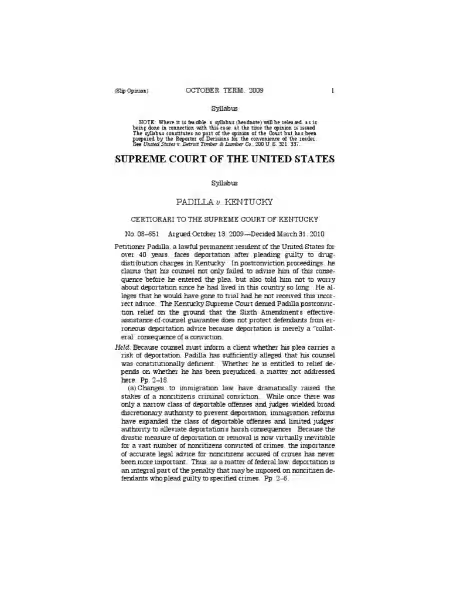
The 2010 Supreme Court case, Kentucky v. Padilla, dramatically reshaped the landscape of criminal defense for non-citizen defendants. This landmark decision addressed the crucial question of whether defense attorneys have a constitutional obligation to advise their clients about the potential immigration consequences of a guilty plea. This article will break down the key aspects of the Kentucky v. Padilla ruling, focusing particularly on Justice Alito's insightful concurring opinion, which offers a critical counterpoint to the majority's decision.
- The Core Ruling of Kentucky v. Padilla
- Justice Alito's Concurring Opinion: A Cautious Approach to Kentucky v. Padilla
- The Broader Implications of Kentucky v. Padilla
-
Frequently Asked Questions: *Padilla v. Kentucky*
- What was the main ruling in *Padilla v. Kentucky*?
- What is the significance of the "direct/collateral consequences" distinction?
- What are the three scenarios outlined by the Court regarding advising clients about deportation?
- What is Justice Alito's main point of contention in his concurring opinion?
- What standard for advising on immigration consequences does Justice Alito suggest?
- Why does Justice Alito believe the majority's approach is problematic?
- Does the majority opinion rely on professional standards? How does Alito respond?
- What are some of the complexities of immigration law that make advising on deportation difficult?
- How does *Padilla* impact the *Strickland v. Washington* test for ineffective assistance of counsel?
- Does *Padilla* only apply to deportation?
- What is Justice Scalia's position in his dissenting opinion?
- What is the overall impact of *Padilla v. Kentucky*?
The Core Ruling of Kentucky v. Padilla
The Supreme Court's majority opinion in Kentucky v. Padilla established a significant precedent: defense attorneys have a Sixth Amendment duty to advise their non-citizen clients about the potential deportation consequences of a criminal conviction. This overturned the longstanding practice of considering deportation a mere "collateral consequence" of a conviction, not requiring attorney advisement. The Court reasoned that deportation is a particularly severe penalty, intricately linked to the criminal process, and therefore warrants explicit counsel.
The Court didn't mandate providing highly detailed immigration legal advice, but rather emphasized the necessity of informing clients about the potential risks. The decision outlined the attorney's responsibility depending on the clarity of the immigration consequences:
- Unambiguous Consequences: If deportation is a clear and certain consequence of the conviction, the attorney must advise the client.
- Uncertain Consequences: If the immigration consequences are unclear, the attorney must inform the client that deportation may result.
- Silence is Unacceptable: The Court explicitly stated that failing to offer any advice regarding the potential immigration ramifications was unacceptable.
Justice Alito's Concurring Opinion: A Cautious Approach to Kentucky v. Padilla
While agreeing with the outcome of Kentucky v. Padilla, Justice Alito offered a powerful concurring opinion that expressed significant reservations about the breadth and practicality of the majority's holding. His central argument centered on the immense complexity of immigration law and the unrealistic burden placed on defense attorneys to provide expert, comprehensive advice in a field outside their expertise.
He stressed that defense attorneys are not immigration lawyers and should not be held to the standard of providing expert advice on nuanced immigration issues. The majority opinion's reliance on professional standards, Alito argued, was misplaced. Professional organizations might advocate for broader advising, but court decisions, not private associations, ultimately define Sixth Amendment standards. He highlighted the ambiguity within immigration law itself, with terms like "aggravated felony" and "crime involving moral turpitude" often open to varying interpretations, even among experienced immigration attorneys.
The Practical Challenges of the Majority's Ruling
Alito compellingly outlined the difficulties the majority's ruling presented:
- Ambiguity and Complexity: The ever-changing nature of immigration law, coupled with varied interpretations across different Circuit Courts, makes providing precise and consistent advice incredibly challenging.
- Potential for Misleading Advice: Attempting to give specific immigration advice without specialized training runs the risk of providing inaccurate or incomplete information, potentially harming the client more than helping.
- Unrealistic Burden on Defense Attorneys: Expecting every criminal defense attorney to master the complexities of immigration law is an unreasonable and impractical expectation.
Alito's Proposed Alternative
Justice Alito proposed a more measured approach that balances the need to inform clients with the realities of legal practice:
- Avoid Affirmative Misrepresentation: Defense attorneys should refrain from offering demonstrably incorrect or misleading advice.
- Inform Clients of Potential Consequences: Attorneys should inform non-citizen clients of the potential immigration consequences of their plea and advise them to seek consultation from an immigration specialist if they desire detailed advice.
This approach, he argued, avoids the pitfalls of the majority's less clear "succinct and straightforward" test while still fulfilling the ethical responsibility to inform clients of the possible ramifications of their choices.
The Broader Implications of Kentucky v. Padilla
The implications of Kentucky v. Padilla extend beyond deportation. While the case focused on the severe consequence of removal, the underlying reasoning might impact future cases involving other collateral consequences of convictions. Alito's concurrence implicitly acknowledges this possibility, suggesting that the majority's approach could lead to an expansion of attorney responsibilities far beyond what is warranted or practical.
The decision highlights the intersection of criminal law and immigration law, underscoring the need for greater clarity and perhaps even legislative reform to address the complexities of advising non-citizen defendants. The case serves as a reminder of the significant stakes involved in criminal proceedings for non-citizens and the critical role of effective legal representation in protecting their rights. The debate sparked by Kentucky v. Padilla, and particularly Justice Alito's compelling concurrence, continues to shape the legal landscape for non-citizen defendants facing criminal charges. The case remains a pivotal point in the ongoing conversation about the proper scope of an attorney's duty to advise their clients about the potentially devastating collateral consequences of a criminal conviction, especially in the complicated realm of immigration law. Ultimately, Kentucky v. Padilla forces a careful consideration of the balance between protecting the rights of defendants and setting realistic expectations for the responsibilities of their legal counsel.
Frequently Asked Questions: *Padilla v. Kentucky*
What was the main ruling in *Padilla v. Kentucky*?
The Supreme Court ruled that defense attorneys have a duty to advise their non-citizen clients about the potential deportation consequences of a guilty plea. This overturned the previous understanding that deportation was a collateral consequence not requiring attorney advisement. The Court held that deportation is a uniquely severe penalty with close ties to the criminal process.
What is the significance of the "direct/collateral consequences" distinction?
The Court rejected the traditional distinction between direct and collateral consequences in the context of deportation. It argued that the severity and close connection of deportation to the criminal process make it inappropriate to treat it as a mere collateral consequence.
What are the three scenarios outlined by the Court regarding advising clients about deportation?
- Unambiguous consequence: If deportation is an unambiguous consequence of a conviction, the attorney must advise the client accordingly.
- Unclear consequences: If the immigration consequences are unclear, the attorney must advise that deportation may result.
- Silence is unacceptable: The attorney must provide some advice regarding potential immigration consequences; silence is insufficient.
What is Justice Alito's main point of contention in his concurring opinion?
Justice Alito, while agreeing with the outcome, expressed concern about the breadth of the majority's holding. He argued that the majority's requirement placed an unrealistic burden on defense attorneys, who are not immigration law experts and should not be expected to provide expert advice in this complex field.
What standard for advising on immigration consequences does Justice Alito suggest?
Alito proposed a more limited standard: defense attorneys should (1) avoid giving demonstrably incorrect advice and (2) inform non-citizen clients of the potential immigration consequences and advise them to seek counsel from an immigration specialist if they desire such advice.
Why does Justice Alito believe the majority's approach is problematic?
Alito argued the majority's approach creates a difficult-to-apply test, risks incomplete or misleading advice, bypasses potentially more effective solutions (e.g., judicial warnings, statutory reforms), and represents a significant departure from established Sixth Amendment jurisprudence. He highlighted the complexity and ambiguity of immigration law, making it difficult even for immigration experts to provide definitive advice.
Does the majority opinion rely on professional standards? How does Alito respond?
The majority opinion relied on prevailing professional norms and ethical standards as justification for expanding Sixth Amendment duties. Alito challenges this, arguing that these standards are not uniformly applied and don't necessarily support the majority's broad interpretation. He emphasizes that courts, not professional organizations, determine Sixth Amendment standards.
What are some of the complexities of immigration law that make advising on deportation difficult?
The complexity stems from ambiguous terms like "aggravated felony" and "crime involving moral turpitude," varying Circuit interpretations, and frequent legislative changes. These factors make it difficult to predict the immigration consequences of a specific offense, even for experienced immigration lawyers.
How does *Padilla* impact the *Strickland v. Washington* test for ineffective assistance of counsel?
Padilla applies the two-pronged Strickland test. The Court found that failure to advise on deportation consequences can constitute deficient performance, and prejudice is presumed because of the severity of deportation.
Does *Padilla* only apply to deportation?
While focused on deportation, the case's reasoning might influence future challenges regarding other severe collateral consequences of convictions, such as loss of voting rights or professional licenses.
What is Justice Scalia's position in his dissenting opinion?
Justice Scalia argued that the Sixth Amendment doesn't mandate advice on collateral consequences and that this ruling could lead to a vast expansion of attorney responsibilities, potentially better addressed through legislation.
What is the overall impact of *Padilla v. Kentucky*?
Padilla established a heightened obligation for defense attorneys to inform non-citizen clients of the potentially life-altering immigration consequences of criminal convictions. It significantly altered the scope of Sixth Amendment rights for non-citizen criminal defendants.