
Unveiling the Enigmatic Charm of Huehue Guatemala
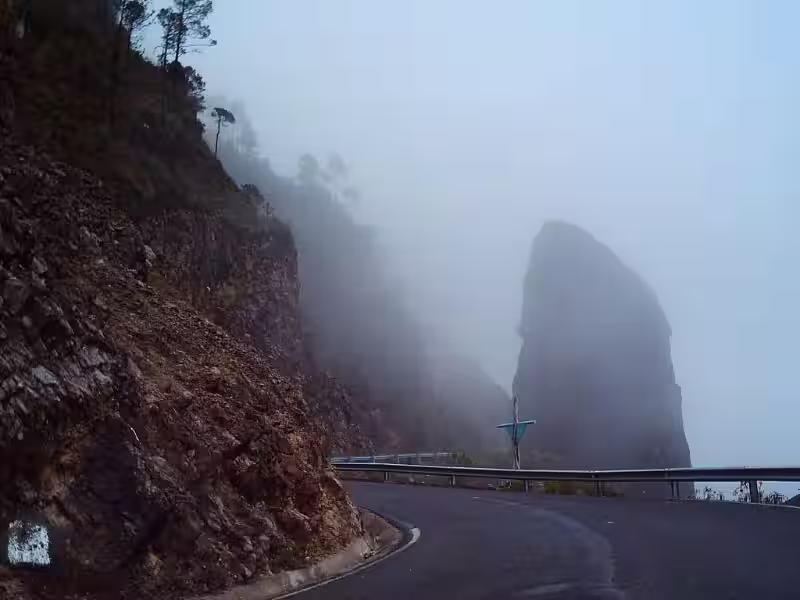
Huehuetenango, a name that whispers tales of ancient civilizations and breathtaking landscapes, is a captivating destination nestled in the Guatemalan highlands. Often overlooked by those solely focused on Antigua or Lake Atitlán, Huehuetenango offers a unique blend of history, culture, and natural beauty that deserves exploration. Its rich tapestry of Mayan heritage, coupled with its stunning natural environment, makes it a truly unforgettable experience.
- A Journey Through Time: Huehuetenango's Rich History
- The Modern City of Huehuetenango: A Blend of Old and New
- Beyond the City: Exploring Huehuetenango's Natural Beauty
-
Frequently Asked Questions about Huehuetenango, Guatemala
- What is Huehuetenango?
- What is the history of Huehuetenango?
- What is the economy of Huehuetenango like?
- What is the climate in Huehuetenango?
- What are some notable features of Huehuetenango?
- What is the significance of Zaculeu?
- How diverse is the population of Huehuetenango Department?
- What is Huehuetenango's coffee known for?
- What is the geographical significance of Huehuetenango's coffee-growing region?
- What is the significance of Huehuetenango in Guatemalan history?
A Journey Through Time: Huehuetenango's Rich History
The history of Huehuetenango is deeply intertwined with the ancient Maya civilization. Long before the arrival of the Spanish conquistadors, the region thrived as a center of Mayan power. The city, originally known as Xinabajul in the Mam language, existed alongside the formidable fortified city of Zaculeu, the pre-Columbian capital of the Mam kingdom. These ancient sites still stand as silent witnesses to a glorious past.
The name "Huehuetenango" itself is a testament to this rich history. Derived from Nahuatl, the language of the Aztec people, it translates to "place of the ancients," a fitting moniker for a region steeped in centuries of cultural significance. The Spanish conquistador, Gonzalo de Alvarado, adopted this name after conquering Zaculeu and Xinabajul, unknowingly cementing a legacy that would endure for centuries. The ruins of Zaculeu, with their uniquely preserved plaster coatings from 1940s restoration efforts, are a must-see for any visitor interested in Mayan archaeology. The small on-site museum provides further insight into the lives and culture of the people who once inhabited this remarkable city.
Exploring Zaculeu: A Window to the Past
Zaculeu's significance extends beyond its impressive architecture. The site offers a unique perspective on Mayan life, revealing insights into their social structures, religious practices, and daily routines. Imagine wandering through the restored palaces and plazas, envisioning the bustling activity that once filled these spaces. The artifacts housed in the museum provide additional context, bringing the past vividly to life.
The meticulous restoration efforts, while adding to the site's present-day appearance, also provide a unique opportunity for researchers to study the materials and techniques employed by the ancient Maya. The plasterwork, for example, offers valuable insights into Mayan construction methods and artistic expression.
The Modern City of Huehuetenango: A Blend of Old and New
While steeped in history, Huehuetenango is far from a static relic of the past. It's a vibrant city, bustling with life and activity. The city serves as the departmental capital, and its economy largely relies on coffee exports – a significant contributor to Guatemala's overall economy. The distinctive flavor and quality of Huehue Guatemala coffee are renowned worldwide, reflecting the unique terroir of the region.
Beyond its economic significance, Huehuetenango possesses a distinct cultural identity. The predominance of the Mam language and the strong presence of indigenous Mayan culture add a rich layer of complexity to the city's character. The city's diverse population, encompassing various Mayan ethnic groups and Ladinos (Spanish-speaking inhabitants), creates a unique cultural melting pot. This vibrant diversity is reflected in the city's traditions, cuisine, and daily life.
Although Huehuetenango boasts its own airport (HUG/MGHT), currently, no scheduled flights operate. The most practical way to reach Huehuetenango is via road, either by car or bus. Located 269 kilometers from Guatemala City, it marks the last departmental capital on the Pan-American Highway before the Mexican border. Local transportation within the city is readily available, making exploring its various neighborhoods and attractions easily accessible.
The city's subtropical highland climate, characterized by warm summers and mild winters, makes it a pleasant destination year-round. However, visitors should be prepared for significant rainfall during the months of June through September. Packing appropriate clothing and footwear is essential, particularly if you plan on exploring the surrounding countryside and hiking to some of the region's beautiful viewpoints.
Beyond the City: Exploring Huehuetenango's Natural Beauty
The Huehuetenango department extends far beyond the city limits, encompassing a vast and diverse landscape. The Sierra de los Cuchumatanes mountain range dominates the region, resulting in a dramatic variation in altitude and climate. This varied geography supports a rich biodiversity, with numerous rivers, lakes, and stunning natural vistas.
The department is crisscrossed by a network of rivers, including the Hondo, Xecunabaj, Cuilco, Ixcán, Nentón, and Selegua, which feed into the larger Chixoy (Río Negro) and Usumacinta river systems. These waterways provide essential resources for the region's inhabitants and contribute to the beauty of the landscape. Laguna Yolnabaj, the largest lake in the department, presents a tranquil escape from the bustling city life.
A Deep Dive into the Department's Features:
Here are some key points highlighting the broader Huehuetenango Department:
- Diverse Ecosystems: From high-altitude cloud forests to lower-lying valleys, the department exhibits an astounding range of ecosystems.
- Indigenous Cultures: Nine distinct Maya groups call this department home, each with its unique language and traditions.
- Agricultural Heartlands: Agriculture remains the backbone of the local economy, with coffee, maize, wheat, and potatoes being major crops.
- Archaeological Treasures: Beyond Zaculeu, numerous other pre-Columbian sites await discovery, offering further insights into the region's Mayan past.
- Natural Wonders: The department boasts stunning natural attractions, including the source of the San Juan River and the breathtaking landscapes of the Sierra de los Cuchumatanes.
Huehuetenango, with its blend of ancient history, vibrant culture, and breathtaking landscapes, presents a unique and compelling destination for travelers seeking an authentic Guatemalan experience. It's a region that rewards exploration, offering a captivating journey through time and a glimpse into the rich tapestry of Guatemalan life. So, venture beyond the well-trodden tourist paths and embark on an adventure to discover the hidden gems of Huehue Guatemala.
Frequently Asked Questions about Huehuetenango, Guatemala
What is Huehuetenango?
Huehuetenango is a city and municipality in the Guatemalan highlands. It serves as the capital of the Huehuetenango department, located approximately 269 kilometers from Guatemala City. It's the last departmental capital on the Pan-American Highway before reaching the Mexican border.
What is the history of Huehuetenango?
The area's history predates the Spanish conquest. Originally known as Xinabajul in the Mam language, it existed alongside the fortified Maya city of Zaculeu, the pre-Columbian capital of the Mam kingdom. The name "Huehuetenango," meaning "place of the ancients" in Nahuatl, was adopted after the Spanish conquest. A significant Mam population remains, and the Zaculeu ruins are a major tourist attraction.
What is the economy of Huehuetenango like?
Coffee exports are a primary driver of the economy. Agriculture in general is crucial, with crops such as maize, wheat, and potatoes also significant. Mining and handicrafts also contribute to the regional economy.
What is the climate in Huehuetenango?
Huehuetenango has a subtropical highland climate (Cwb). Summers are warm, and winters are mild. Average temperatures range from a minimum of 8.7°C (47.7°F) to a maximum of 24.6°C (76.3°F), with significant rainfall between June and September.
What are some notable features of Huehuetenango?
Huehuetenango boasts the Zaculeu ruins, a significant pre-Columbian Maya site with restored structures. It also has a small airport (HUG/MGHT), though currently without scheduled flights. The city is home to the Xinabajul football team, which competes in Guatemala's Liga Nacional de Fútbol.
What is the significance of Zaculeu?
Zaculeu was the pre-Columbian capital of the Mam Kingdom. Its ruins are a major tourist attraction, notable for the plaster coatings applied during restoration work in the 1940s. A small museum on-site displays artifacts from the site.
How diverse is the population of Huehuetenango Department?
The Huehuetenango department is one of Guatemala's most ethnically diverse regions, with nine distinct Maya groups, each speaking their own language. Mam is the most prevalent. The population consists of a large majority of indigenous Maya and a smaller Ladino (Spanish-speaking) population.
What is Huehuetenango's coffee known for?
Huehuetenango coffee is renowned for its high quality. Grown at high altitudes in a unique microclimate, it offers a complex flavor profile with notes of nectarine, peach, dark chocolate, and a rich, winey aftertaste.
What is the geographical significance of Huehuetenango's coffee-growing region?
Huehuetenango is the highest and driest of Guatemala's three non-volcanic coffee-growing regions. Its high altitude and unique microclimate, protected from frost by dry winds, contribute significantly to the distinctive flavor of its coffee.
What is the significance of Huehuetenango in Guatemalan history?
Huehuetenango holds historical significance as the birthplace of former Guatemalan president Efraín Ríos Montt and his brother, Mario Enrique Ríos Montt. The department also briefly belonged to the short-lived independent state of Los Altos (1838-1840).