
How Much Does It Cost a Company to Sponsor an H1B Visa?
Navigating the intricacies of sponsoring an H-1B visa can be daunting, and understanding the associated costs is crucial before embarking on this process. This comprehensive guide delves into the financial implications of H-1B sponsorship, providing a clearer picture of the expenses involved.
- Understanding the Base Fees
- Beyond the Base Fees: Additional Considerations
- Employee Responsibilities and Other Costs
- Critical Considerations for H1B Sponsorships
-
H-1B Visa Sponsorship Costs: Frequently Asked Questions
- How much does it cost a company to sponsor an H-1B visa?
- What are the specific fees involved in the H-1B sponsorship process?
- Are there any options to reduce the cost of sponsorship?
- What are the optional costs associated with H-1B sponsorship?
- Who is responsible for paying the fees associated with the H-1B sponsorship process?
- Are there any other expenses related to H-1B sponsorship?
- Can the fees be refunded if the petition is denied?
Understanding the Base Fees
The H-1B visa program, allowing U.S. companies to employ foreign workers in specialized fields, comes with a range of fees. These fees, significantly increasing in recent years, are vital to consider. The complexity arises from the various components involved, including application fees, processing options, and additional mandated costs. A thorough understanding of these fees is essential to accurately budgeting for the entire sponsorship process.
Application Fees and Processing Options
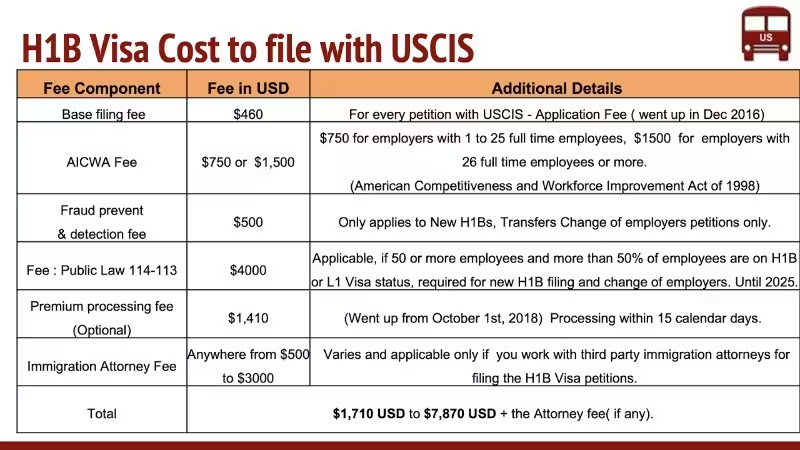
The most significant costs are often the application fees. The initial application fee for registering an H-1B candidate is expected to be $215 in 2025, a substantial leap from previous years. Beyond this, the I-129 filing fee, which officially begins at $780 in April 2024 is also noteworthy. This is a notable increase from the previous uniform rate of $460. This rising cost is a key aspect of the overall expense that potential sponsors need to factor into their budget. Additionally, a new Asylum Program Fee of $600 is now mandatory for all I-129 and I-140 petitions, reflecting the increased regulatory burden.
Employer Size and Specific Fees
Important differentiators include employer size and specific categories. Smaller employers or non-profits might enjoy lower fees in some instances. However, the prevailing trend is toward higher costs across the board. This is particularly notable in the case of the Public Law 114-113 fee, which can be substantial for companies with 50 or more employees relying heavily on H1-B/L1 visa holders. It's essential to consult the latest regulations to ensure accuracy in estimating your specific financial obligations.
Beyond the Base Fees: Additional Considerations
While the base fees are significant, the overall cost extends beyond these initial charges.
Additional Employer Fees
Employers bear the responsibility for several additional charges. This includes the electronic registration fee, which has been increased for the 2026 fiscal year to $215 per beneficiary. The ACWIA (American Competitiveness and Workforce Improvement Act) fee also varies based on company size, adding another layer of complexity to the financial picture. For example, companies with 25 or fewer employees are subject to a $750 fee, while those exceeding 25 employees face a $1500 fee.
Premium processing, offering expedited processing, comes at a cost of $2,805. While optional, this option may be crucial for time-sensitive needs. A fraud prevention and detection fee of $500 is now required for all H-1B petitions, further adding to the overall financial burden. These additional charges are all part of the total expense that a company needs to consider when sponsoring an H-1B.
Employee Responsibilities and Other Costs
It's crucial to understand that the sponsorship costs are not solely borne by the employer.
Employee Costs
Employees are responsible for visa stamping fees at the U.S. consulate, dependent visa fees (if applicable), and potentially premium processing fees, further complicating the financial aspect. These costs can significantly vary depending on the individual's circumstances and the specific country of origin. Given the diverse range of costs involved, obtaining accurate, up-to-date information is essential.
Comprehensive Cost Breakdown
Companies should calculate the total cost by factoring in legal fees, recruitment expenses, potential relocation costs for employees, and training costs. This comprehensive cost-breakdown is vital to accurately assess the overall financial commitment. For example, legal counsel fees, typically ranging from $2,000 to $5,000, can significantly add to the overall expenses.
Critical Considerations for H1B Sponsorships
Understanding the implications of the H1-B visa program is crucial for informed decision-making.
The Labor Condition Application (LCA)
The Labor Condition Application (LCA) is a mandatory step in the process, but thankfully, it doesn't involve any filing fees. This document is a vital component in demonstrating that the company has followed the appropriate procedures. Understanding the importance of this step is critical to the overall process's legitimacy.
Eligibility Requirements
Companies must ensure that both the employee and the job meet specific eligibility criteria. This includes verification of the employee's degree, license, or equivalent qualifications in the specialty occupation. Similarly, the job itself must meet requirements, primarily involving a bachelor's degree or equivalent, or specialized duties. It is critical to ensure that all these requirements are met to avoid potential rejection in the sponsorship process.
Non-Refundable Fees and Potential Delays
It's crucial to understand that H1-B visa fees are typically non-refundable even if the petition is denied. Potential delays in the approval process are also a reality. Companies seeking to hire specialized talent through H1-B sponsorships need to be prepared to allocate considerable time and budget for the entire process.
Sponsoring an H-1B visa involves a significant financial commitment. The costs are substantial and can vary significantly, including application fees, processing options, and additional mandated costs. Companies must accurately assess all associated expenses, including legal fees, recruitment costs, and potential relocation expenses. By thoroughly understanding the complete cost picture, companies can make informed decisions about the feasibility and affordability of sponsoring an H-1B employee. Remember, this is a complex process requiring careful attention to detail.
H-1B Visa Sponsorship Costs: Frequently Asked Questions
How much does it cost a company to sponsor an H-1B visa?
The cost of sponsoring an H-1B visa is multifaceted and depends on several factors, including the size of the company, the processing route chosen, and the specific requirements of the case. There's no single fixed price. Direct costs for the employer generally include application fees, optional premium processing, and fees related to fraud prevention and the Asylum Program. Beyond these direct costs, companies should anticipate significant indirect expenses like attorney fees, recruitment and advertising costs, and potential relocation/training costs for the employee.
What are the specific fees involved in the H-1B sponsorship process?
Several fees contribute to the total cost, varying based on company size and specific circumstances. The H-1B registration fee for 2025 is $215, increasing significantly from previous years. The I-129 filing fee is also increasing, with a new fee of $780 effective April 2024. A new Asylum Program Fee of $600 is required for all I-129 and I-140 petitions. Additional fees include the ACWIA fee, which depends on employer size (ranging from $750 for companies with 25 or fewer employees to $1,500 for larger companies). Public Law 114-113 fees can also apply, reaching up to $4,000 for companies with over 50 employees who have a majority of their workforce on H1B/L1 visas. Lastly, a Fraud Prevention and Detection Fee of $500 is mandatory.
Are there any options to reduce the cost of sponsorship?
Certain exemptions apply to specific organizations like universities and non-profit organizations. Smaller employers and non-profits may also have lower fees in some categories. However, the overall cost of H-1B sponsorship remains substantial.
What are the optional costs associated with H-1B sponsorship?
While not mandatory, premium processing, which expedites the processing time, comes with a fee of $2,805. Additionally, attorney fees, recruitment costs, and potential employee relocation/training costs should be factored into the total cost.
Who is responsible for paying the fees associated with the H-1B sponsorship process?
The employer is generally responsible for the majority of the application fees, including registration, I-129 form, Public Law 114-113, premium processing (if opted for), fraud prevention, ACWIA, and Asylum Program fees. However, employees might be responsible for visa stamping fees at the US consulate, dependent visa fees (if applicable), and premium processing fees if they opt for the expedited service.
Beyond the direct fees, a company also needs to factor in recruitment costs to demonstrate a good-faith effort to hire U.S. workers, attorney fees for navigating the complex process, and potential employee relocation/training expenses. The salary costs of the H-1B employee over the period of the visa must also be considered.
Can the fees be refunded if the petition is denied?
Generally, the fees are non-refundable, even if the petition for the H-1B visa is denied. This is an important consideration in the H-1B sponsorship process.