
Green Card vs H1B: Navigating the Path to Permanent Residency in the US
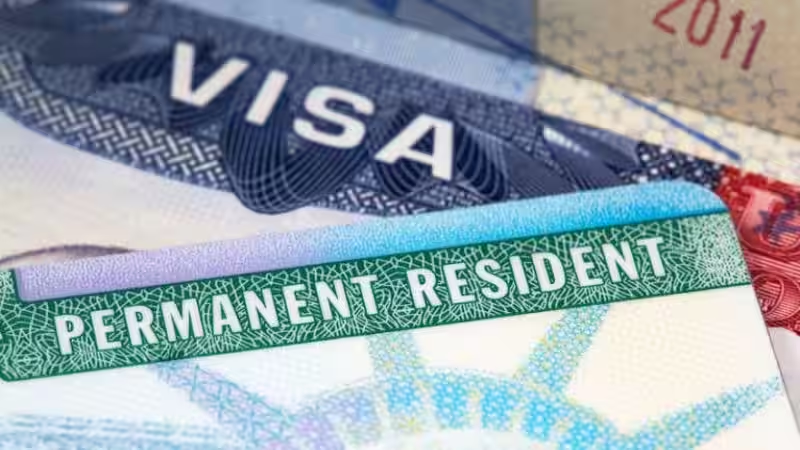
Is a coveted H-1B visa enough to guarantee a future in the United States, or is the more elusive green card the key to long-term residency? This article delves into the complexities of H-1B visas and green cards, highlighting their fundamental differences and implications for foreign workers seeking a permanent presence in the US. We'll explore the limitations of the H-1B system, and the potential avenues for securing permanent residency.
- Understanding the H-1B Visa: Temporary Work Permit
- Exploring Permanent Residency: The Green Card
- The H-1B to Green Card Transition: A Lengthy Journey
- Alternative Avenues to Green Card Status
- Conclusion: A Nuanced Perspective on US Immigration
-
Frequently Asked Questions: H-1B Visas vs. Green Cards
- What is an H-1B visa?
- What is a Green Card?
- What are the key differences between an H-1B visa and a Green Card?
- How can an H-1B visa holder obtain a Green Card?
- What are the limitations of an H-1B visa?
- What are the benefits of having a Green Card?
- What is the Adjustment of Status concurrent filing process?
- Are there alternative pathways to a Green Card besides the H-1B route?
- Is professional guidance recommended when navigating the Green Card application process?
Understanding the H-1B Visa: Temporary Work Permit
The H-1B visa is a temporary work permit for specialized occupations, primarily in fields like science, technology, engineering, and mathematics (STEM). It's a crucial tool for companies seeking skilled foreign workers, but it comes with inherent limitations that prospective H-1B holders should be aware of. This visa isn't a pathway to permanent residency on its own, and the rigorous application process relies heavily on employer sponsorship. In essence, the H-1B visa is a tool to bring talent temporarily to the United States, not a permanent solution.
The lottery system, combined with a numerical cap, further complicates the process. This means that even with a strong application and a supportive employer, the odds of securing the visa can be challenging. The recent surge in layoffs, particularly in the tech sector, has highlighted the precarious nature of H-1B employment. Individuals on H-1B visas suddenly find themselves in a critical predicament: they must either find another sponsor for the H-1B visa or leave the country. This vulnerability is a stark reality for many H-1B visa holders.
Exploring Permanent Residency: The Green Card
The green card, in contrast, represents a different opportunity, offering permanent residency in the United States. It grants the holder the freedom to work, live, and travel within the country without the constraints of a temporary visa.
This independence offers greater job security and career flexibility. Green card holders are not tied to a specific employer, allowing them to change jobs, start businesses, or even remain in the US if they face job loss. The flexibility afforded by green card residency is a significant advantage over the H-1B system's reliance on employer sponsorship. This broader scope is often a driving force behind the desire for green card status.
The H-1B to Green Card Transition: A Lengthy Journey
The transition from an H-1B visa to a green card is a significant step, often a lengthy and complex process. H-1B holders typically pursue a green card through the employment-based immigration system, which involves several steps, including obtaining a qualifying job offer from a U.S. employer. The process is multi-faceted, demanding patience and meticulous attention to detail. Understanding the necessary steps for a smooth transition is crucial.
Unfortunately, this process is not always straightforward. The need for extensive documentation, stringent requirements, and often protracted wait times are major factors that shape the journey. The recent economic shifts have further influenced the difficulty of securing a green card via the H-1B route.
Alternative Avenues to Green Card Status
Recognizing the limitations of the H-1B visa system, many H-1B holders explore alternative pathways to permanent residency. The EB-5 Immigrant Investor Program is a notable example, offering a unique opportunity for individuals to obtain a green card by investing in a U.S. business. This alternative approach allows for a different avenue to permanent residency, and has been gaining traction.
Moreover, a significant improvement for H-1B visa holders has been the introduction of the Adjustment of Status concurrent filing process, available since March 2022. This process allows H-1B visa holders to apply for their green card while simultaneously obtaining an employment authorization document. This crucial document grants them the freedom to work for any employer in the US, enhancing their job security and career prospects significantly. This new avenue has attracted considerable interest from H-1B visa holders. This concurrent filing option effectively shortens the time it takes to establish permanent residency.
Conclusion: A Nuanced Perspective on US Immigration
The H-1B visa and the green card represent fundamentally different approaches to immigration in the United States. The H-1B visa offers temporary work authorization, significantly dependent on employer sponsorship. The green card, however, provides permanent residency, offering a greater degree of freedom and job security.
For those seeking long-term US residence, understanding the limitations of the H-1B visa and the various pathways to a green card is paramount. Navigating this complex system can be daunting, but assistance from a specialized immigration consultancy can prove invaluable. Step Global, for instance, offers expertise in navigating the intricate processes associated with various citizenship and residency programs across several countries. This specialized support can provide a crucial advantage in securing permanent residency.
Ultimately, the choice between an H-1B visa and a green card is a personal one, requiring careful consideration of individual circumstances, career aspirations, and the long-term vision for one's future. Understanding the nuances of each option is crucial to making an informed decision.
Frequently Asked Questions: H-1B Visas vs. Green Cards
What is an H-1B visa?
An H-1B visa is a temporary work visa allowing foreign nationals with specialized skills (e.g., in STEM fields) to work in the U.S. It requires an employer to sponsor the applicant and is subject to annual numerical limits and a lottery system. The visa typically lasts for three years, potentially extendable for another three. Crucially, it's not a pathway to permanent residency.
What is a Green Card?
A Green Card is a document granting permanent residency in the U.S. It allows the holder to work and live indefinitely in the country without an expiration date. There are various pathways to obtaining a Green Card, including employment, marriage, family relations, lottery, asylum, or refugee status.
What are the key differences between an H-1B visa and a Green Card?
The primary difference lies in the status granted. H-1B visas are temporary, tied to a specific employer, and have strict limitations (numerical limits, lottery system). A Green Card, on the other hand, signifies permanent residency, offering greater freedom to change jobs, start businesses, and remain in the U.S. even after job loss. Green Card holders enjoy significantly improved job security and career flexibility.
How can an H-1B visa holder obtain a Green Card?
The most common route is through employment-based avenues. An H-1B visa holder can apply for a Green Card while simultaneously working for the sponsoring employer or through other options like the EB-5 Immigrant Investor Program. The newly introduced Adjustment of Status concurrent filing process has improved this by allowing H-1B holders to apply for a Green Card while obtaining an employment authorization document, increasing job security and career advancement. This option is available since March 2022.
What are the limitations of an H-1B visa?
H-1B visas are heavily reliant on employer sponsorship, making job security precarious. Recent tech layoffs highlight this vulnerability. The visa is directly tied to the employer, restricting job choices and potentially impacting salary negotiations. The maximum stay is 6 years, after which the holder needs to either find a new sponsor or leave the country.
What are the benefits of having a Green Card?
Green Card holders enjoy significantly increased freedom and job security. They can change jobs, start businesses, or remain in the U.S. even after job loss, unlike H-1B holders who are tied to their sponsor. This independence fosters better career flexibility and security.
What is the Adjustment of Status concurrent filing process?
This recently introduced process allows H-1B visa holders to simultaneously apply for a Green Card and obtain an employment authorization document. This document lets them work for any employer in the U.S., enhancing job security and career advancement prospects. It became available in March 2022.
Are there alternative pathways to a Green Card besides the H-1B route?
Yes, several alternative programs exist, such as the EB-5 Immigrant Investor Program. This route allows individuals to invest in a U.S. business and gain permanent residency. Other avenues include marriage, family relations, or lottery systems.
Yes, understanding the complexities of the Green Card process and the various avenues requires significant research and preparation. Seeking professional guidance from immigration consultants can be highly beneficial in navigating the application process successfully.