
Explain Some of the Dangers of Being a Stateless Nation
Statelessness, the absence of nationality, can lead to a multitude of profound and often overlooked dangers. It strips individuals of fundamental rights and protections, leaving them vulnerable in a world that often operates under the assumption of national affiliation. This article will explore some of the significant risks associated with this condition, highlighting the systemic issues that perpetuate it and the consequences for those affected.
The Systemic Nature of Statelessness: Discriminatory Laws
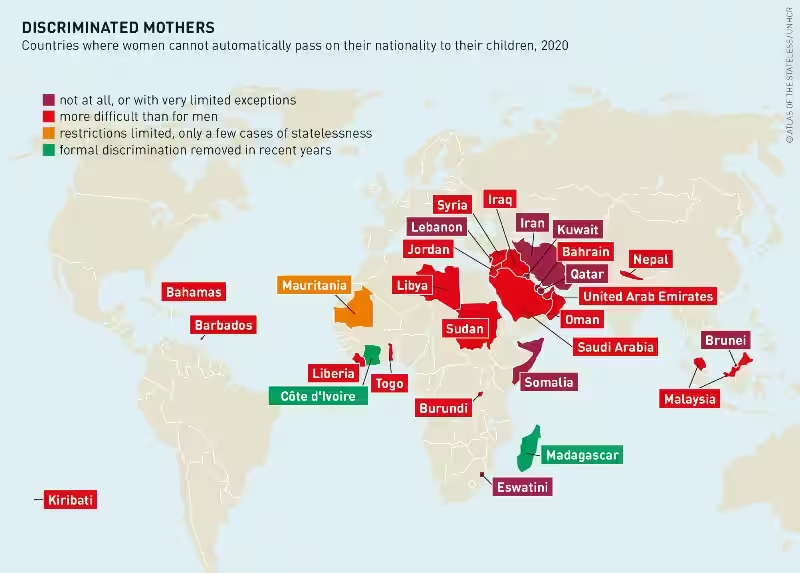
Discriminatory nationality laws are a primary driver of statelessness. These laws, often steeped in historical biases, frequently target minority groups based on their race, ethnicity, religion, language, or gender. Such laws can completely deny or severely limit the ability of particular groups to acquire citizenship, leading to widespread statelessness within affected communities. For example, a nation's laws might not recognize citizenship for individuals born to undocumented immigrants, effectively denying them any national identity.
These discriminatory practices are not isolated incidents but often systemic. Laws that deny women equal rights to their male counterparts in citizenship acquisition, or those that categorically exclude particular racial or ethnic groups from citizenship, create a deeply ingrained structural issue. The impact of these laws is exacerbated when they are coupled with inadequate or inconsistent legal processes. This creates a cycle of disadvantage, trapping individuals and families in a state of perpetual statelessness.
Nationality Laws and Statelessness: Gaps and Inconsistencies
The very laws designed to determine nationality can unintentionally create statelessness. Inconsistent or poorly drafted laws, particularly those relating to parentage or place of birth, can result in a significant number of individuals being excluded from citizenship. For instance, a child born to undocumented parents in a country where citizenship is not automatically granted to the children of non-citizens is at high risk of being stateless.
Furthermore, the complexity of migration patterns and shifting borders can strain national laws. When individuals are displaced by conflict or economic hardship, their rights to citizenship can be jeopardized as they no longer fit neatly into the parameters of existing nationality laws in either their country of origin or their destination. This creates a perilous situation where the very movement to seek safety or opportunity can inadvertently lead to statelessness. This is especially true for individuals who cannot prove their lineage or residency requirements in a new country.
Statelessness: A Consequence of Shifting Borders and States
The emergence of new states or significant changes to existing borders can leave groups without a recognized nationality. Regions undergoing political reorganization or conflict often fail to accommodate the pre-existing population's claims to citizenship. This becomes particularly problematic when those affected belong to minority groups, as they may face significant difficulties in proving their connection to the newly formed or reorganized state. Historical records and birth certificates might be lost or unavailable, making it extremely challenging to establish their right to citizenship.
Additionally, the loss or deprivation of nationality through prolonged residence abroad or legal changes can result in statelessness. Individuals who have lived outside their country of origin for extended periods may lose their citizenship through a variety of legal loopholes or bureaucratic inaction. This is particularly relevant in societies where nationality laws are not well-defined and where documentation processes are inadequate.
The Role of Documentation and Proof in Statelessness
A critical factor in statelessness is the inability to prove connections to a state. This frequently manifests itself as a lack of birth registration, the absence of proper documentation, or the loss of important records. While being undocumented does not automatically imply statelessness, the lack of proper documentation significantly hinders the acquisition of nationality. Without the necessary paperwork, individuals are often denied access to services and protections that are intrinsic to citizenship. This inability to demonstrate a connection to a state can seriously impact access to healthcare, education, employment, and other necessities.
Statelessness: A Multifaceted Problem
The risks associated with statelessness extend far beyond the legal realm; they impact every aspect of an individual's life. Stateless people often face:
- Limited access to healthcare: Without citizenship, individuals might be denied basic medical services and healthcare.
- Limited access to education: Stateless children may be prevented from attending school, hindering their opportunities for growth and development.
- Increased vulnerability to exploitation: Lack of legal protection can make stateless individuals more vulnerable to human trafficking, forced labor, and other forms of exploitation.
- Social and economic marginalization: Statelessness frequently leads to isolation and poverty, creating a cycle of disadvantage for individuals and their families.
Conclusion
Statelessness is not simply an abstract legal concept. It has very real and devastating consequences for individuals and communities. Understanding the causes and consequences of statelessness is crucial in developing effective policies and practices to prevent and address this pressing issue. Naturally, a commitment to promoting inclusive and equitable nationality laws is essential to protecting the rights of all individuals. Nations must recognize that statelessness is a systemic problem requiring multi-pronged solutions.
Statelessness: An FAQ
This FAQ explores the dangers of being a stateless nation, focusing on the causes and consequences of this precarious legal and human condition.
What is statelessness?
Statelessness refers to the lack of nationality for an individual. This means a person is not recognized as a citizen or national of any country, leaving them without the protection and rights afforded to citizens. This lack of nationality stems from a complex interplay of factors, not always an individual's fault.
What are the main causes of statelessness?
Statelessness often arises from a variety of factors, including:
- Discriminatory Nationality Laws: Laws that explicitly discriminate against minority groups based on race, ethnicity, religion, language, or gender can create vast pockets of statelessness. Laws that deny citizenship to women or certain ethnic groups, or change existing laws to exclude groups, are particularly problematic.
- Flawed Nationality Laws: Inconsistent or poorly drafted nationality laws, especially those related to parentage, birth, or descent, can unintentionally exclude individuals. For example, laws based solely on descent may leave children of unknown parentage without citizenship. Similarly, a lack of clear procedures for acquiring citizenship can leave individuals vulnerable.
- Population Displacement and Shifting Borders: The emergence of new states or the redrawing of borders can leave groups outside the nationality framework of the new states if they cannot prove their connection to the new country. This is especially challenging for minority groups struggling to prove lineage or meet residency requirements.
- Loss or Deprivation of Nationality: Individuals may lose their nationality due to extended periods of residence abroad, or through legal changes. This can happen even when they have strong ties to a previous country, such as families who've emigrated.
- Lack of Documentation: The inability to prove connections to a state, often due to a lack of birth registration or other documentation, is a significant risk factor, even if those individuals are not undocumented.
How does statelessness impact individuals?
Stateless individuals are often denied access to fundamental rights and protections, including:
- Lack of legal recognition: This means that stateless individuals cannot access essential services like healthcare, education, or employment.
- Inequality and discrimination: Stateless individuals are frequently marginalized and subjected to discrimination because they are not recognized by any nation state.
- Vulnerability to exploitation: Without legal protection, stateless individuals are more vulnerable to human trafficking, forced labor, and other abuses.
- Social isolation and exclusion: Without nationality, stateless individuals face significant barriers to integrating into communities, making it hard to build social networks and relationships.
- Limited opportunities for development: The absence of legal status hinders access to jobs, education, and other opportunities, limiting personal and societal growth.
What can be done to address statelessness?
Addressing statelessness requires a multifaceted approach, encompassing:
- Reform of nationality laws: Governments should strive to create inclusive and clear nationality laws that prevent unintended exclusions and offer equal opportunities for all.
- International cooperation: International bodies and states must collaborate to identify, support, and assist stateless people.
- Protection of rights: Implementing policies that recognize the rights of stateless individuals is crucial to protecting them from exploitation and discrimination.
- Improved documentation procedures: States need effective systems for registering births and issuing documentation to prevent statelessness.
- Recognition of stateless individuals' identities: Supporting and validating the citizenship claims of stateless individuals is essential.
Is being undocumented the same as being stateless?
No. While a lack of documentation can significantly impede the acquisition of nationality and increase the risk of statelessness, being undocumented does not automatically equate to being stateless. A person can be undocumented but still a citizen of a country, while a stateless person has no nationality.