
Choosing the Right Exclusion Netting for Your Crops
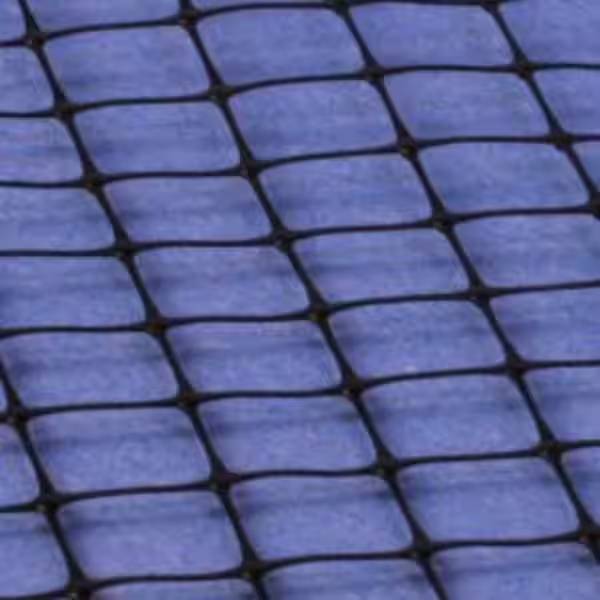
Protecting your crops from pests and wildlife is crucial for a successful harvest. One increasingly popular method is using exclusion netting, a barrier that keeps unwanted visitors away from your valuable plants. But with so many options available, choosing the right netting can feel overwhelming. This article will guide you through the key considerations when selecting exclusion netting, highlighting different types and their applications.
- Understanding Exclusion Netting: Types and Applications
- Case Study: ExcludeNet for Berry Crop Protection
- Beyond ExcludeNet: Other Exclusion Netting Options
-
ExcludeNet Insect Exclusion Netting FAQ
- What is ExcludeNet and what does it protect against?
- How effective is ExcludeNet at preventing infestation?
- What are the specifications of the ExcludeNet netting?
- Why is ExcludeNet more affordable than competitors?
- What other products does ExcludeNet offer besides insect netting?
- What is the manufacturing process and origin of materials?
- How long does ExcludeNet netting last?
- What are the benefits of using ExcludeNet compared to other pest control methods?
- Does ExcludeNet offer support or guidance on installation?
- What is ExcludeNet's return policy?
- How can I order ExcludeNet products?
Understanding Exclusion Netting: Types and Applications
Exclusion netting isn't a one-size-fits-all solution. Different nets are designed for specific pests and applications. Consider the following factors when choosing your netting:
The first step is identifying the specific pests you're targeting. Are you dealing with insects like Spotted Wing Drosophila (SWD), birds, or larger animals like deer or rabbits? The mesh size and material strength will vary depending on the pest's size and aggressiveness.
Secondly, the environment plays a crucial role. The netting needs to withstand the local climate, including sun exposure, wind, and potential rainfall. UV resistance is a key factor to consider for longevity. Think about the size of your crops and the installation method. You'll need to choose a width that suits your setup, and the material needs to be strong enough to support the weight of the crop and withstand environmental stresses.
Mesh Size and Material Strength: A Critical Balance
The mesh size directly impacts the effectiveness of the netting. A finer mesh will exclude smaller insects, while a coarser mesh is better for larger pests. However, a finer mesh can reduce light transmission, potentially hindering plant growth. Finding the right balance is crucial. Material strength is also essential, particularly in areas with high winds or heavy rainfall. Look for netting made from durable materials like high-density polyethylene (HDPE) which is known for its UV resistance and strength.
Choosing the right mesh size and material is critical for the success of your exclusion netting strategy. Too large a mesh, and your target pests will slip through; too small, and your plants may suffer from insufficient sunlight.
Case Study: ExcludeNet for Berry Crop Protection
ExcludeNet provides a compelling example of specialized exclusion netting. Their 85-gram ExcludeNet, specifically designed for Spotted Wing Drosophila (SWD) protection, showcases the effectiveness of a targeted approach. Their decade-long data demonstrates consistently low infestation rates, often reaching zero percent in multiple harvest seasons.
This success isn't just luck. The robust construction of the netting (85 grams per square meter, 0.60 mm x 1.05 mm) plays a significant role. Combined with ExcludeNet's direct experience in application, they offer a comprehensive solution beyond simply supplying the netting. Their affordability, achieved by minimizing overhead costs, makes this high-performance solution accessible to berry farmers of all sizes.
ExcludeNet's Business Model: A Collaborative Approach
ExcludeNet stands out due to its commitment to affordability and collaboration. By reducing overhead costs associated with warehousing and extensive staffing, they can pass on savings to customers. Their tiered pricing system further encourages bulk purchases and group orders amongst neighboring farms, fostering a collaborative pest control effort that benefits the whole community. This collaborative approach demonstrates a deeper understanding of the challenges faced by growers, extending their support beyond the product itself.
Beyond ExcludeNet: Other Exclusion Netting Options
While ExcludeNet specializes in berry crop protection, other companies offer a wide range of exclusion netting for various applications. Let's explore some alternative options:
- ProtekNet: This 47-gram netting offers broader protection against a wider range of insect pests, birds, rabbits, and even deer. Its lighter weight and larger mesh size might be suitable for applications where ExcludeNet's finer mesh is unnecessary.
- Nixalite: This company offers an extensive catalog of bird exclusion products, including various types of netting, spikes, and vent guards. Their products cater to a broader range of applications, from protecting buildings to securing solar panels.
The selection of the best exclusion netting depends on your specific needs and budget. Consider the type of pests you are trying to exclude, the size and type of your crop, and the durability of the netting required for your climatic conditions.
Considering Alternatives and Making Informed Decisions
Choosing the right exclusion netting requires careful consideration. Factors like mesh size, material strength, UV resistance, and cost all need to be weighed against your specific needs. Don't hesitate to consult with experts or conduct thorough research before making a purchase. Reading reviews and comparing specifications from different manufacturers can help you make an informed decision that will protect your investment and ensure a successful harvest. Analyzing the long-term costs, including installation and maintenance, is also crucial.
In conclusion, exclusion netting offers a valuable tool for protecting your crops from a wide array of pests and wildlife. By understanding the different types of netting available and carefully considering your specific requirements, you can choose the most effective and cost-efficient solution to safeguard your harvest. Remember that considering the long-term implications including installation, material longevity, and potential drawbacks such as reduced light transmission is vital for selecting the most appropriate exclusion netting for your needs.
ExcludeNet Insect Exclusion Netting FAQ
What is ExcludeNet and what does it protect against?
ExcludeNet offers high-quality insect exclusion netting primarily designed to protect berry crops from the Spotted Wing Drosophila (SWD). Our flagship 85-gram netting has a proven track record of significantly reducing SWD infestation.
How effective is ExcludeNet at preventing infestation?
Data spanning over a decade shows infestation rates consistently below 1%, with multiple harvest seasons reporting 0% infestation. This high effectiveness is due to the netting's robust construction and our direct experience in its application.
What are the specifications of the ExcludeNet netting?
Our 85-gram netting measures 0.60 mm x 1.05 mm and is available in 13-foot-wide rolls or 6.5-foot-wide by 328-foot-long rolls. Larger 26-foot-wide pieces can be created by sewing two rolls together for an additional fee. It's manufactured by Tek-Knit Industries in Montreal using high-density polyethylene yarn made in the USA.
Why is ExcludeNet more affordable than competitors?
Unlike larger companies, we avoid high overhead costs associated with warehousing, extensive staffing, and large-scale delivery operations. Our tiered pricing system offers further cost savings for bulk purchases, and we encourage group orders to benefit neighboring farms.
What other products does ExcludeNet offer besides insect netting?
In addition to our insect netting, we also offer vineyard sidewall netting, hail netting, and shade cloth. Please note that these products have a longer lead time of at least three months.
What is the manufacturing process and origin of materials?
Our 85-gram netting is manufactured by Tek-Knit Industries in Montreal using high-density polyethylene yarn made in the USA.
How long does ExcludeNet netting last?
The longevity of the netting depends on environmental factors, but the high-quality materials and construction contribute to a significant lifespan. Further information on expected lifespan can be provided upon request.
What are the benefits of using ExcludeNet compared to other pest control methods?
ExcludeNet offers a cost-effective, high-performance solution that eliminates the need for harmful pesticides while significantly reducing SWD damage and improving yields. Our data-driven evidence supports our claims.
Does ExcludeNet offer support or guidance on installation?
We are happy to provide guidance on the best application methods for our netting. Contact us directly for assistance.
What is ExcludeNet's return policy?
Please contact us directly to inquire about our return policy, as it may vary depending on circumstances.
How can I order ExcludeNet products?
You can contact us directly via phone or email to place an order. We can provide you with current pricing and shipping information.