
Mastering the Employee Warning Template: A Guide to Corrective Action
Many employers struggle with the process of addressing employee performance or behavioral issues. A well-structured and legally sound approach is crucial. This guide will explore the importance of employee written warnings and provide practical advice on using an employee warning template effectively. We'll also delve into the nuances of progressive discipline and how to avoid potential legal pitfalls.
- Understanding the Purpose of Written Warnings
- Utilizing an Effective Employee Warning Template
- The Process of Issuing a Written Warning
- Progressive Discipline and Avoiding Unfair Warnings
- Documenting Verbal Warnings and Electronic Delivery
-
Employee Warning Template FAQ
- What is the purpose of an employee written warning?
- What information should be included in a written warning?
- Are there different types of written warnings?
- What is the process for issuing a written warning?
- How long should a written warning remain on an employee's record?
- What constitutes an unfair written warning?
- When is a written warning necessary?
- What if an employee refuses to sign the written warning?
- Are there templates available for written warnings?
- What about documenting verbal warnings?
Understanding the Purpose of Written Warnings
Written warnings aren't intended as punishment. Instead, they serve as a formal record of performance or behavioral problems, offering an opportunity for improvement and corrective action. They follow unsuccessful verbal warnings and provide a clear documented trail of events. This is critical for both the employer and the employee. For the employer, it offers protection against future legal challenges. For the employee, it provides a clear understanding of expectations and the consequences of continued poor performance or behavior.
This formal approach is significantly more effective than simply relying on verbal communication. Verbal warnings, while useful for minor infractions, lack the concrete documentation of a written warning. This lack of documentation can create ambiguity and leave both parties vulnerable in the event of future disputes.
Utilizing an Effective Employee Warning Template
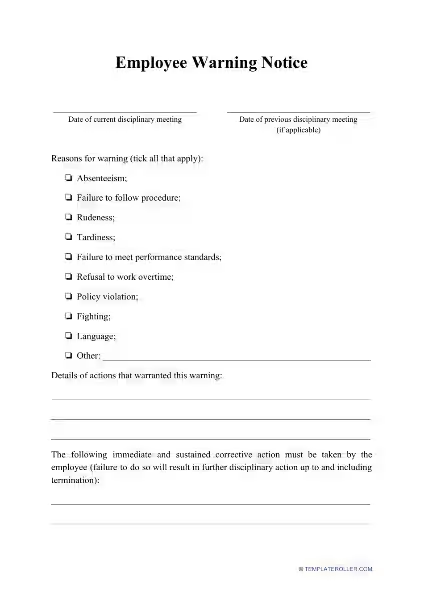
An effective employee warning template should include specific details about the infraction, expected improvements, and the consequences of continued non-compliance. This clarity is key to avoiding misunderstandings and ensuring a fair process. Here are essential elements to include:
- Employee Information: Name, employee ID, department, and date.
- Specific Infraction: A clear and concise description of the problem, backed up by factual evidence (e.g., dates, times, witnesses). Avoid vague language.
- Expected Improvements: Outline concrete steps the employee must take to rectify the situation. Set measurable goals and provide a realistic timeline.
- Consequences of Non-Compliance: Clearly state the repercussions of continued failure to meet expectations, including the possibility of further disciplinary action up to and including termination.
- Employee Acknowledgment: A space for the employee to sign and date the document, acknowledging receipt and understanding. Document refusal to sign as well.
Examples of Employee Warning Templates for Different Infractions
Different situations require slightly different approaches within your employee warning template. Here are a few examples:
-
Poor Performance: Specify the deficient areas (e.g., missed deadlines, low quality of work), quantify the shortfall (e.g., "missed 3 deadlines in the last month"), and detail the expected improvements (e.g., "meet all deadlines going forward, improve quality to meet company standards").
-
Unprofessional Conduct: Clearly describe the unprofessional behavior (e.g., inappropriate language, harassment, insubordination), cite specific instances, and outline the expected change in behavior (e.g., "adhere to company's code of conduct," "treat colleagues with respect").
-
Attendance Issues: Document the absences or tardiness (e.g., "absent without notice on three occasions in the last two months"), state the company's attendance policy, and detail the expected improvement (e.g., "maintain perfect attendance going forward," "provide notification of absences in accordance with company policy").
The Process of Issuing a Written Warning
Issuing a written warning should be a formal and documented process. This includes:
- Scheduling a Meeting: Arrange a private meeting with the employee to discuss the issue.
- Presenting the Issue: Clearly and calmly explain the problem, referencing specific instances and evidence.
- Presenting the Written Warning: Provide the employee with a copy of the completed employee warning template.
- Obtaining Employee Signature (or Documenting Refusal): Have the employee sign the document, indicating their understanding and acknowledgment. If they refuse, document this refusal explicitly.
- Maintaining Records: Keep a copy of the signed warning in the employee's personnel file.
- Following Up: Schedule follow-up meetings to monitor progress and offer support.
The duration of a written warning on an employee's record typically ranges from six to twelve months. The exact timeframe might vary depending on company policy.
Progressive Discipline and Avoiding Unfair Warnings
Most companies utilize a progressive discipline model. This typically involves a series of steps:
- Verbal Warning: For minor infractions.
- First Written Warning: For more serious or recurring issues.
- Final Written Warning: For continued non-compliance.
- Termination: If the employee fails to improve after the final written warning.
It's crucial to avoid issuing unfair warnings. An unfair warning might lack proper justification, deviate from company policy, or be based on discriminatory factors. Such warnings can lead to legal challenges. Ensure that all warnings are justified, consistent with company policy, and free from bias. Always document everything thoroughly.
Documenting Verbal Warnings and Electronic Delivery
While written warnings are crucial for serious issues, verbal warnings are appropriate for minor infractions. It's essential to document these verbal warnings as well, noting the date, the issue discussed, the action plan agreed upon, and the witnesses present.
Similarly, you might choose to deliver written warnings electronically using an email. However, always obtain confirmation of receipt and understanding, possibly by requesting a reply or signature. Remember to retain a copy of the email for your records.
By following these guidelines and utilizing a well-crafted employee warning template, you can ensure a fair, consistent, and legally sound process for addressing employee performance and behavioral issues. Remember, the goal is improvement, not punishment. Transparency and clear communication are paramount in maintaining a positive and productive work environment.
Employee Warning Template FAQ
What is the purpose of an employee written warning?
An employee written warning is a formal record of performance or behavioral issues. It's not intended as punishment, but rather as an opportunity for corrective action and improved performance. It follows unsuccessful verbal warnings and provides a clear record of the issues and expectations for improvement.
What information should be included in a written warning?
A written warning should clearly state the specific infraction(s), outlining the problem with concrete examples. It should detail the expected improvements, including specific, measurable, achievable, relevant, and time-bound (SMART) goals. Finally, it must state the consequences of continued non-compliance, which might include further disciplinary action up to and including termination. The company's relevant policies should also be referenced.
Are there different types of written warnings?
Typically, there are at least two types: a first written warning and a final written warning. A first warning serves as a formal notification of performance or behavioral issues and outlines expectations for improvement. A final warning indicates that further non-compliance will result in termination. The exact number of warnings before termination varies by company policy.
What is the process for issuing a written warning?
Issuing a written warning involves scheduling a formal meeting with the employee, clearly presenting the issues, providing the written warning document for review and signature (documenting refusal if applicable), maintaining records of the meeting and the warning, and following up on the employee's progress towards improvement within the specified timeframe.
How long should a written warning remain on an employee's record?
The duration of a written warning on an employee's record typically ranges from six to twelve months. After this period, it may be removed, depending on company policy.
What constitutes an unfair written warning?
An unfair written warning lacks proper justification or deviates from established company policy. It may not provide sufficient detail or supporting evidence. Unfair warnings can lead to legal challenges. Ensuring the warning is objective, fair, and consistent with company policy is crucial.
When is a written warning necessary?
A written warning is generally issued after verbal warnings have proven ineffective in addressing performance or behavioral problems. Minor infractions may only require verbal warnings. The decision to issue a written warning should be based on the severity of the issue and the employee's history.
What if an employee refuses to sign the written warning?
If an employee refuses to sign the written warning, this refusal should be documented in the warning itself. The documentation should clearly state the date, time, the fact of the refusal, and who witnessed the refusal (if applicable). This ensures a formal record exists despite the lack of employee signature.
Are there templates available for written warnings?
Yes, many companies use pre-written templates to ensure consistency and clarity. These templates typically include sections for specific infractions, expected improvements, and consequences. Using a template is recommended to maintain a standardized approach to disciplinary actions.
What about documenting verbal warnings?
Verbal warnings should also be documented. A brief record should be kept, including the date, time, the issue discussed, the actions expected from the employee, and the names of those present. This creates a paper trail and helps to avoid disputes regarding verbal warnings. This documentation might take the form of a brief memo or an entry in a formal performance management system.