
Understanding and Supporting Your Dual Language Learner
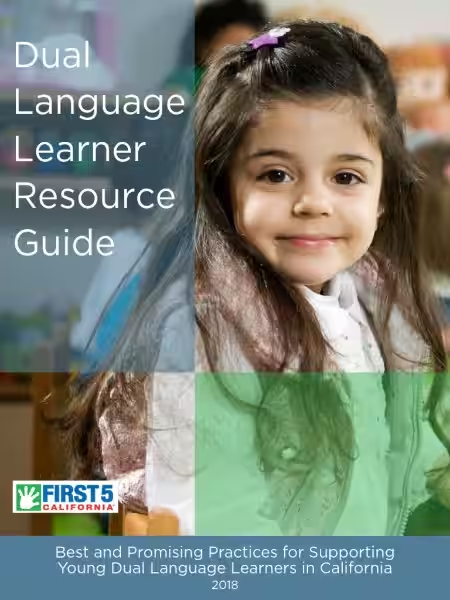
Are you a parent, educator, or caregiver curious about the best ways to support a dual language learner (DLL)? Understanding the unique strengths and needs of these children is crucial for fostering their academic and personal success. This article explores effective strategies for nurturing bilingualism in young children (ages 0-5), emphasizing that their linguistic abilities are a significant asset, not a challenge.
- The Cognitive Advantages of Bilingualism
-
Best Practices for Educating Young Dual Language Learners
- Comprehensive Assessments: Laying the Foundation
- Differentiated Instruction: Meeting Individual Needs
- Family Partnerships: Collaborating for Success
- Strategic Home Language Integration: Leveraging Linguistic Assets
- Promoting Language Development: Creating Rich Language Environments
- Specific Instructional Strategies: Practical Tools for Success
- Transition to Kindergarten: Ensuring a Smooth Pathway
- What is a Dual Language Learner (DLL)?
- How are DLLs assessed?
- What kind of instruction works best for DLLs?
- How important is family involvement in a DLL's education?
- How is the home language used in the classroom?
- What strategies promote language development in DLLs?
- How can we ensure a smooth transition to kindergarten?
- What is the overall approach to educating DLLs?
The Cognitive Advantages of Bilingualism
Bilingualism, the ability to proficiently use two or more languages, is increasingly recognized as a cognitive strength. Rather than hindering development, it enhances cognitive flexibility, problem-solving skills, and even improves performance in areas like literacy and math. DLLs often demonstrate superior executive function skills, such as attention control and task switching, due to the constant mental juggling of languages. This early exposure to multiple linguistic systems helps them develop a more robust and adaptable brain.
It's important to understand that the learning process for a DLL is not simply about acquiring two separate language systems. Instead, the languages often interact and support each other. A child might use words or grammatical structures from one language to help them understand concepts in the other. This process, often referred to as code-switching, is a natural part of language development and should be viewed as a positive indicator of cognitive flexibility.
Best Practices for Educating Young Dual Language Learners
Effective education for DLLs requires a holistic approach that values their linguistic and cultural backgrounds. This means moving beyond simply teaching English and instead embracing their home language as a valuable tool for learning.
Comprehensive Assessments: Laying the Foundation
Accurate assessment is paramount. Screenings and evaluations must be conducted in both English and the child's primary language. Using qualified interpreters when necessary ensures a fair and accurate evaluation of the child's developmental abilities. Understanding diverse writing systems also plays a crucial role, especially for children whose home language utilizes a different script from English. The goal is not just to identify potential learning gaps but to build a comprehensive picture of the child's strengths and needs. This careful assessment will help tailor the learning experience to perfectly meet the individual child's needs.
Differentiated Instruction: Meeting Individual Needs
Pre-kindergarten programs must adopt differentiated instruction techniques. Lessons, activities, and materials should be personalized to cater to each child's unique language level and learning style. This might involve adapting gross and fine motor skill development activities to be more accessible or providing additional support for language comprehension. Close collaboration between teachers, families, and specialists can greatly enhance the impact of differentiated instruction, ensuring a successful and fulfilling learning experience for each child.
Family Partnerships: Collaborating for Success
Strong family partnerships are essential. Families must be active participants in their child's education; their cultural perspectives and insights should be valued and integrated into the classroom setting. Open communication and mutual understanding are critical, given that cultural norms surrounding schooling and parental involvement can vary greatly. When educators acknowledge and respect the family's role in the child's development, it creates a supportive environment that encourages both learning and growth.
Strategic Home Language Integration: Leveraging Linguistic Assets
The child's home language should be strategically integrated into the classroom. This isn't about replacing English; it's about leveraging the child's existing linguistic strengths to build upon. Using the home language to scaffold learning, provide practice, and extend understanding can significantly enhance comprehension and engagement with the classroom material. The classroom environment should actively promote multilingualism and celebrate the richness of diverse cultures.
Promoting Language Development: Creating Rich Language Environments
DLLs need ample opportunities to use both languages. This includes conversations, reading aloud (in multiple languages, including bilingual books), listening to audio materials in both languages, and encouraging peer interaction. Close observation and ongoing assessment of speaking and listening skills are vital for gauging progress and adapting strategies as needed. The more opportunities a child has to use language, the more fluent and confident they will become in both their home language and English.
Specific Instructional Strategies: Practical Tools for Success
Several specific strategies can significantly aid in language learning. These include:
- Utilizing cognates: Words shared across languages provide a familiar anchor point for learning new vocabulary.
- Employing visual aids: Visual tools make concepts more accessible, especially for young learners.
- Using bilingual books and resources: These resources provide context and build vocabulary in both languages.
- Facilitating peer-to-peer learning: Interaction with other bilingual children provides valuable language practice.
Teachers should also actively learn about the sounds in English that their students' home languages might lack, building phonetic awareness gradually, focusing on high-frequency words and word families to accelerate English fluency.
Transition to Kindergarten: Ensuring a Smooth Pathway
A smooth transition to Kindergarten is vital. Effective communication between pre-kindergarten and kindergarten teachers is necessary, along with comprehensive student records including language profiles, social histories, and assessment results. Continued family engagement is paramount for successful transitioning. This collaboration ensures a continuous and supportive learning environment for the child, minimizing any potential disruptions or challenges as they move to a new educational setting.
In conclusion, the successful education of dual language learners hinges on a holistic, culturally responsive approach that values bilingualism and actively integrates the child's home language and culture into the learning process. By understanding and embracing the unique strengths of DLLs, we can empower them to thrive academically and personally.
What is a Dual Language Learner (DLL)?
A Dual Language Learner is a child (aged 0-5 in this context) who is learning two or more languages simultaneously. This is a significant cognitive asset, enhancing their problem-solving, concentration, and literacy/math skills. It's crucial to remember that bilingualism is a strength, not a deficit.
How are DLLs assessed?
Comprehensive assessments are vital, conducted in both English and the child's primary language. Interpreters may be needed to ensure accurate evaluations of developmental abilities. The assessment process must also account for different writing systems.
What kind of instruction works best for DLLs?
Differentiated instruction is key. Lessons, activities, and materials must be personalized to meet individual needs and language levels, adapting even gross and fine motor skill activities as needed. This requires thorough pre-K screenings, family interviews, and close observation of the child.
How important is family involvement in a DLL's education?
Family partnerships are essential! Strong collaboration between families, teachers, and specialists maximizes a child's success. Families should be actively involved, and their cultural perspectives valued. Open communication and mutual understanding are crucial, acknowledging that cultural norms regarding schooling and family involvement can differ significantly.
How is the home language used in the classroom?
The child's home language should be strategically integrated into the classroom to support comprehension, engagement, and assessment. This includes using the home language to scaffold learning, provide practice, and extend understanding. The classroom environment should actively promote multilingualism and multiculturalism.
What strategies promote language development in DLLs?
DLLs need abundant opportunities for language use: conversations, reading aloud (in multiple languages, including bilingual books), listening to audio materials, and peer interaction. Close observation and ongoing assessment of speaking and listening skills are crucial. Utilizing cognates (words shared across languages), visual aids, bilingual resources, team-teaching with bilingual staff, peer-to-peer learning, and opportunities to speak their native language are all highly effective strategies. Teachers should also focus on building phonetic awareness gradually, addressing sounds absent in the child's home language, and using high-frequency words and word families to accelerate English fluency.
How can we ensure a smooth transition to kindergarten?
Effective communication between pre-kindergarten and kindergarten teachers is vital. Comprehensive student records, including language profiles, social histories, and assessment results, are essential. Continued family engagement remains crucial for a successful transition.
What is the overall approach to educating DLLs?
The most effective approach is holistic and culturally responsive. It emphasizes the importance of bilingualism, family involvement, and differentiated instruction to maximize academic and personal success. It rests on the belief in the abilities of DLLs and the deliberate integration of their home languages and cultures into the learning process.