
Does Claiming My Parent as Dependent Affect Her Medicaid?
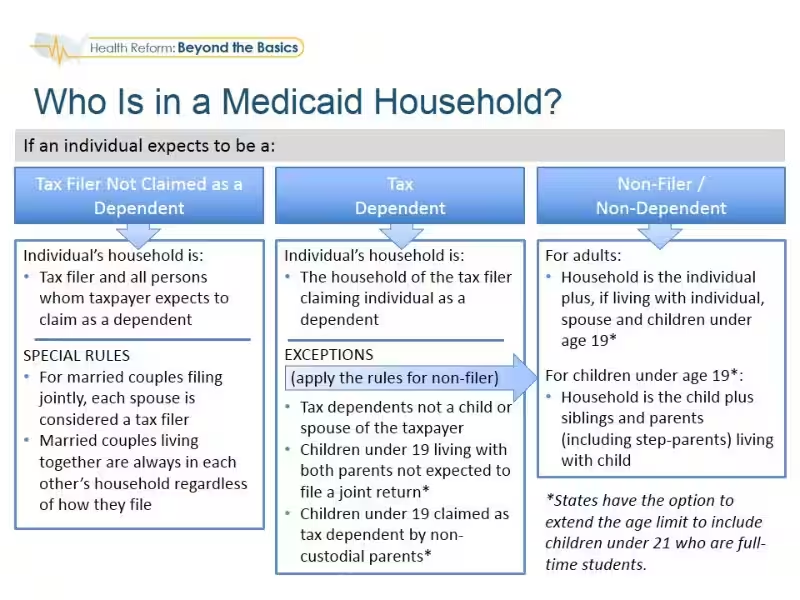
This article addresses a common concern regarding the relationship between claiming a parent as a dependent on a tax return and their Medicaid eligibility. Understanding this connection is crucial for families navigating the complexities of senior care.
- Understanding Medicaid Eligibility
- The Impact of Financial Arrangements
- The Dependent Relationship and Support Costs
- Key Takeaways and Precautions
- Additional Considerations
-
FAQ: Claiming a Parent as a Dependent and Medicaid Eligibility
- Does claiming my parent as a dependent affect their Medicaid?
- What if I financially support my parent?
- How much support is considered too much?
- What if I deposit money into my parent's account to help with expenses?
- Does the amount of money I contribute to my parent's Medicaid costs matter?
- My parent's income and assets are already below Medicaid limits. Will claiming them affect it?
- What should I do to ensure my parent's Medicaid eligibility?
Understanding Medicaid Eligibility
Medicaid eligibility is determined by a complex interplay of income and asset limits. These limits vary significantly based on the state and the specific Medicaid program, such as Aged, Blind, and Disabled (ABD) Medicaid, Home and Community-Based Services (HCBS) Medicaid Waivers, or Nursing Home Medicaid. This means that a single formula doesn't apply everywhere, and it's essential to consult with state-specific resources for accurate information. It's important to remember that the system is designed to support those with the greatest need.
Importantly, the fundamental principle is that a parent's Medicaid eligibility is assessed independently of their child's tax filing. The child claiming the parent as a dependent doesn't automatically affect Medicaid benefits, a fact that naturally brings forth many other questions and considerations.
The Impact of Financial Arrangements
While claiming a parent as a dependent doesn't inherently disqualify them from Medicaid, special care must be taken with financial transactions. Depositing funds directly into the parent's account to assist with living expenses is a crucial area of potential complication. Such deposits could be viewed as unearned income, potentially exceeding the Medicaid income limit. This is important to note as the financial guidelines are often strict.
It's crucial to understand that the potential for disqualification arises when the deposited funds push the parent's income above the Medicaid eligibility limit. While the risk is there, the amount needed to trigger a disqualification is typically substantial. Furthermore, if the funds are intended for immediate expenses, they are likely to be spent quickly and, therefore, not counted as assets impacting Medicaid eligibility. This is a naturally occurring aspect of the process, and understanding the mechanisms involved is crucial for avoiding potential issues.
The Dependent Relationship and Support Costs
For a child to claim a parent as a dependent, they must financially support the parent, exceeding 50% of their total expenses. This includes a wide range of costs, such as housing, utilities, food, clothing, medical care, transportation, and entertainment. This means that if the parent's Medicaid expenses, for example, exceed 50% of their total support costs during the tax year, then the child cannot claim them as a dependent.
The dependent relationship itself is governed by specific financial requirements. A careful consideration of the support provided is essential for complying with tax regulations and avoiding unintended consequences for Medicaid eligibility.
Key Takeaways and Precautions
In summary, claiming a parent as a dependent on a tax return does not automatically affect their Medicaid eligibility. However, the potential for complications arises from the financial transactions surrounding the claimed support.
The key is to maintain separate financial arrangements and carefully track expenses to ensure that the child's support, including Medicaid expenses, doesn't exceed 50% of the parent's total support costs. The focus should be on ensuring the parent's income and assets remain below the Medicaid eligibility threshold, as the primary concern is not the tax dependency claim itself but the potential for income and asset miscalculations.
Additional Considerations
It's essential to consult with a qualified financial advisor or tax professional. They can provide tailored guidance based on the specific circumstances and the laws in the relevant state.
This specialized knowledge is crucial in ensuring that financial decisions concerning the parent's care and well-being are made in accordance with the specific requirements of the Medicaid program.
Important Note: This article provides general information and should not be considered legal or financial advice. Consult with relevant professionals for personalized guidance.
FAQ: Claiming a Parent as a Dependent and Medicaid Eligibility
This FAQ addresses questions about how claiming a parent as a dependent on a tax return might affect their Medicaid eligibility.
Does claiming my parent as a dependent affect their Medicaid?
No, claiming a parent as a dependent on your tax return does not automatically affect their Medicaid eligibility. Medicaid eligibility is determined by the parent's individual income and asset limits, which vary by state and type of Medicaid program. Your tax filing is separate from their eligibility assessment.
What if I financially support my parent?
Your financial support, as long as it does not exceed 50% of your parent's total support, will not affect their Medicaid eligibility. However, transferring significant funds directly to your parent's account could be considered unearned income, potentially jeopardizing their Medicaid eligibility. If you provide substantial support, ensure your parent's income and assets remain below the Medicaid eligibility limits.
How much support is considered too much?
You can claim your parent as a dependent if you pay more than 50% of their support costs. This includes expenses like housing, utilities, food, medical care, transportation, and entertainment. If your parent's Medicaid costs exceed half of their total support, you cannot claim them as a dependent. Focus on maintaining separate financial arrangements to avoid exceeding this limit.
What if I deposit money into my parent's account to help with expenses?
Depositing funds into your parent's account could potentially push their income above the Medicaid eligibility limit if it's considered unearned income. While the amount needed to trigger disqualification is usually substantial, it's best to avoid such transfers to ensure their eligibility. Focus on maintaining separate accounts and support arrangements.
Does the amount of money I contribute to my parent's Medicaid costs matter?
Your contribution to your parent's Medicaid costs should not exceed 50% of their total support costs. If it does, you cannot claim them as a tax dependent.
My parent's income and assets are already below Medicaid limits. Will claiming them affect it?
If your parent's income and assets are already below Medicaid eligibility limits, claiming them as a dependent is unlikely to affect their eligibility. However, be mindful of potentially exceeding the 50% support threshold.
What should I do to ensure my parent's Medicaid eligibility?
Maintain separate financial arrangements. Ensure your parent's income and assets remain below the Medicaid eligibility limits. Be mindful of the 50% support threshold to avoid jeopardizing your parent's Medicaid eligibility.
Important Note: This FAQ addresses the specific question posed. It does not cover other situations or specific Medicaid programs. Consult with a financial advisor or legal professional for personalized guidance.