
Understanding the Importance of a Certificate of Accuracy in Translation
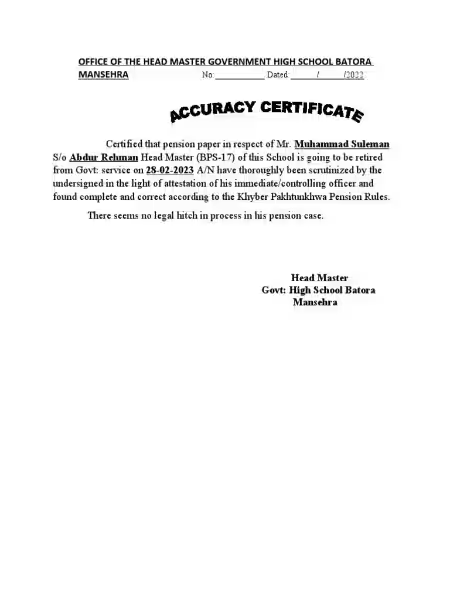
Choosing a translation service can be daunting. You're entrusting important documents – legal contracts, medical records, marketing materials – to a third party. How can you be sure the final product is accurate and reliable? One crucial element to look for is a certificate of accuracy. This article will explore what a certificate of accuracy is, the different types available, and why it's so important for ensuring the quality and trustworthiness of your translation.
- What is a Certificate of Accuracy?
- Types of Certificates of Accuracy
- Securing Your Certificate of Accuracy: Preventing Fraud
- Why is a Certificate of Accuracy Important?
-
Frequently Asked Questions: Certificates of Accuracy
- What is a Certificate of Accuracy (COA)?
- What are the different types of COAs?
- When should I use a short-form COA?
- When should I use a long-form COA?
- How does a COA ensure the accuracy of a translation?
- What happens if the original document lacks unique identifiers?
- How can I prevent fraudulent use of a COA?
- Who issues a Certificate of Accuracy?
- Is a COA legally binding?
- Are there any specific templates or formats for COAs?
What is a Certificate of Accuracy?
A certificate of accuracy, sometimes called a certificate of translation, is a formal declaration by a translator (or translation agency) confirming the accuracy and fidelity of a translated document. It acts as a guarantee of quality and professionalism, offering clients a level of confidence in the translation's reliability. Think of it as a seal of approval, indicating that the translation has been completed to a high standard and adheres to the source material. It doesn't just state that the translation exists; it makes a claim about its quality and the translator's competence.
The importance of such a certificate cannot be overstated, especially when dealing with documents that have legal or official implications. For example, a certificate might be required when submitting documents to immigration services, courts, or government offices.
Types of Certificates of Accuracy
The specific format of a certificate of accuracy can vary, but generally, they include key information such as:
- Translator's Credentials: The translator's name, qualifications, and any relevant certifications (like those offered by the American Translators Association).
- Document Identification: Precise and unambiguous identification of the translated document—including its title, date, reference numbers, and any other unique identifiers.
- Declaration of Accuracy: A statement affirming that the translation is accurate and complete to the best of the translator's knowledge and ability.
- Date of Completion: The date the translation was finalized.
- Contact Information: Contact details for the translator or agency.
While some services offer simple certificates, others may provide more detailed versions. Some organizations, like the ATA, offer standardized certificate formats to ensure consistency and reliability. These usually come in two varieties: short-form and long-form.
Short-Form Certificate of Accuracy
The short-form certificate serves as a brief declaration of accuracy. It's suitable for less formal documents where notarization isn't required. It concisely states the translator's qualifications and clearly identifies the translated document using its title and any unique identifiers present in the source. This type of certificate offers a general assurance of accuracy and professionalism. It is a quick and efficient way to verify the translation’s basic integrity.
Long-Form Certificate of Accuracy
The long-form certificate provides a more comprehensive declaration. It's often used for documents requiring notarization, such as those intended for legal, official, or governmental purposes. This type of certificate presents a detailed account of the translator's experience and expertise within a specific field, significantly enhancing its credibility. Even without notarization, a long-form certificate is useful when a higher level of assurance is required.
The added detail provides a stronger guarantee of accuracy and suitability for sensitive or high-stakes situations.
Securing Your Certificate of Accuracy: Preventing Fraud
A crucial aspect of a certificate of accuracy is its security and integration with the translated document. To prevent fraud, the certificate should be securely linked to the translation. This is typically done by including specific details from the original document within the certificate itself, creating an unbreakable link. If the original document lacks unique identifiers, integrating the certificate directly into the translated document is a best practice. This prevents the certificate from being detached and used fraudulently with a different translation.
Why is a Certificate of Accuracy Important?
The benefits of obtaining a certificate of accuracy are multifaceted. Here are several key reasons why this is a crucial consideration when selecting a translation service:
- Legal Validity: For documents with legal implications, a certificate of accuracy adds weight to the translation, enhancing its admissibility in court or official proceedings.
- Trust and Credibility: A certificate demonstrates the translator's professionalism and commitment to accuracy. It builds trust and confidence in the quality of the translation.
- Risk Mitigation: It reduces the risk of errors and misunderstandings that could lead to costly mistakes or legal repercussions.
- Professional Standards: The presence of a certificate of accuracy indicates that the translation service adheres to high professional standards.
- Proof of Accuracy: It serves as verifiable proof of the translation's accuracy and the translator's qualifications.
In conclusion, while the simple three-step process of uploading documents, translator assignment, and notification of completion is important, the added assurance of a certificate of accuracy elevates the service significantly. When choosing a translation provider, don't hesitate to inquire about their certificate policy. Demand a certificate of accuracy – it’s a vital safeguard ensuring your translated documents are accurate, reliable, and legally sound. Understanding the nuances of short-form versus long-form certificates will help you choose the right level of assurance for your specific needs. Remember, the cost of a poor translation far outweighs the cost of securing a certificate of accuracy.
Frequently Asked Questions: Certificates of Accuracy
What is a Certificate of Accuracy (COA)?
A Certificate of Accuracy (COA) is a declaration, often provided by a certified translator, that attests to the accuracy of a translation and the translator's qualifications. It serves as a verification of the translation's fidelity to the source material. The level of detail provided varies depending on the type of certificate (short-form or long-form).
What are the different types of COAs?
There are typically two types: short-form and long-form. The short-form COA is a less formal statement affirming the translation's accuracy and the translator's qualifications. The long-form COA provides a more detailed declaration, often including specific experience details, and is frequently used for notarized documents intended for official purposes.
When should I use a short-form COA?
A short-form COA is suitable for documents that do not require notarization and where a less formal assurance of accuracy is sufficient.
When should I use a long-form COA?
A long-form COA is generally used for documents that require notarization, such as those submitted to courts, government agencies, or other official bodies. It may also be appropriate when a more comprehensive declaration of the translator's expertise is needed, even without notarization.
How does a COA ensure the accuracy of a translation?
While the COA itself doesn't directly verify the accuracy of the translation (that's the translator's responsibility), it provides a formal statement attesting to it. Furthermore, by incorporating specific details from the original document (titles, reference numbers, etc.) into the COA, it helps prevent fraud by securely linking the certificate to the translation.
What happens if the original document lacks unique identifiers?
If the original document lacks unique identifiers, integrating the COA directly into the translated document is the best practice. This prevents the COA from being detached and used fraudulently with a different translation.
How can I prevent fraudulent use of a COA?
The key to preventing fraud is secure linking. Ensure the COA includes specific, unique identifiers from the original document. Integrating the COA directly into the translated document is the most secure method.
Who issues a Certificate of Accuracy?
Certificates of Accuracy are typically issued by certified translators, often those affiliated with professional organizations like the American Translators Association (ATA).
Is a COA legally binding?
The legal weight of a COA depends on the jurisdiction and the specific context in which it is used. While it's a strong statement of accuracy, its legal standing might be strengthened by notarization, especially in official settings.
Are there any specific templates or formats for COAs?
Organizations like the ATA often provide sample short-form and long-form COA templates to guide translators in creating their certificates. However, the specific format might vary.