
Can You Go to Jail for Threatening Someone in Florida?
Facing a threat-related charge in Florida can be incredibly daunting. Understanding the nuances of Florida's criminal threat laws is crucial for anyone who finds themselves in this situation, or even for those simply curious about the potential consequences of their words. This article will delve into the specifics of Florida statutes related to threats, helping you navigate the complexities of these serious offenses.
- Understanding Florida's Threat Laws
- Key Elements of a Criminal Threat
- The Difference Between a Threat and a Joke or Playful Remark
- Examples of Criminal Threats
- Defenses to Criminal Threat Charges
- Legal Advice
-
FAQ: Can You Go to Jail for Threatening Someone in Florida?
- What are the laws regarding threatening someone in Florida?
- What constitutes a criminal threat in Florida?
- Are written and verbal threats treated the same?
- Can threats made online be prosecuted in Florida?
- What defenses are available for criminal threat charges in Florida?
- What should I do if I'm accused of making a threat in Florida?
- What are the potential penalties for a criminal threat conviction in Florida?
- Does the context of the situation matter when determining if a threat is criminal?
Understanding Florida's Threat Laws
Florida's criminal threat laws, primarily found in Chapter 836 of the Florida Statutes, are designed to protect individuals from violence and intimidation. These laws address both the spoken and written word, encompassing a wide range of communication methods. The statutes are meticulously crafted to ensure that only genuine threats are penalized, recognizing the difference between a heated argument and a true threat of violence. Naturally, the intent behind the communication is paramount in determining whether a statement crosses the legal threshold.
It's important to distinguish between a casual remark or a heated exchange and an actual threat. Florida's laws, while designed to protect individuals, are also designed to avoid punishing harmless speech. This distinction often hinges on the intent behind the words, whether spoken or written, and the context in which they are exchanged. The focus is not on the emotional impact of the words themselves, but on the intent of the speaker to cause fear or harm.
Key Elements of a Criminal Threat
For a threat to be considered a criminal offense in Florida, prosecutors must prove several key elements beyond a reasonable doubt. This involves meticulous consideration of every aspect of the interaction. These critical elements include:
-
Intent to threaten: The prosecution must demonstrate that the accused intended their communication to be interpreted as a threat. This is a crucial element that often necessitates examining the context of the communication.
-
Malicious nature of the threat: The threat must be more than a casual statement or a heated exchange. It must demonstrate a malicious intent to cause harm or fear. A simple disagreement, even a harsh disagreement, will not constitute a criminal threat.
-
Communication of the threat: The threat must be communicated to the victim, either verbally, in writing, or electronically. This communication can be direct or indirect, but it must be clear that the victim received the threat.
-
Intent to cause fear or harm: Crucially, the prosecution must show that the intent behind the threat was to instill fear or cause harm. Accidental or jestful statements that are not intended to cause fear or harm are not considered criminal threats.
Failure to prove any of these elements could lead to the dismissal of the threat charge.
The Difference Between a Threat and a Joke or Playful Remark
The difference between a threat and a playful remark or a heated argument can be extremely subtle. The context, tone, and intent of the communication are critical factors in determining whether a statement crosses the line into a criminal threat. For example, an argument fueled by alcohol and emotions might not be seen as a criminal threat, while a statement made with clear intent to instill fear of violence would be.
Communication through social media, text messages, emails, or other electronic means is equally actionable as those made verbally or in written correspondence. The privacy of such communications is not a safeguard against prosecution. The key consideration is the recipient's interpretation of the intent behind the message.
Examples of Criminal Threats
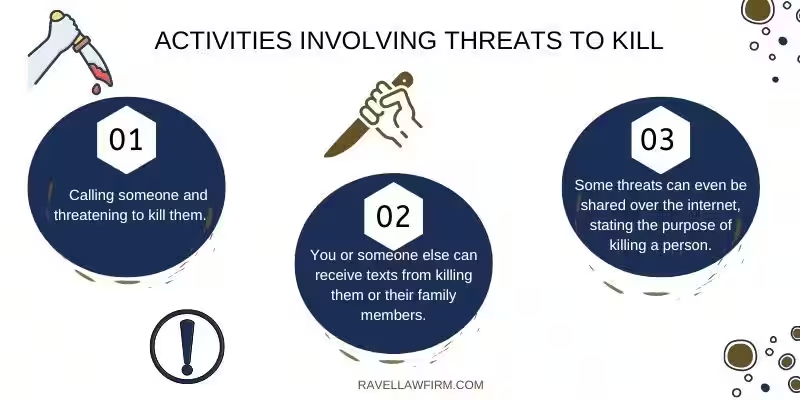
Many seemingly harmless interactions can escalate into criminal threats. Verbal threats, written threats, and electronic threats are all judged by the same legal standards, with the focus always on intent.
-
Verbal threats: A direct statement like "I'm going to hurt you" clearly constitutes a verbal threat. However, words like "I'm going to beat you up" or "you're dead to me" in a heated argument might also be considered a threat, depending on the context.
-
Written threats: A written message like "You're going to die" or "I'm going to kill you" clearly falls within the scope of a written threat. Even more subtle messages, such as those containing aggressive language or graphic descriptions, might be considered threats if presented in the right context.
-
Electronic threats: Threats communicated through social media, texting, or email are increasingly common. A text message containing threats, or even an online post intended to provoke violence, could potentially be considered a criminal threat in Florida.
Defenses to Criminal Threat Charges
If you're facing a criminal threat charge in Florida, there are possible defenses that can be explored. These defenses include:
-
Lack of intent: Arguing that you did not intend your communication to be interpreted as a threat. This often involves presenting evidence that the communication was a joke, a heated argument, or just a misunderstood expression.
-
Ambiguous or vague statements: This defense argues that the statement wasn't clear enough to be seen as a threat. This hinges on demonstrating that the words were not specific enough to convey a credible threat. A threat requires specific intent, not just an angry statement.
-
Protected speech under the First Amendment: This is a limited defense, as true threats are not protected by the First Amendment. This defense argues that the statement was protected free speech, not a genuine threat. A threat intended to cause harm is not protected speech.
-
False accusations: If you genuinely believe that the accusations against you are false, this can be a viable defense. You have the right to challenge the evidence presented against you.
Legal Advice
Facing criminal charges in Florida is serious. Naturally, seeking legal representation is crucial. A criminal defense attorney can provide valuable guidance and explore potential defenses. They can help you navigate the legal process and build the strongest possible case. The nuances of Florida law regarding threats can be complex, and a qualified attorney can help you understand your rights and options.
Disclaimer: This article is for informational purposes only and does not constitute legal advice. You should consult with a qualified Florida attorney to discuss your specific situation.
FAQ: Can You Go to Jail for Threatening Someone in Florida?
This FAQ provides general information about Florida's criminal threat laws. It is not legal advice and should not be substituted for consultation with a qualified legal professional.
What are the laws regarding threatening someone in Florida?
Florida's criminal threat laws, primarily found in Chapter 836 of the Florida Statutes, cover threats of death or bodily harm (Section 836.05) and written threats (Section 836.10). Both are considered second-degree felonies, punishable by up to 15 years imprisonment and a $10,000 fine. Additional statutes, like 784.048, address harassment, stalking, and cyberstalking, which can also carry significant penalties when tied to threats of death or injury.
What constitutes a criminal threat in Florida?
A criminal threat requires proof beyond a reasonable doubt of several elements: the intent to threaten, the malicious nature of the threat, the communication of the threat to the victim (verbally, in writing, or electronically), and the intent that the threat would cause fear or harm. Accidental, jestful, or ambiguous statements are generally not considered criminal threats. The crucial element is the intent behind the communication; a threat must be made with the objective of causing fear or harm. The context, tone, and speaker's intent are vital in determining whether a statement is a threat.
Are written and verbal threats treated the same?
While both written and verbal threats can be criminal, the legal requirements for proving each differ. Written threats are often established by evidence of the communication itself. Verbal threats require demonstrating intent to harm, a realistic possibility of harm, and the victim's fear of imminent violence.
Can threats made online be prosecuted in Florida?
Yes, threats made through social media, text messages, emails, or other electronic means are treated the same as verbal or written threats. Private communications are not exempt from prosecution.
What defenses are available for criminal threat charges in Florida?
Potential defenses include a lack of intent, arguing the threat was ambiguous or vague, claiming protected speech under the First Amendment (though true threats aren't protected), and alleging false accusations. The success of these defenses depends on demonstrating a lack of malicious intent, ambiguity in the statement, or insufficient evidence to prove the elements of the crime.
What should I do if I'm accused of making a threat in Florida?
Immediately seek legal counsel from a qualified criminal defense attorney. Talking to the police without an attorney present could incriminate you. Your attorney can advise you on your rights and develop a defense strategy.
What are the potential penalties for a criminal threat conviction in Florida?
Penalties can range from fines to substantial prison sentences, depending on the nature and severity of the threat. A second-degree felony conviction carries a maximum penalty of 15 years imprisonment and a $10,000 fine. Other related offenses, like harassment or stalking, can also carry significant penalties.
Does the context of the situation matter when determining if a threat is criminal?
Yes, the context surrounding the communication is crucial. What might seem like a harmless statement in one context can be a serious threat in another. A skilled attorney can help determine how the specific circumstances of the case affect the interpretation of the threat.