
Beginning Bridge Lessons: Mastering the Fundamentals of Bidding
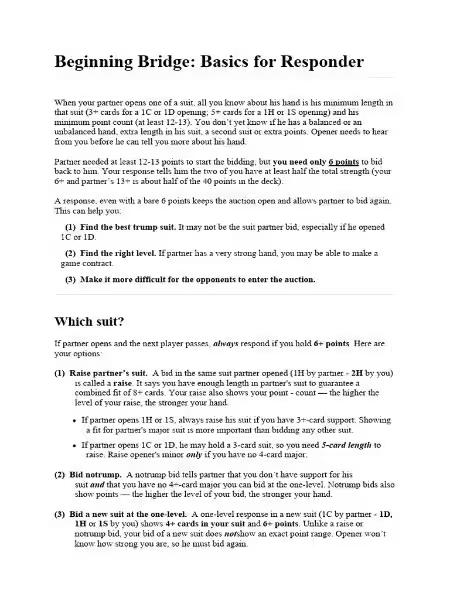
Are you intrigued by the strategic depth of contract bridge but feel overwhelmed by the seemingly complex rules? Many beginners find the bidding system the most challenging aspect of the game. This article will guide you through a structured approach to learning bridge, focusing on the essential bidding concepts to get you started. We'll explore a beginner-friendly course that breaks down the complexities into manageable steps, making the initial learning curve much less daunting.
- Understanding the Structure of a Beginner's Bridge Course
- Lessons 1-4: Mastering Common Opening Bids
- Lesson 5: Card Play and Advanced Bidding Concepts
- Simplified Bidding Systems and Partnership Communication
- Supplementary Resources and Sharing the Knowledge
-
Frequently Asked Questions: Beginning Bridge Lessons
- What is covered in this beginner bridge course?
- How many bidding conventions are covered?
- What bidding concepts are taught in each lesson?
- What kind of learning aids are included?
- How is the course structured?
- What is the focus on card play?
- Why is a simplified bidding system used?
- What about more advanced bidding concepts?
- Are there any prerequisites?
- Where can I find more information?
Understanding the Structure of a Beginner's Bridge Course
This five-lesson course prioritizes a clear understanding of bidding, recognizing its crucial role in success. While assuming some basic familiarity with the game's mechanics (card play, etc.), it dives directly into the intricacies of bidding. This approach is efficient for those already somewhat acquainted with the game or who prefer a faster progression into strategic aspects.
The course avoids overwhelming beginners with advanced conventions early on. While methods like Stayman and Jacoby transfers offer greater precision, they introduce unnecessary complexity at the beginning stages. The structure prioritizes building a solid foundation before incorporating more sophisticated techniques. This streamlined approach allows learners to grasp core concepts before moving onto more advanced strategies. The gradual introduction of new concepts minimizes frustration and maximizes retention.
Lessons 1-4: Mastering Common Opening Bids
The first four lessons focus on twenty common opening bids, providing a comprehensive foundation for initiating bidding sequences. This is done systematically, gradually introducing new bid types.
Lesson 1: Simple Suit Bids
Lesson 1 introduces the four basic suit bids: 1♠, 1♥, 1♦, and 1♣. Each bid signifies a certain level of strength in the specified suit. This lesson lays the groundwork for understanding suit-based bidding, which is fundamental to the entire game. The quizzes following each lesson are crucial in solidifying understanding and translating theoretical knowledge to practical application. Visual presentation of hands in the quizzes is particularly helpful for visual learners.
Lesson 2: No Trump and its Response
Lesson 2 introduces the 1 No Trump (1NT) opening bid, signifying a balanced hand without a strong suit. Crucially, it also covers a simplified "Easy Way" response to 1NT, a strategy that avoids the complexities of more advanced conventions like Stayman and Jacoby transfers. This simplified approach allows beginners to focus on interpreting basic hand strengths and responding appropriately.
Lessons 3 & 4: Strong and Weak Opening Bids
Lesson 3 delves into two opening bids that indicate a very strong hand. This introduces the concept of high-level bidding and how to signal significant strength. Lesson 4, in contrast, focuses on opening bids with weaker hands but a long suit. This teaches beginners to bid aggressively when their hand has a significant length in one suit, even if the overall hand strength is lower. This understanding is critical for effective preemptive bidding.
Lesson 5: Card Play and Advanced Bidding Concepts
Lesson 5 is divided into two parts, covering card play and advanced bidding strategies.
Lesson 5, Part 1: Opening Leads and Card Play
Part 1 provides essential guidance on opening leads and subsequent card play. It teaches standard leading rules and emphasizes the strategic importance of the opening lead—a critical aspect often overlooked by beginners. This section bridges the gap between bidding and play, highlighting how strategic bidding informs optimal card play.
Lesson 5, Part 2: Advanced Bidding Strategies (Optional)
Part 2 (optional but recommended) delves into broader bidding strategies. This includes the importance of partnership communication, point counting (High Card Points and distribution), and understanding forcing bids. This section acknowledges the complexity involved in determining the best contract, emphasizing the iterative nature of learning. It's designed to be revisited and absorbed gradually as the player's skill develops. Beginning bridge lessons would be incomplete without at least touching on these elements.
Simplified Bidding Systems and Partnership Communication
The course utilizes a simplified 5-card major bidding system, widely used and easy for beginners to grasp. It correctly emphasizes consistency in partnership agreements, regardless of the chosen system. While the "2 Over 1" system is mentioned as a potential future addition, the standard system provides a less overwhelming introduction. The importance of consistent communication between partners is stressed throughout the course, a vital factor often overlooked by new learners. Clear communication is far more impactful than any specific bidding system.
Supplementary Resources and Sharing the Knowledge
The course offers various supplementary resources, including a bidding chart, flowcharts, and a summary sheet of the 20 opening bids, making learning more efficient and enjoyable. The author encourages sharing the course materials, provided proper credit is given to ATeacherFirst.com, fostering a collaborative learning environment.
In conclusion, this structured approach to beginning bridge lessons provides a clear path to mastering the fundamentals of bidding, prioritizing a gradual and accessible introduction to the game. By focusing on key concepts and offering supplementary resources, this course empowers beginners to confidently engage in the strategic world of contract bridge.
Frequently Asked Questions: Beginning Bridge Lessons
What is covered in this beginner bridge course?
This five-lesson course focuses primarily on bidding, a frequently challenging aspect for new players. It assumes some basic familiarity with the game's mechanics (either from prior experience or observation) and doesn't delve deeply into card-playing techniques initially.
How many bidding conventions are covered?
Lessons 1-4 introduce 20 common opening bids. Simple, beginner-friendly conventions are used, delaying more complex techniques like Stayman and Jacoby transfers until later. A simplified 5-card major system is employed, emphasizing consistent partnership agreements.
What bidding concepts are taught in each lesson?
- Lesson 1: Opening bids of one in each suit (1♠, 1♥, 1♦, 1♣).
- Lesson 2: 1 No Trump (1NT) opening and a simplified response system.
- Lesson 3: Two opening bids indicating a very strong hand.
- Lesson 4: Opening bids with a weak hand but a long suit (at the 2-level or higher).
- Lesson 5, Part 1: Opening leads and subsequent card plays.
- Lesson 5, Part 2 (Optional): Broader bidding strategy, including point counting, forcing bids, and partnership communication.
What kind of learning aids are included?
Each lesson includes quizzes to reinforce learning. The quizzes use visual representations of hands, benefiting visual learners. Supplementary resources such as a bidding chart, flowcharts, and a summary sheet of the 20 opening bids are also provided.
How is the course structured?
The course is designed to be straightforward and manageable, building a solid foundation in bidding. It prioritizes understanding basic principles before introducing more advanced concepts.
What is the focus on card play?
While card play is not the primary focus, Lesson 5, Part 1 provides an introduction to opening leads and basic card play strategy. More advanced card play techniques are left for future learning.
Why is a simplified bidding system used?
The course utilizes a simplified 5-card major bidding system to avoid overwhelming beginners. While the "2 Over 1" system is mentioned, it is suggested for later study after mastering the basics. The emphasis is on clear communication between partners, regardless of the specific system.
What about more advanced bidding concepts?
Lesson 5, Part 2 (optional) introduces more advanced bidding strategy, but it is acknowledged that mastering these concepts takes time and practice. It is recommended to revisit this section as your skills improve.
Are there any prerequisites?
Some familiarity with the basic rules and mechanics of bridge is assumed, but the course is designed to be accessible to those with minimal prior experience.
Where can I find more information?
The course materials should provide ample information. Further resources and credit are given to ATeacherFirst.com.