
Understanding the American Police Flag: Symbol of Solidarity or Division?
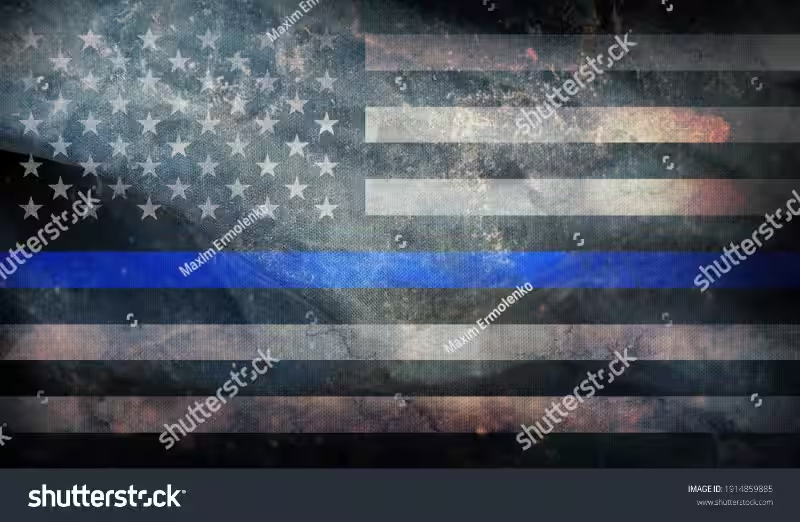
The American police flag, often featuring the "thin blue line," is a potent symbol that evokes strong reactions. Its meaning, however, is far from straightforward, sparking intense debate and controversy. This article aims to provide a balanced overview of the flag's history, its evolving symbolism, and the reasons behind its contentious nature.
- The Origins and Evolution of the "Thin Blue Line"
- The Controversy Surrounding the American Police Flag
- Conflicting Interpretations and the Ambiguity of the Symbol
- Conclusion: Navigating the Complex Symbolism of the American Police Flag
-
American Police Flag FAQ
- What is the "thin blue line" flag?
- What is the origin of the "thin blue line" symbol?
- Why is the "thin blue line" flag controversial?
- What do supporters of the "thin blue line" flag say?
- What are the criticisms of the "thin blue line" flag?
- Has the use of the "thin blue line" flag led to any legal consequences?
- Are there other variations of the "thin blue line" flag?
The Origins and Evolution of the "Thin Blue Line"
The iconic "thin blue line" imagery, often depicted on the American police flag, didn't originate within law enforcement. Its roots trace back to the "thin red line" of the Crimean War, symbolizing the British army's valiant defense against overwhelming odds. This powerful metaphor, representing a small force holding back chaos, resonated deeply, eventually finding its way into police culture.
The transition from "thin red line" to "thin blue line" for police was gradual, influenced by several key figures and events. Los Angeles Police Chief William H. Parker's frequent use of the term in the 1950s helped establish its connection to law enforcement. Joseph Wambaugh's novels in the 1970s further solidified the image in the public consciousness. Finally, Errol Morris's 1988 documentary, The Thin Blue Line, powerfully showcased the concept visually, significantly contributing to its widespread adoption.
Initially, the "thin blue line" primarily served as a symbol of police solidarity, representing the sacrifices made by officers to maintain order and protect communities. It symbolized the inherent risks and challenges faced daily by those in law enforcement. This initial meaning was largely positive, fostering a sense of unity and shared purpose within the profession.
The Controversy Surrounding the American Police Flag
Despite its positive origins, the "thin blue line" symbol has become deeply controversial in recent years. This is primarily due to its appropriation by the "Blue Lives Matter" movement, a counter-movement to the Black Lives Matter movement. The association with this counter-movement has fundamentally shifted the symbol's interpretation for many.
The display of the American police flag at far-right rallies and the January 6th Capitol attack further fueled the controversy. This association with extremist ideologies tainted the image, leading many to view it as a symbol of white nationalism and intolerance. In response, several police departments, including those in Los Angeles and Madison, Wisconsin, have banned the flag from official settings, explicitly citing its association with "undemocratic, racist, and bigoted" views.
The Punisher Skull and its Unintended Consequences
The fusion of the "thin blue line" with the Punisher skull further complicates the symbol's meaning. This skull, initially a comic book character's emblem, has been widely adopted by some law enforcement officers, often interpreted as representing a willingness to use extreme force. The creator of the Punisher character has publicly criticized this appropriation, arguing that it promotes an "outlaw mentality" inconsistent with the values of legitimate law enforcement. The addition of the Punisher skull onto the thin blue line imagery has undoubtedly escalated the controversy.
Conflicting Interpretations and the Ambiguity of the Symbol
The core of the controversy lies in the inherent ambiguity of the symbol. Supporters view the American police flag as a tribute to fallen officers and a symbol of solidarity against criticism and attacks on law enforcement. They see it as a representation of the sacrifices and dangers faced daily by police officers.
Conversely, critics argue that the "thin blue line" fosters an "us versus them" mentality, exacerbating tensions between police and the communities they serve. They contend that the symbol can hinder positive police-community relations and create a climate of distrust. The presence of the American police flag at rallies alongside overtly hateful symbols further reinforces these negative connotations.
Variations and Further Complexity
The situation is further complicated by variations of the thin blue line flag, incorporating national flags or representing other professions. These versions blur the lines even further, making it difficult to ascertain the intended message without further context. The widespread adoption of these variants only adds to the multifaceted nature of the debate. These variations have also led to injunctions against their display on uniforms or in official capacities in several jurisdictions worldwide.
The American police flag and its "thin blue line" imagery remain a deeply contested symbol, reflecting the ongoing debates on policing, race, and societal order. Understanding its evolution and the various interpretations surrounding it is crucial for navigating the complex discussions around law enforcement and community relations. While the intent may have been to honor fallen officers and promote solidarity, the symbol's appropriation and association with extremist ideologies have fundamentally altered its perception for many. The future of the "thin blue line" and its place within law enforcement will undoubtedly continue to be a subject of ongoing debate and discussion.
American Police Flag FAQ
What is the "thin blue line" flag?
The "thin blue line" flag is a symbol often associated with law enforcement. It typically depicts a single blue stripe against a black background, representing law enforcement officers as a barrier between order and chaos. Variations exist, sometimes incorporating national flags or representing other professions like firefighters or military personnel.
What is the origin of the "thin blue line" symbol?
The imagery originates from the "thin red line" used to describe a regiment's courageous stand during the Crimean War. The adaptation to "thin blue line," referencing the color of police uniforms, gained popularity through various channels, including the writings of Joseph Wambaugh, the work of Los Angeles Police Chief William H. Parker in the 1950s, and Errol Morris's 1988 documentary The Thin Blue Line.
Why is the "thin blue line" flag controversial?
The flag's meaning has become highly contested. While initially representing police solidarity and sacrifice, its association with the "Blue Lives Matter" movement and its prominence at far-right rallies and events like the January 6th Capitol attack have linked it to white nationalist and extremist ideologies. This has led several police departments to ban its official use. The combination of the "thin blue line" with the Punisher skull further fuels negative perceptions.
What do supporters of the "thin blue line" flag say?
Supporters see the flag as a tribute to fallen officers and a symbol of solidarity against criticism and attacks directed toward law enforcement. They view it as a representation of the sacrifices made in upholding the law.
What are the criticisms of the "thin blue line" flag?
Critics argue that the flag fosters an "us versus them" mentality, exacerbating tensions between police and the communities they serve. The flag's appearance alongside hate symbols reinforces negative connotations, potentially hindering positive police-community relations. The ambiguity of the symbol allows for its appropriation by groups with harmful ideologies.
Has the use of the "thin blue line" flag led to any legal consequences?
Yes, in various jurisdictions, the display of the "thin blue line" flag on uniforms or in official capacities has resulted in injunctions against its use, demonstrating the legal and social ramifications of its contested symbolism.
Are there other variations of the "thin blue line" flag?
Yes, variations exist, such as "thin gold line" for firefighters, "thin red line" for military and first responders, and other similar adaptations. These variations further complicate the already complex symbolism and associated controversies.