
Waiver of Unlawful Presence: Navigating the US Immigration System
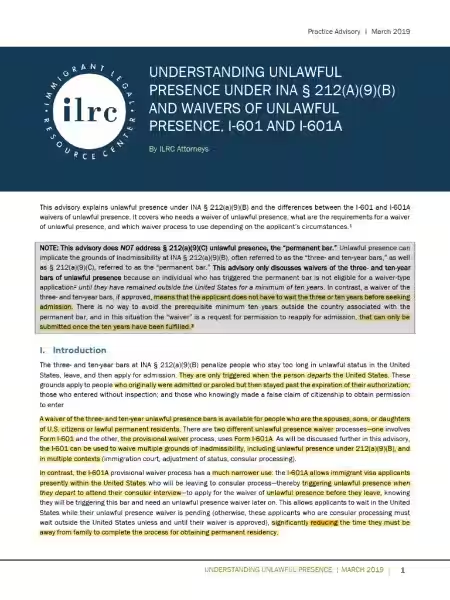
Are you facing a potential bar to entry into the United States due to unlawful presence? Understanding the options available for overcoming this hurdle is crucial. This article will clarify the process of obtaining a waiver, explaining the differences between traditional and provisional waivers and highlighting key considerations.
- Understanding the Unlawful Presence Bar
- The Introduction of the Provisional Unlawful Presence Waiver
- Comparing Provisional (I-601A) and Traditional (I-601) Waivers
- The "Extreme Hardship" Requirement
-
Frequently Asked Questions: Waiver of Unlawful Presence
- What is a Waiver of Unlawful Presence?
- What is the difference between the traditional Form I-601 waiver and the provisional unlawful presence waiver (Form I-601A)?
- Who is eligible for a provisional unlawful presence waiver (Form I-601A)?
- What is "extreme hardship" in the context of the I-601A waiver?
- How do I apply for a provisional unlawful presence waiver (Form I-601A)?
- What happens after I submit my I-601A application?
- What if my I-601A is denied?
- Do I need an attorney?
Understanding the Unlawful Presence Bar
Prior to 2013, accumulating over 180 days of unlawful presence in the US significantly complicated the process of obtaining an immigrant visa. Individuals typically had to leave the country, attend a consular interview, be declared inadmissible because of their unlawful presence, and then apply for a waiver of inadmissibility (Form I-601). This lengthy procedure often resulted in prolonged separations from family members who were US citizens or lawful permanent residents.
The complexities of this process placed a heavy burden on families and created a considerable backlog in the immigration system. The wait times were often unpredictable, leading to prolonged uncertainty for those seeking to reunite with loved ones. This separation could have devastating effects on emotional wellbeing, family relationships, and even financial security.
The Introduction of the Provisional Unlawful Presence Waiver
To address these challenges, the provisional unlawful presence waiver was introduced. Initially limited to immediate relatives (spouses, children, and parents) of U.S. citizens, this process underwent a significant expansion on August 29, 2016. Since then, the provisional waiver has become available to all individuals who are statutorily eligible for an immigrant visa and need only a waiver for unlawful presence.
This significant change expanded the accessibility of the provisional waiver and provided relief to a broader range of individuals seeking permanent residency. The streamlined process has significantly benefited many families, reducing the emotional and logistical stress of prolonged separation.
Key Benefits of the Provisional Waiver
The most significant advantage of the provisional waiver is the ability to apply for it before leaving the US for a consular interview. This contrasts sharply with the traditional Form I-601 process, where the waiver application is submitted after being deemed inadmissible. This pre-departure application significantly minimizes family separation time.
Furthermore, the provisional waiver simplifies the overall immigration process. Applicants can tackle the waiver application while still within the United States, allowing them to maintain their jobs, continue their education, and remain close to their support networks during a crucial period.
Comparing Provisional (I-601A) and Traditional (I-601) Waivers
While the provisional waiver offers a streamlined path, it's crucial to understand its limitations and the continued relevance of the traditional Form I-601 waiver.
-
Form I-601A (Provisional Unlawful Presence Waiver): This form allows applicants to apply for a waiver while still in the US, significantly reducing family separation. It's designed for those whose only ground of inadmissibility is unlawful presence.
-
Form I-601 (Waiver of Grounds of Inadmissibility): This is the traditional waiver and is still used if an applicant doesn't qualify for the provisional waiver or chooses not to use it. The application is filed after being deemed inadmissible at a consular interview, leading to longer separation periods.
The choice between these forms depends on individual circumstances and eligibility criteria. Always consult with an immigration attorney to determine the best course of action.
Eligibility for the Provisional Waiver
Eligibility for the provisional waiver involves several key criteria:
- Age: You must be at least 17 years old.
- Physical Presence: You must be physically present in the US.
- Pending Immigrant Visa Case: You must have a pending immigrant visa case (e.g., through family sponsorship, employment-based petition, or the Diversity Visa program).
- No Other Grounds of Inadmissibility: You cannot be inadmissible for reasons beyond unlawful presence (e.g., criminal history, health issues).
- Active Removal Proceedings: Crucially, you must not be in active removal proceedings.
Failing to meet any of these requirements will render you ineligible for a provisional waiver, necessitating the use of the traditional I-601 process.
The "Extreme Hardship" Requirement
A critical aspect of both the provisional and traditional waivers is demonstrating "extreme hardship" to a qualifying relative (QR). This QR is typically a U.S. citizen or lawful permanent resident spouse or parent.
The applicant must convincingly demonstrate that their absence in the United States would create extreme hardship for this qualifying relative.
This involves providing extensive documentation illustrating the potential negative consequences for the QR, such as:
- Financial hardship: Loss of income, inability to afford basic necessities.
- Health concerns: The potential impact on the QR's physical or mental health due to the absence of the applicant.
- Educational implications: Negative effects on children's education due to parental absence.
- Emotional distress: The significant emotional impact of separation on family members.
Strong Application, Successful Outcome
A successful waiver application relies on meticulous preparation and compelling evidence. Gathering substantial documentation, including medical records, bank statements, school records, and affidavits from family members, friends, or employers, is critical. Consulting with an experienced immigration attorney is highly recommended to ensure that your application is thoroughly prepared and meets all requirements. Remember that even with a granted waiver, other grounds of inadmissibility could still prevent visa issuance.
The process of obtaining a waiver of unlawful presence, whether provisional or traditional, is complex and requires careful navigation. Understanding the differences between the two processes and ensuring you meet all eligibility criteria is crucial for a successful outcome. Seeking professional legal counsel can significantly increase your chances of a positive resolution. Remember, timely submission and accurate form usage are essential to avoid delays and potential rejection.
Frequently Asked Questions: Waiver of Unlawful Presence
What is a Waiver of Unlawful Presence?
A Waiver of Unlawful Presence allows certain individuals who have accumulated unlawful presence in the United States to overcome the inadmissibility that would otherwise prevent them from obtaining an immigrant visa. This inadmissibility stems from exceeding authorized stays, resulting in a 3 or 10-year bar to re-entry. The waiver helps these individuals avoid the lengthy separation from family members that often accompanies the traditional waiver process.
What is the difference between the traditional Form I-601 waiver and the provisional unlawful presence waiver (Form I-601A)?
The traditional Form I-601 waiver requires applicants to leave the U.S., attend a consular interview, be deemed inadmissible, and then apply for the waiver. The provisional waiver (Form I-601A) allows eligible applicants to apply for the waiver before leaving the U.S. for their consular interview, significantly reducing family separation. The Form I-601 remains an option for those who don't qualify for or choose not to use the provisional waiver.
Who is eligible for a provisional unlawful presence waiver (Form I-601A)?
Eligibility requires being at least 17 years old, physically present in the U.S., having a pending immigrant visa case (e.g., through family sponsorship, employment-based petition, or other qualifying immigration categories), and not being inadmissible for reasons other than unlawful presence. Importantly, individuals in active removal proceedings are not eligible.
What is "extreme hardship" in the context of the I-601A waiver?
To be approved, you must demonstrate "extreme hardship" to a qualifying relative (QR) – a U.S. citizen or lawful permanent resident spouse or parent – if you are not allowed to re-enter the U.S. This involves showing significant difficulties your QR would face without you in the U.S., and the challenges of relocating to your home country. Factors considered include financial stability, health, education, family support, and cultural integration. For LGBTQ+ couples, persecution or stigma faced by the QR in their home country is a relevant consideration. You must also demonstrate your own ties to the U.S.
How do I apply for a provisional unlawful presence waiver (Form I-601A)?
The process involves submitting Form I-601A with supporting evidence and fees to United States Citizenship and Immigration Services (USCIS). It's crucial to use the most current version of the form and follow all instructions carefully to avoid delays or rejection. USCIS provides resources, including videos and online guidance, to help with this process.
What happens after I submit my I-601A application?
USCIS will review your application. Approval allows you to proceed with consular processing. However, even with an approved waiver, inadmissibility for other reasons can still prevent visa issuance. A denial can lead to removal proceedings.
What if my I-601A is denied?
If your I-601A is denied, you may need to pursue a waiver of inadmissibility through the traditional Form I-601 process after being deemed inadmissible at your consular interview. This will likely involve leaving the U.S. and significantly increasing the time spent separated from your family.
Do I need an attorney?
While not mandatory, consulting with an experienced immigration attorney is highly recommended. Immigration law is complex, and an attorney can provide personalized guidance based on your specific circumstances. The information here is for informational purposes only and does not constitute legal advice.