
Understanding Nonprofit Stamp Rates: Your Guide to Saving on Postage
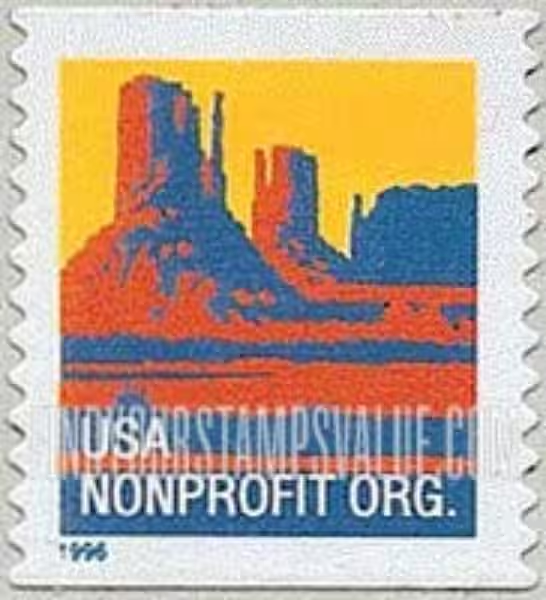
Securing reduced postage rates is a crucial aspect of efficient fundraising and communication for any nonprofit organization. This guide will walk you through the process of obtaining and maintaining these cost-effective nonprofit stamp rates, helping you maximize your budget and impact.
- Obtaining Nonprofit Postage Rates: More Than Just 501(c)(3) Status
- Maintaining Compliance: The Key to Keeping Your Nonprofit Stamp Savings
- Understanding the Limitations: What Nonprofit Postage Rates Don't Cover
- Maximizing Your Savings: Strategies Beyond the Nonprofit Stamp
- Seeking Professional Help
-
Nonprofit Postage Rates: Frequently Asked Questions
- What are nonprofit postage rates?
- How do I qualify for nonprofit postage rates?
- What are the USPS regulations I need to follow?
- What types of mail are eligible for nonprofit postage rates?
- Where can I find more information about USPS regulations for nonprofit mail?
- What happens if I don't comply with USPS regulations?
- Can I use a special "nonprofit stamp"?
- Are there any resources to help me understand and comply with USPS regulations?
Obtaining Nonprofit Postage Rates: More Than Just 501(c)(3) Status
Simply holding a 501(c)(3) designation from the IRS isn't enough to automatically qualify for reduced postage rates. The United States Postal Service (USPS) has its own separate approval process. This means you'll need to complete a formal application and demonstrate your eligibility according to USPS criteria.
This application process verifies that your organization meets the USPS's specific requirements for nonprofit mailings. It's a crucial step that shouldn't be overlooked. Thoroughly review the application materials and ensure all necessary documentation is included to avoid delays. Prepare to provide evidence of your nonprofit status and your intended use of the discounted postage.
Maintaining Compliance: The Key to Keeping Your Nonprofit Stamp Savings
Once you've secured your nonprofit postage rates, maintaining compliance with USPS regulations is paramount. Failure to do so can result in significant penalties, including loss of your discounted rates and retroactive charges.
This means paying close attention to the content of your mailed materials. Advertising, for instance, is a sensitive area. Too much advertising can jeopardize your eligibility. The USPS provides resources, such as Publication 417, "Nonprofit USPS Marketing Mail Eligibility," to help you navigate these complexities. Regularly consult this publication and the guidelines provided by your local Business Mail Entry Unit (BMEU). Early consultation with the BMEU, particularly during the design phase of your mailings, is highly recommended.
Understanding the Limitations: What Nonprofit Postage Rates Don't Cover
It's important to understand the scope of nonprofit postage rates. These discounted rates apply only to domestic mail within the United States. If you're planning any international mail campaigns, you'll need to use standard postage rates.
Remember that the savings offered by nonprofit postage rates are significant, but they are limited to specific mail classes and types of materials. Understanding these limitations upfront will prevent unexpected costs and delays. Carefully review the USPS guidelines to ensure your mailings comply with all regulations. Don't hesitate to seek clarification if you are unsure about any aspect of the requirements.
Maximizing Your Savings: Strategies Beyond the Nonprofit Stamp
While securing the nonprofit stamp rates is a significant step, there are additional strategies to further optimize your mailing costs:
Streamlining Your Mailing Process
- Bulk Mailings: The USPS offers significant discounts for bulk mailings. Meet the minimum requirements to take advantage of these savings.
- Automation: Services like PostGrid can automate various aspects of your mailing process, from design and printing to mailing and tracking. This can significantly reduce your costs and manual effort.
- Cooperative Mailings: Collaborate with other nonprofits to share mailing costs and leverage combined mailing lists. This approach can be particularly effective, especially under the Cooperative Mail Rule (CMR).
Optimizing Your Mail Pieces
- Design: Simple, clean designs are more cost-effective than complex layouts. Minimize the amount of advertising to stay within USPS guidelines.
- Weight: Keep mail pieces under 3 ounces to avoid higher postage fees. Use thinner paper when possible. Source cost-effective paper; explore discounted purchases or donations.
- Addressing: Maintain accurate and up-to-date mailing lists using NCOA (National Change of Address) services to minimize wasted postage. Clearly brand your mailings with your nonprofit's name and return address (matching your USPS authorization form).
Choosing the Right Mail Class
- Standard Mail: Consider using USPS Standard Mail for potentially lower rates depending on your mailing characteristics.
Tracking and Improvement
- Campaign Tracking: Monitor your response rates, donations, and ROI to optimize future campaigns. This data-driven approach allows for continuous improvement and greater efficiency.
- Testing: Conduct small-scale tests of your mail pieces before mass mailing to identify and correct any issues. Include pre-addressed, adequately stamped reply envelopes for donations or responses.
Seeking Professional Help
Navigating the intricacies of nonprofit postage can be challenging. Don't hesitate to seek professional help, especially if you're a new organization or unfamiliar with the process. Direct mail services can offer expert guidance on automation, list acquisition, and compliance. This investment in professional assistance can save you time, money, and headaches in the long run.
By understanding the requirements for obtaining and maintaining nonprofit stamp rates, and by implementing these cost-saving strategies, your nonprofit can significantly reduce its mailing expenses, freeing up vital resources to focus on your mission. Remember, proactive planning and a commitment to compliance are key to realizing the full benefits of discounted postage.
Nonprofit Postage Rates: Frequently Asked Questions
What are nonprofit postage rates?
Nonprofit postage rates are discounted mailing rates offered by the United States Postal Service (USPS) to eligible nonprofit organizations. These significantly reduce mailing costs compared to standard postage for for-profit entities, applying to Periodicals and Marketing Mail. However, simply having 501(c)(3) status from the IRS is not enough to qualify. Separate USPS authorization is required.
How do I qualify for nonprofit postage rates?
Qualifying requires a formal application and approval process through the USPS. You must demonstrate that your organization meets all USPS eligibility criteria outlined in their regulations. This involves proving your nonprofit status and adhering to specific guidelines regarding the content of your mailings. Contacting your local Business Mail Entry Unit (BMEU) is highly recommended.
What are the USPS regulations I need to follow?
Maintaining compliance with strict USPS regulations is crucial for retaining your nonprofit postage rates. These regulations cover many aspects of your mailed materials, particularly concerning advertising content. Publication 417, "Nonprofit USPS Marketing Mail Eligibility," provides detailed information. Failing to comply can result in the loss of your discounted rates and retroactive charges. Consult the BMEU, especially during the design phase of your mail pieces, to ensure compliance.
What types of mail are eligible for nonprofit postage rates?
Nonprofit postage rates apply exclusively to domestic mail within the United States. International mail is not eligible for these reduced rates.
Where can I find more information about USPS regulations for nonprofit mail?
Publication 417, "Nonprofit USPS Marketing Mail Eligibility," is the primary resource. Your local Business Mail Entry Unit (BMEU) can also provide valuable guidance and answer specific questions about your mailing plans.
What happens if I don't comply with USPS regulations?
Failure to comply with USPS regulations will result in the loss of your nonprofit mailing privileges. You will also likely be charged the difference between the nonprofit and standard postage rates retroactively for any non-compliant mailings.
Can I use a special "nonprofit stamp"?
While there isn't a specifically designated "nonprofit stamp," you can use any postage that meets the requirements of your chosen mail class (e.g., First-Class Mail, Marketing Mail) and the weight of your mailing pieces. The USPS offers various options, including the ability to purchase stamps in bulk or use automated postage meters. Using the correct postage is vital for maintaining your nonprofit mailing privileges. The new "Patriotic Block" stamp can be used by eligible nonprofits, but it's not limited exclusively to them.
Are there any resources to help me understand and comply with USPS regulations?
Yes. The USPS provides several resources, including Publication 417 and the assistance of your local Business Mail Entry Unit (BMEU). Consulting these resources early in the process is strongly recommended. Seeking professional help with direct mail services can also be beneficial, particularly for organizations new to bulk mailings.