
Poverty By America Summary: Unpacking the Systemic Roots of Inequality
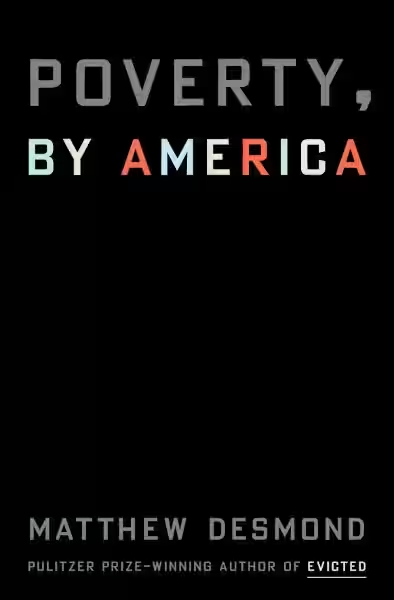
Understanding the complexities of poverty in America requires moving beyond individual narratives and examining the systemic factors that perpetuate inequality. While many assume poverty is solely a result of individual choices, the reality is far more nuanced and deeply embedded in the structures of our society. This article will explore key aspects of poverty in America, drawing on insights from leading researchers and policymakers.
- The Myth of Individual Responsibility: Systemic Factors at Play
- Who Benefits from Poverty? The Unexpected Players
- Breaking the Cycle: Towards a More Equitable Future
-
Frequently Asked Questions about "Poverty, By America"
- What is "Poverty, By America" about?
- What are some key arguments presented in the book?
- Who benefits from poverty in America, according to the book?
- What solutions does the book propose to address poverty?
- How does the book challenge traditional explanations of poverty?
- Where can I find a summary of "Poverty, By America"?
- What is the main takeaway from the book?
The Myth of Individual Responsibility: Systemic Factors at Play
The common narrative surrounding poverty often centers on individual failings—lack of motivation, poor financial decisions, or a lack of education. While individual choices undoubtedly play a role, this perspective ignores the powerful systemic forces that actively maintain and even exacerbate poverty. These systems benefit not just the wealthy elite, but a broader segment of the population, creating a complex web of interconnected interests.
Many argue that the poor are responsible for their own circumstances due to a lack of hard work or poor decision-making. However, this ignores the structural barriers faced by those living in poverty, such as limited access to education, healthcare, and job opportunities. Furthermore, the cost of necessities, such as housing and childcare, is often disproportionately high for low-income families, creating a cycle of debt and hardship that's difficult to escape. The very systems designed to help often fall short, leaving those in need further behind.
Who Benefits from Poverty? The Unexpected Players
Astonishingly, many Americans, even those not considered wealthy, benefit from systems that perpetuate poverty. This isn't necessarily intentional, but rather a consequence of policies and practices that inadvertently favor the more affluent. For example, housing subsidies disproportionately benefit higher-income, white families while lower-income families struggle to obtain affordable housing. Similarly, retirement and college savings plans, designed to promote financial security, further widen the wealth gap, providing greater benefits to those already financially secure.
This benefit extends beyond just financial perks. The availability of cheap labor, fueled by poverty, benefits consumers who enjoy lower prices on goods and services. This demand for cheap labor, in turn, keeps wages low for many workers, perpetuating the cycle. The system, therefore, is not simply about the opulent 1%; it involves a broader "secure majority" whose interests are interwoven with the continued existence of poverty.
The Role of Exclusionary Zoning and Predatory Practices
Exclusionary zoning laws, which restrict housing density and types, actively maintain prosperous and well-funded neighborhoods for the affluent, while concentrating poverty in other areas. This segregation is not merely a geographical issue; it translates into significant disparities in access to quality education, healthcare, and job opportunities. This deliberate concentration of poverty further exacerbates existing inequalities.
The financial landscape also contributes to this cycle. Lower-income families often pay higher interest rates, rent, and fees for various services, creating a system that disproportionately burdens the poor. Predatory lending practices, such as payday loans, trap many in cycles of debt, making it virtually impossible to climb out of poverty. The high profitability of renting in poor neighborhoods highlights yet another exploitation dynamic, making it clear that poverty is not simply a matter of individual failings but a complex web of systemic forces.
Breaking the Cycle: Towards a More Equitable Future
Addressing poverty in America requires a multifaceted approach that tackles both individual circumstances and the systemic issues that perpetuate inequality. This requires a significant shift in policy and societal attitudes.
Key Policy Changes Needed
- Strengthening Labor Unions: Empowering workers through stronger unions can lead to higher wages, better benefits, and improved working conditions, directly impacting the economic stability of low-income families.
- Increasing Affordable Housing: Investing in affordable housing initiatives, including ending exclusionary zoning, is crucial to providing stable and safe housing for low-income individuals and families.
- Tax Reform: Reforming the tax system to reduce tax breaks for the wealthy and increase funding for anti-poverty programs is essential for redirecting resources towards those who need them most.
- Empowering the Poor: Providing low-income individuals with access to education, job training, and financial literacy programs is vital for breaking the cycle of poverty.
The path forward involves a fundamental shift in our understanding of poverty. It's not simply a matter of individual responsibility; it's a systemic issue that demands collective action. By understanding the complex interplay of factors that contribute to poverty, we can begin to build a more equitable and just society for all. This requires a national conversation, fueled by data and research, to address the deep-seated inequalities that continue to plague America. The future demands a commitment to dismantling the systemic forces that perpetuate poverty and empowering those who have been historically marginalized.
Frequently Asked Questions about "Poverty, By America"
This FAQ section addresses common questions regarding Matthew Desmond's book, "Poverty, By America," based on available information. Please note that a comprehensive understanding requires reading the book itself.
What is "Poverty, By America" about?
"Poverty, By America" challenges conventional wisdom about poverty in the United States. It argues that persistent poverty isn't solely due to individual failings, but rather is a systemically maintained condition that benefits affluent Americans. The book examines how policies, practices, and consumer choices contribute to the perpetuation of poverty, even benefiting those who aren't explicitly wealthy.
What are some key arguments presented in the book?
The book makes several key arguments, including: the affluent benefit significantly from systems that maintain poverty; existing anti-poverty programs are often insufficient and may even inadvertently benefit the wealthy; exclusionary zoning and predatory lending practices concentrate and exacerbate poverty; and empowerment of the poor through increased economic and political agency is crucial for meaningful change. The book also explores the roles of consumer choices, political power, and the need for systemic reform.
Who benefits from poverty in America, according to the book?
Desmond argues that the benefits of poverty extend beyond the 1%, encompassing a broader "secure majority." This includes those who benefit from low-wage labor, cheap goods and services, and policies that disproportionately favor the affluent. Landlords in low-income areas, for example, are identified as profiting from the desperation of their tenants.
What solutions does the book propose to address poverty?
The book advocates for a multi-pronged approach, including: strengthening labor unions; increasing access to homeownership; ending exclusionary zoning; reforming the tax system to redistribute wealth; and empowering the poor to have a greater voice in shaping their economic and social circumstances. It also emphasizes the importance of conscious consumer choices and investment decisions.
How does the book challenge traditional explanations of poverty?
The book directly challenges common explanations, such as blaming individual failings (lack of work ethic, poor choices), immigration, and non-traditional family structures. It argues that these are often consequences of, rather than causes of, poverty, and that systemic factors are the primary drivers.
Where can I find a summary of "Poverty, By America"?
While a complete summary is unavailable here, many online services offer book summaries. Be aware that access might require a subscription. Independent research and reviews may also provide further insight.
What is the main takeaway from the book?
The central takeaway is that poverty in America is not simply an individual problem but a systemic one, actively maintained by structures and policies that benefit the more affluent. Addressing this requires a fundamental shift in policies and attitudes, focusing on empowerment of the poor and systemic reform rather than individual blame.