
Dominicans in Spain: A Growing Community and its Rich History
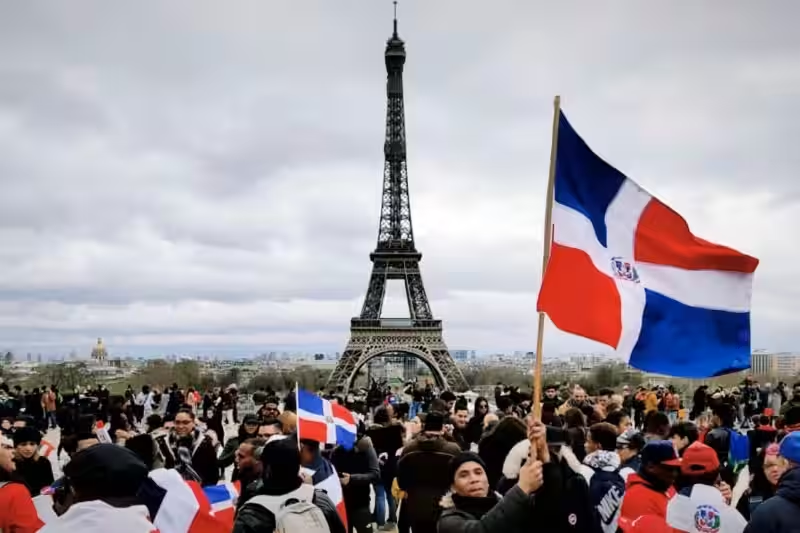
Understanding the significant presence of Dominicans in Spain requires exploring its history, cultural impact, and the strong bilateral ties between the two nations. This article delves into the multifaceted aspects of this vibrant community, shedding light on its growth, geographic distribution, and cultural contributions to Spanish society.
- A Historical Overview of Dominican Immigration to Spain
- The Geographic Distribution of Dominicans in Spain
- The Strong Ties Between Spain and the Dominican Republic
- Dominican Culture in Spain: A Blend of Influences
- Conclusion: A Thriving Community and its Future
-
Frequently Asked Questions: Dominicans in Spain
- How many Dominicans live in Spain?
- Where in Spain do most Dominicans live?
- What is the gender distribution of the Dominican population in Spain?
- What is the history of Dominican immigration to Spain?
- What is the nature of the relationship between Spain and the Dominican Republic?
- What is Dominican culture like in Spain?
- Why is the Dominican community in Spain so significant?
A Historical Overview of Dominican Immigration to Spain
The story of Dominicans in Spain isn't a recent one. While the large-scale migration is relatively modern, the roots of the connection go far back to the Spanish colonization of the Dominican Republic, beginning with Columbus's arrival in 1492. Although the initial waves of migration were small, historical ties laid the groundwork for future movements of people between the two countries.
A notable wave of Dominican immigration began during the Juan Bosch administration when several individuals received government scholarships to pursue higher education in Spain. This early migration established a foothold for future waves. However, the most significant exodus occurred following the 1965 Dominican Civil War. Seeking refuge and stability, nearly 2,000 Dominicans fled to Spain, viewing it as a "motherland" due to the historical ties between the two nations. This influx significantly contributed to the growth of the Dominican community in Spain.
The Geographic Distribution of Dominicans in Spain
The Dominican population in Spain isn't evenly distributed. A significant majority, approximately 70%, resides in the Madrid metropolitan area. Popular neighborhoods with large Dominican communities include Aravaca, Cuatro Caminos, Villaverde, and Legazpi. This concentration facilitates community building and support networks, strengthening cultural ties.
Beyond Madrid, Catalonia also boasts a substantial Dominican presence. Smaller, but still notable communities, exist in other regions such as Castile and León, Castilla–La Mancha, Andalusia, and Valencia. This dispersal, while less concentrated than in Madrid, helps spread Dominican culture and influence across the Spanish landscape. It also reflects the evolving integration of Dominicans within Spanish society.
Demographic Breakdown: A Predominantly Female Community
A striking demographic feature of the Dominican community in Spain is its gender imbalance. The number of women significantly outweighs the number of men. This disparity, while requiring further sociological analysis, indicates specific migratory patterns and challenges faced by both men and women within the community. The reasons behind this imbalance should be a subject of continued study to understand the full dynamics of Dominican migration to Spain.
The Strong Ties Between Spain and the Dominican Republic
The substantial Dominican presence in Spain isn't merely a matter of chance; it's underpinned by a robust and multifaceted relationship between the two countries. This relationship is formalized through a wide array of bilateral agreements covering numerous sectors.
These agreements demonstrate the depth and breadth of collaboration between Spain and the Dominican Republic. They extend beyond economic cooperation to encompass areas such as culture, education, and social security. This extensive network of treaties significantly eases the integration of Dominicans into Spanish society and safeguards their well-being. The commitment shown through these agreements highlights the importance Spain places on its relationship with the Dominican Republic and its citizens living in Spain.
Bilateral Agreements: A Foundation for Integration
The numerous bilateral agreements between Spain and the Dominican Republic are a testament to the strong diplomatic foundation supporting the significant Dominican presence in Spain. These agreements cover a wide range of areas:
- Recognition, Peace, and Friendship: Laying the groundwork for a harmonious relationship.
- Commerce and Navigation: Facilitating economic exchange and trade.
- Extradition: Ensuring justice and cooperation in legal matters.
- Literary and Artistic Property: Protecting intellectual property rights.
- Emigration and Dual Nationality: Addressing legal aspects of migration and citizenship.
- Air Transportation: Promoting connectivity and travel between the two countries.
- Economic, Scientific, Technical, Cultural, and Educational Cooperation: Fostering collaboration in diverse fields.
- Investment Protection: Encouraging foreign investment and economic growth.
- Regulation of Migrant Laborers and Social Security: Providing support and protection for migrant workers.
- Avoidance of Double Taxation: Simplifying taxation for individuals and businesses.
These agreements create a supportive environment for Dominicans in Spain, easing their integration into the Spanish society and ensuring their rights are protected. The comprehensive nature of these agreements reflects a long-term commitment to fostering a strong and mutually beneficial relationship between the two nations.
Dominican Culture in Spain: A Blend of Influences
The Dominican presence in Spain significantly enriches the country's cultural landscape. Dominicans bring with them a vibrant culture that's a compelling blend of Spanish, African, and indigenous Taíno influences. This cultural fusion manifests itself in various aspects of life, from music and cuisine to religious practices and family values.
Dominican music, with its infectious rhythms of merengue, salsa, and bachata, adds a lively and energetic element to the Spanish cultural scene. The cuisine, featuring rice, meat, fried plantains, and colorful salads, introduces new flavors and culinary traditions. The visual arts often display a blend of European aesthetics with unique Dominican styles. Baseball, the national sport of the Dominican Republic, has also gained popularity amongst Spaniards through the Dominican community.
The strong family values and religious traditions, predominantly Roman Catholic with a significant Protestant population, further contribute to the richness and diversity of the Dominican community in Spain. These cultural elements contribute to a vibrant and dynamic cultural exchange, enriching the Spanish experience.
Conclusion: A Thriving Community and its Future
The Dominicans in Spain represent a dynamic and growing community, the largest in Europe. Their significant numbers, coupled with their rich history, strong cultural identity, and the extensive bilateral agreements between Spain and the Dominican Republic, ensure their continued importance in the Spanish social fabric. Their contribution to Spanish society is significant and their influence continues to grow, shaping the cultural landscape of Spain in profound and lasting ways.
Frequently Asked Questions: Dominicans in Spain
How many Dominicans live in Spain?
Dominicans constitute approximately 1.66% of Spain's foreign population, making them the eleventh largest immigrant group and the fifth largest from Latin America in the country. This represents a significant presence, the largest Dominican community in Europe and second largest globally after the United States.
Where in Spain do most Dominicans live?
Around 70% of Dominicans in Spain reside in the Madrid area, specifically in neighborhoods like Aravaca, Cuatro Caminos, Villaverde, and Legazpi. Other notable communities are located in Catalonia, with smaller populations spread across Castile and León, Castilla–La Mancha, Andalusia, and Valencia.
What is the gender distribution of the Dominican population in Spain?
The Dominican community in Spain is predominantly female, with significantly more women (105,297) than men (72,854).
What is the history of Dominican immigration to Spain?
Dominican immigration to Spain has occurred in waves. Initially, some Dominicans arrived on government scholarships during the Juan Bosch administration. A substantial wave followed the 1965 Dominican Civil War, with nearly 2,000 seeking refuge in what they considered their "motherland." While a small number migrated during colonial times, the current large diaspora is primarily a product of more recent migration.
What is the nature of the relationship between Spain and the Dominican Republic?
Spain and the Dominican Republic share a strong bilateral relationship, supported by numerous agreements covering diverse areas. These include recognition, peace, friendship, commerce, navigation, extradition, intellectual property, emigration, dual nationality, air transportation, economic cooperation, scientific and technical cooperation, cultural and educational cooperation, investment protection, regulation of migrant laborers, social security, and the avoidance of double taxation. This extensive framework reflects a deep and enduring connection between the two nations.
What is Dominican culture like in Spain?
Dominican culture in Spain is vibrant and multifaceted, blending Spanish, African, and indigenous influences. Music (merengue, salsa, bachata), cuisine (rice, meat, fried plantains), visual arts, fashion, and baseball (the national sport) all contribute to a rich cultural identity. While predominantly Roman Catholic, a significant Protestant population also exists. Family life emphasizes traditional values.
Why is the Dominican community in Spain so significant?
The Dominican community in Spain holds significance due to its size (largest in Europe), its historical roots stemming from the Spanish colonization of the Dominican Republic, and its vibrant cultural contributions to Spanish society. The extensive bilateral agreements between Spain and the Dominican Republic further underline its importance.