
What Will the US Do About Private Attorneys Being Expensive?
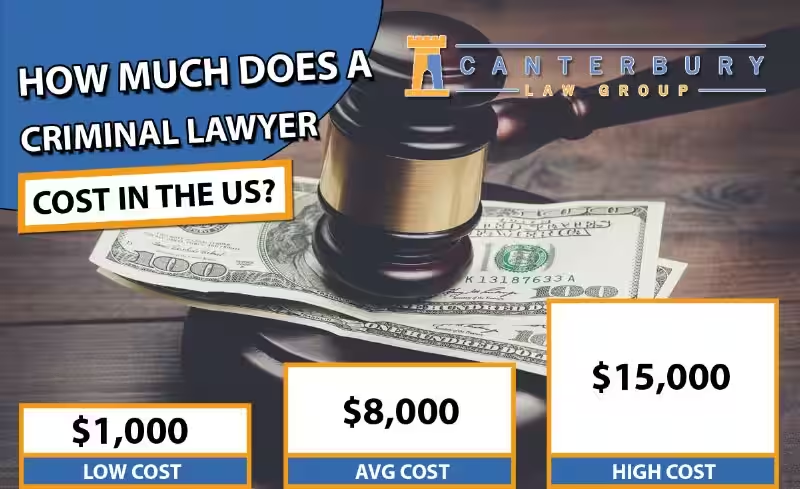
The soaring cost of private legal representation in the US is a pressing concern, affecting access to justice for many. This article explores the complex factors contributing to this issue and examines potential solutions. The high cost isn't simply a matter of greed; it's deeply rooted in a combination of market dynamics, professional practices, and systemic challenges.
- The Perception of Value and Scarcity
- The Pitfalls of Traditional Legal Practices
- The Role of Law Firm Overhead and Education
- Modern Approaches to Affordable Legal Representation
- The Inefficiency of the Court System
- The Need for Market Transparency and Innovation
- Summary of Key Points:
-
FAQ: What Will the US Do About Expensive Private Attorneys?
- Q: Why are private attorneys so expensive?
- Q: Is the cost of law school a major driver of attorney fees?
- Q: How does the shrinking middle class relate to legal affordability?
- Q: What is the problem with the "billable hour" system?
- Q: How does the court system contribute to high legal costs?
- Q: How does the legal market structure affect affordability?
- Q: Can anything be done to lower attorney fees?
- Q: What about contingency fees? Aren't they a good solution?
- Q: How does law firm overhead affect costs?
- Q: What are some innovative solutions being proposed?
- Q: Are there examples of successful innovations?
- Q: Are there any limitations to these proposed solutions?
- Q: What is the role of perceived value in attorney fees?
- Q: What is the impact of the perceived scarcity of attorneys on pricing?
- Q: How can consumers protect themselves against high legal fees?
- Q: How can the government play a role in addressing these issues?
- Q: What about public defense?
- Q: What is the overall message of this article?
The Perception of Value and Scarcity
The perceived value of legal services plays a significant role in their cost. Many believe that higher fees equate to superior legal representation, a perception that often isn't accurate. This can inflate the market, encouraging attorneys, even those without extraordinary skills or experience, to charge premium rates. Moreover, the perception of scarcity in legal talent, while not universally true (especially in certain rural areas or niche specialties), further fuels demand and drives up prices. This creates a vicious cycle where the perceived value and scarcity inflate the cost, potentially hindering the effective functioning of the legal system.
This perception of scarcity creates an environment where even less experienced attorneys can command premium prices due to the generalized belief that high fees equate with expertise. This disconnect between perceived expertise and actual experience can make access to legal services prohibitive for many who need representation.
The Pitfalls of Traditional Legal Practices
Traditional legal practices contribute significantly to the high cost of legal representation. Contingency fees, while appearing to offer upfront cost avoidance for clients, can result in substantial payouts to attorneys, with clients bearing additional out-of-pocket expenses if the outcome falls short of expectations. The structure of these fees, often requiring a percentage of settlements or awards, can be costly, especially for substantial recoveries.
The rigidity of the billable hour system often prioritizes attorney time over client outcomes. This pricing model can create ambiguity about costs and discourages efficiency. This often discourages attorneys from focusing on solutions that might improve efficiency, leading to a greater reliance on the billable hour concept. It fosters a perception of unaffordability for many needing legal services.
The Role of Law Firm Overhead and Education
Law firm overhead plays a crucial role in determining the total cost of legal services. Expenses like staff salaries, office space, legal research tools, and technology can account for a substantial portion of a firm's net revenue, sometimes exceeding 70% before partner compensation.
High tuition fees at law schools contribute to the financial burden on graduates. This financial pressure creates a need for high earning potential, further contributing to the perceived necessity for high attorney compensation, again, creating a cycle of high fees. This can lead graduates to feel obligated to charge high fees, potentially even leading to burnout before practice.
Modern Approaches to Affordable Legal Representation
To counteract the high cost of private attorneys, an alternative approach to delivering legal services is necessary. Innovations in legal representation, such as those proposed by Consult With Shea, aim to create a more accessible model by eliminating unnecessary overhead, leveraging virtual interactions, and employing targeted representation. This alternative approach seeks to challenge the traditional high-cost model, emphasizing that substantial cost reductions are achievable without compromising quality legal representation.
By embracing virtual platforms and strategic approaches, legal firms can potentially offer more tailored and efficient services, addressing the rising concerns of accessibility.
The Inefficiency of the Court System
The antiquated and overly complex court system significantly contributes to the high cost of legal services. An inefficient court process increases the time and resources required for legal solutions, further driving up costs. Modernizing court procedures, including accessibility and improved case management, can significantly improve efficiency and affordability.
The pandemic highlighted the urgent need for digitalization in the court system in particular, a trend which needs to be continued to make the courts more accessible to a diverse range of people.
The Need for Market Transparency and Innovation
The opaqueness and limited innovation within the current legal services market exacerbate the problem. Outdated regulations and a lack of clear pricing information hinder informed consumer choices. The UK's success in promoting transparency and shopper comparison serves as a potential model for improving access and satisfaction within the US legal system.
The current legal system's lack of transparency is a critical issue that impacts consumers negatively as they lack the information they need to make informed choices.
Summary of Key Points:
(20 Key Points Summarized, in no particular order):
- Perception of value: High fees often perceived as synonymous with quality.
- Perceived scarcity: Feeling of limited legal talent inflates demand.
- Contingency fees: Structure can lead to substantial attorney payouts.
- Billable hour system: Prioritizes lawyer time over client outcomes.
- Law firm overhead: Significant expenses contribute to overall costs.
- High law school tuition: Financial burden on graduates impacting compensation expectations.
- Inefficient court system: Slow processes increase legal costs.
- Lack of market transparency: Hinders informed consumer choices.
- Limited innovation: Outdated legal practices hinder affordability.
- Modern legal approaches: Virtual interactions and tailored representation are crucial.
- Focus on client outcomes: Shift from time-based billing to value-based pricing.
- Virtual interactions: Technology to reduce overhead and increase accessibility.
- Targeted representation: Identify specific needs to deliver efficient service.
- Eliminating unnecessary overhead: Focus on cost-effective delivery models.
- Transparency in pricing: Clear pricing models to empower consumer choice.
- Modernizing court procedures: Streamlining processes to increase efficiency.
- Promoting legal innovation: Encourage new approaches to solving legal issues.
- Addressing the needs of the shrinking middle class: Adaptation and innovation needed to address new needs.
- Contingency fee reform: Potential for alternative fee structures to reduce cost.
- Addressing the perceived scarcity: Addressing shortages of attorneys in specific rural or niche areas.
These 20 points highlight the multifaceted nature of the high cost of private attorneys and underscore the need for innovation, reform, and practical solutions to improve access to justice.
FAQ: What Will the US Do About Expensive Private Attorneys?
This FAQ addresses the rising costs of private legal representation in the US, drawing on insights from Bob Glaves' article "How Did Legal Services Get So Unaffordable, and What Are We Going to Do About It?".
Q: Why are private attorneys so expensive?
A: The high cost of legal services isn't a simple issue. Several factors contribute, including the perception that higher fees equate to better quality, even if not always accurate, and a perceived scarcity of attorneys, which isn't universally true. Traditional legal practices, like contingency fees and high overhead, also play a significant role. The billable hour system, with its focus on lawyer time over client outcomes, often leads to unclear costs and discourages efficiency. Furthermore, outdated court systems and an opaque market structure for legal services add to the problem.
Q: Is the cost of law school a major driver of attorney fees?
A: While law school tuition is a significant societal concern, its direct impact on final legal service costs is relatively limited. While graduates face substantial debt, typical hourly billing rates don't drastically increase because of it.
Q: How does the shrinking middle class relate to legal affordability?
A: A shrinking middle class makes legal services less accessible, even for those who need them. The current system hasn't adapted to meet the changing needs of this segment, unlike other industries.
Q: What is the problem with the "billable hour" system?
A: The billable hour system prioritizes lawyer time over client outcomes, making costs unclear and discouraging efficiency. It fosters a perception of unaffordability, in contrast to fixed-fee models offering transparency and value-based pricing.
Q: How does the court system contribute to high legal costs?
A: An outdated and inefficient court system increases the time and resources needed for legal solutions, directly driving up costs. Modernizing court procedures for accessibility and case management can significantly improve efficiency and affordability.
Q: How does the legal market structure affect affordability?
A: The current market for legal services is often opaque and lacks innovation. Outdated regulations and a lack of clear pricing information hinder informed consumer choices. Models of transparency, like those seen in the UK, present opportunities for improvement.
Q: Can anything be done to lower attorney fees?
A: The legal profession can innovate, streamline procedures, and foster transparency. This includes adopting more efficient pricing models (like fixed fees), modernizing court systems, and improving the transparency of the legal marketplace. The legal profession does hold considerable responsibility for addressing these issues.
Q: What about contingency fees? Aren't they a good solution?
A: Contingency fees, while helpful for upfront cost avoidance, can lead to substantial attorney payouts, with clients potentially bearing additional out-of-pocket expenses. The structure, often requiring a percentage of settlements or awards, can be costly, particularly for substantial recoveries.
Q: How does law firm overhead affect costs?
A: Law firm overhead, including staff salaries, office space, legal research tools, and technology, can account for a significant portion of a firm's costs (up to 70% before partner compensation). Reducing unnecessary overhead can significantly decrease fees.
Q: What are some innovative solutions being proposed?
A: Innovations like virtual interactions, targeted representation, and the elimination of unnecessary overhead aim to challenge the traditional high-cost model without sacrificing quality. A move towards tailored and efficient legal service delivery is crucial.
Q: Are there examples of successful innovations?
A: The UK's approach to promoting transparency and consumer comparison is cited as a possible model for improving access and satisfaction in the legal marketplace.
Q: Are there any limitations to these proposed solutions?
A: While significant improvements are possible, some contributing factors, such as rising law school costs and economic disparities, are beyond the immediate control of the legal profession.
Q: What is the role of perceived value in attorney fees?
A: The perception that higher fees equate to superior quality, whether justified or not, contributes to inflated pricing and an inflated market for legal services.
Q: What is the impact of the perceived scarcity of attorneys on pricing?
A: Perceived scarcity, while not always accurate in all areas, can fuel demand and consequently increase prices.
Q: How can consumers protect themselves against high legal fees?
A: Consumers can seek out transparent pricing models, investigate attorneys' experience and qualifications, and consider if their chosen form of legal representation aligns with their needs.
Q: How can the government play a role in addressing these issues?
A: Government bodies can play a role in promoting transparency and clarity in the market, possibly with regulations and incentives that push for better pricing models and efficiency in the legal system.
Q: What about public defense?
A: The article does not explicitly address public defense but the principles of efficiency, transparency, and value-based pricing likely apply.
Q: What is the overall message of this article?
A: The primary message centers on the interconnectedness of factors causing legal service unaffordability and the need for proactive innovation and reform within the legal profession to address the issue. Transparency, efficiency, and better pricing models are key.