
A Summary of Acts 21: Navigating Peril and Faith
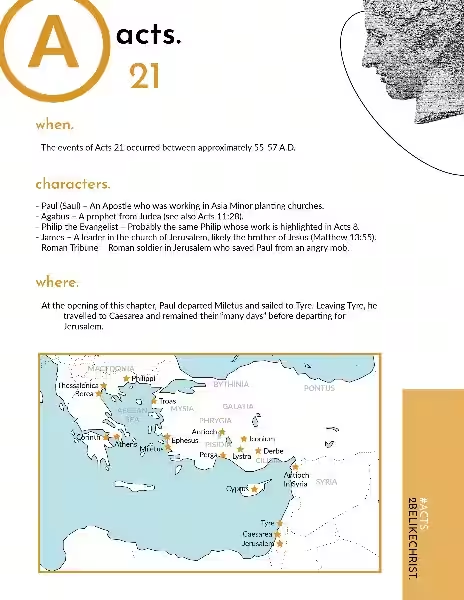
Acts 21, a crucial chapter in the Book of Acts, details a tumultuous journey for the Apostle Paul, highlighting the complex interplay between religious zeal, Roman authority, and the burgeoning Christian faith. This article will offer a comprehensive summary of Acts 21, focusing on the key events and their significance.
This chapter, particularly verses 27-40, paints a vivid picture of the dangers Paul faced upon reaching Jerusalem. It is a crucial snapshot of the early Christian community and an important stepping stone in the understanding of Paul's ministry. The narrative isn't just a historical account; it's a microcosm of the challenges faced by the early Christians as they navigated a world deeply divided by religious dogma and political power. The events of Acts 21 demonstrate how quickly misunderstanding and rumour could escalate into violent conflict.
- The Spark of the Riot: Accusations and Misunderstandings
- Escalation and Roman Intervention: A Clash of Power
- A Roman Approach to Justice: Clarification and Inquiry
- Paul's Strategic Response: Seeking a Hearing
- The Conclusion and Further Implications of the Narrative
-
20 Key Points Summarized: Acts 21
- What does Acts chapter 21, verses 27-40 mean?
- What sparked the riot in Jerusalem?
- How did the Roman authorities intervene?
- What was the Roman approach to justice in this situation?
- What was Paul's reaction to the escalating situation?
- What is the significance of Paul's request to speak?
- How does this excerpt depict the tension between Jewish tradition and early Christianity?
- How does this chapter illustrate Paul's resilience?
- How does this chapter show the influence of the Holy Spirit?
- What is the importance of the prophetic warnings regarding Paul's trip to Jerusalem?
- What role did miscommunication and misinformation play in the riot?
- How does the narrative emphasize the importance of fellowship within the early Christian community?
- What is the overall message of this passage in Acts?
- What is the significance of the Roman involvement in this event?
- How does this excerpt contribute to the overall narrative of Acts?
- What is the significance of Paul's participation in purification rituals?
- How does the chapter highlight the power of human resistance to the Gospel?
- What is the long-term impact of this event on Paul's ministry?
- How is the presence of the Holy Spirit apparent throughout the chapter?
- What are the key themes portrayed in this part of the chapter?
The Spark of the Riot: Accusations and Misunderstandings
The narrative begins with a passionate, yet fundamentally misguided, accusation. Jewish individuals from Asia, present in the Temple, claimed that Paul, through his missionary work, had violated Jewish law. Their central complaint revolved around their belief that Paul was disrespecting Jewish traditions by associating with Gentile converts. This misunderstanding, fueled by rumors and prejudice, quickly spiraled into a dangerous mob scene.
The instigators weren't simply driven by personal animosity; their actions stemmed from a profound disagreement over the interpretation of Jewish law and the place of Gentiles within the faith. This highlights the very real tensions between different interpretations of religious practice and the challenges of bridging cultural and religious divides. These conflicts were not uncommon during this time, as different factions within Judaism wrestled with the implications of the expanding Christian movement. This summary of acts 21 illustrates how quickly a misunderstanding can erupt into violence when not addressed promptly.
Escalation and Roman Intervention: A Clash of Power
The escalating tension reached a fever pitch, leading to Paul's physical removal from the Temple. Driven by their religious fervor, the mob sought to execute Paul. This level of hostility underscores the significant threat Paul faced, and how easily his life could have been lost in a crowd fueled by anger and prejudice. This incident is a stark reminder of the challenges faced by those who challenge deeply held beliefs and traditions.
The decisive and swift intervention of a Roman tribune was crucial in preventing Paul's likely death. The tribune, acting on behalf of the Roman occupying power, seized Paul from the frenzied mob. This Roman intervention reflects the delicate balance of power in the region and the extent to which Roman authorities were involved in maintaining order, even in matters of religious dispute. This summary of acts 21 showcases the Roman empire's involvement in the religious landscape and the delicate balance of power.
A Roman Approach to Justice: Clarification and Inquiry
The tribune's actions—arresting Paul and seeking clarification—reveal a Roman approach to justice, one that prioritized evidence and due process. The tribune, presented with accusations without evidence, acted cautiously and sought to understand the nature of the charges against Paul. This is a key moment in the narrative. It illustrates that justice, even in times of unrest, relies on understanding and evidence, not just on accusations.
This highlights a key difference between the Roman legal system and the often emotional and reactive methods used to address disputes or disagreements within the Jewish community. This contrasts the mob's actions with a more structured, potentially more impartial, approach. This summary of acts 21 reveals a fundamental difference in justice systems.
Paul's Strategic Response: Seeking a Hearing
Significantly, Paul requested permission to speak to the crowd, a request granted by the tribune. This highlights Paul's strategic approach. He recognized the potential for a fair hearing and sought to address the accusations directly. This calculated move could have proven crucial in any subsequent attempt to reconcile the differences. Paul's request showcases his resilience and recognition of the importance of due process even in the midst of intense hostility.
His ability to remain calm and strategic, even when facing imminent danger, reveals a key aspect of Paul's character: the ability to respond to conflict with careful consideration and a desire to communicate his position. This summary of acts 21 reveals a key aspect of Paul's character.
The Conclusion and Further Implications of the Narrative
The excerpt concludes with Paul's request to address the crowd being granted. This sets the stage for a further narrative development, potentially involving Paul's defense and explanation of his actions. The narrative emphasizes the specific need for a hearing in the face of mob violence, indicating the Roman approach to justice and Paul's inherent resilience and faith. This summary of acts 21 highlights a key moment in Paul's journey, showing his resilience and strategic approach.
The account underlines the importance of fair processes and public discourse in times of conflict. Furthermore, the Roman involvement highlights the complex religious, political, and social landscape of the time. The narrative emphasizes that even in the midst of tumult, faith and reason can intertwine to achieve a better understanding and potential resolution.
20 Key Points Summarized: Acts 21
This section synthesizes the key points of Acts 21, providing a comprehensive overview of the chapter's significance:
- Paul's Journey to Jerusalem: Paul's determined journey, despite warnings, highlights his commitment to God's will.
- Agabus' Prophecy: Agabus' prophecy foreshadows Paul's imprisonment, emphasizing the prophetic nature of the early church.
- Paul's Respect for Jewish Traditions: Paul participates in purification rituals, demonstrating his calculated approach but to no avail.
- Misunderstandings and Rumors: Rumors and misinterpretations fuel the escalating hostility toward Paul.
- The Violent Mob Scene: Misunderstandings and accusations rapidly escalate, creating a threatening mob scene.
- Paul's Arrest: Mistrust turns to violence rapidly, leading to Paul's arrest.
- Jewish Opposition: Jewish factions perceive Paul as a threat to their traditions, leading to conflict.
- Roman Intervention: Roman intervention is crucial in saving Paul's life.
- Roman Approach to Justice: The Roman tribune prioritizes evidence and due process in addressing the accusation.
- Paul's Request for a Hearing: Paul strategically requests a hearing before the crowd, demonstrating his faith and resilience.
- The Importance of Due Process: The narrative emphasizes the need for fair processes and procedures.
- Paul's Resilience: Paul demonstrates resilience in the face of opposition.
- Tensions Between Judaism and Christianity: The chapter highlights the challenges faced by the early Christians in reconciling differing belief systems.
- Divine Guidance: The Holy Spirit's guidance is evident throughout, from the warnings to divine protection.
- Fellowship among Christians: Strong bonds of fellowship are evident in the disciples' support of Paul.
- The Complex Religious Landscape: The account underscores the complex interplay of religious, political, and societal factors.
- The Power of Public Discourse: Public discourse becomes necessary to address accusations during conflict.
- Paul's Strategic Thinking: Paul uses strategic methods to attempt to avoid violence.
- The Need for Evidence: The Roman approach emphasizes the need for evidence over rumour.
- The Significance of a Hearing: Paul's request for a hearing underscores the importance of fair processes during conflict.
This summary of Acts 21 provides a wealth of information about a crucial juncture in Paul's ministry, highlighting the interplay of faith, resistance, and justice.
What does Acts chapter 21, verses 27-40 mean?
This section of Acts 21 details a critical moment in Paul's journey, illustrating the complex interplay of religious zeal, Roman authority, and Paul's missionary work. It's a pivotal example of the challenges faced by the early Christian community as it navigated the existing religious and political landscape.
What sparked the riot in Jerusalem?
Jewish individuals from Asia, present in the Jerusalem Temple, accused Paul of violating Jewish law. Their claim centered on Paul's alleged disrespect for Jewish traditions, particularly concerning his interactions with Gentile converts. This accusation, based on misunderstandings and likely fueled by prejudice, ignited a riot.
A Roman tribune, acting on behalf of the occupying power, intervened to prevent Paul's likely death. The tribune, recognizing the potential for escalating violence, arrested Paul and sought clarity about the nature of the accusations. This intervention highlights the power dynamics at play between Roman authority and Jewish religious factions.
What was the Roman approach to justice in this situation?
The Roman tribune's initial response was to act cautiously, seeking clarification before making a judgment. The tribune's actions demonstrate a preference for evidence and due process, even in the face of a highly charged situation.
What was Paul's reaction to the escalating situation?
Paul requested permission to address the crowd, a request granted by the tribune. This highlights Paul's strategic approach to potentially mitigating the situation through reasoned argument and engagement with the cause of the hostility.
What is the significance of Paul's request to speak?
This request sets the stage for a potential hearing in which Paul could defend his actions and attempt to reconcile the differences between Jewish and Gentile Christians. It underscores the importance of fair processes and public discourse in conflict resolution.
How does this excerpt depict the tension between Jewish tradition and early Christianity?
The riot stemmed from the conflict over the interpretation and practice of Jewish law, particularly concerning Gentile inclusion in the Christian community. This highlights the inherent tensions between the established Jewish traditions and the burgeoning Christian faith.
How does this chapter illustrate Paul's resilience?
Despite the hostile mob and the potential for a fatal outcome, Paul remained resolute and sought a fair hearing. This event demonstrates Paul's resilience and commitment to his faith.
How does this chapter show the influence of the Holy Spirit?
While not explicitly stated, the narrative could be interpreted as demonstrating the Holy Spirit's guidance in protecting Paul. The intervention of Roman authorities could be viewed as a divine protection.
What is the importance of the prophetic warnings regarding Paul's trip to Jerusalem?
The prophecy of Agabus foreshadowed the hardships Paul would face in Jerusalem. This underscores the prophetic nature of the early church and the awareness of potential dangers.
What role did miscommunication and misinformation play in the riot?
Misunderstandings and false accusations rapidly escalated into a violent mob scene, highlighting the role of rumor and misinformation in inciting conflict.
How does the narrative emphasize the importance of fellowship within the early Christian community?
The disciples' support and prayers for Paul demonstrate the strong bonds of fellowship within the early Christian community.
What is the overall message of this passage in Acts?
The passage showcases the challenges faced by early Christians as they navigated conflicting religious and political environments. It emphasizes the importance of fair processes, reasoned dialogue, and resilience in the face of opposition.
What is the significance of the Roman involvement in this event?
Roman involvement demonstrates the complex political and social landscape of the time, showing the influence of the occupying power and their approach to justice. The Roman intervention was crucial in averting the likely death of Paul.
How does this excerpt contribute to the overall narrative of Acts?
It provides a crucial moment in Paul's journey, showcasing the risks and challenges he encountered in spreading the Gospel. This incident highlights the complex interplay between religious zeal, Roman authority, and Paul's missionary work.
What is the significance of Paul's participation in purification rituals?
Paul's participation in purification rituals shows his attempt to reconcile with Jewish traditions, but ultimately, this proves insufficient in preventing the riot.
How does the chapter highlight the power of human resistance to the Gospel?
The hostility of the mob, fueled by rumors and misinformation, illustrates the opposition Paul faced from Jewish factions who perceived him as a threat.
What is the long-term impact of this event on Paul's ministry?
The intense persecution Paul faced in Jerusalem likely shaped his future ministry, making him more cautious and strategic in his approach to spreading the Gospel.
How is the presence of the Holy Spirit apparent throughout the chapter?
The overall narrative suggests divine intervention and guidance in protecting Paul, particularly through the Roman tribune's timely intervention.
What are the key themes portrayed in this part of the chapter?
Key themes include divine guidance, human resistance, the importance of fair process, and the challenges faced by the early Christian community.