
I-290B Brief Sample: Navigating USCIS Appeals and Motions
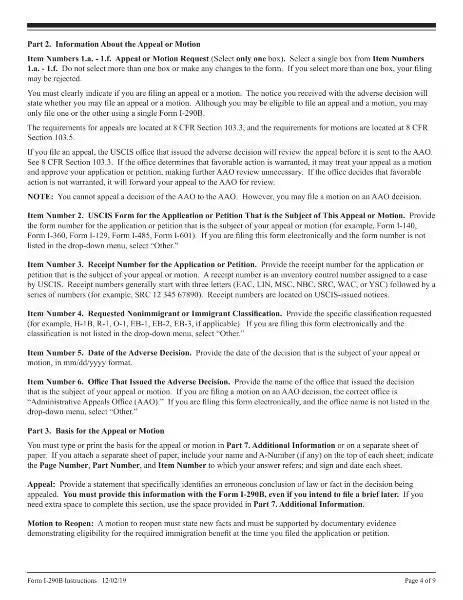
Understanding the intricacies of USCIS Form I-290B, the Notice of Appeal or Motion, is crucial for anyone seeking to challenge an adverse decision. This form, while powerful, demands meticulous adherence to specific procedures. Misinterpreting deadlines, failing to use the correct form edition, or submitting it to the wrong address can lead to rejection. This article will guide you through the essential aspects of using Form I-290B, ensuring you have the necessary information to navigate the process effectively.
- Understanding the Purpose and Scope of I-290B
- Form I-290B: Essential Procedural Requirements
- Deadlines and Time Limits for Filing
- Consequences of Late Filing and Potential Remedies
- Essential Considerations for Success
-
USCIS Form I-290B: Notice of Appeal or Motion - Frequently Asked Questions
- What is Form I-290B?
- What are the form requirements?
- Which benefits are eligible for review using Form I-290B?
- What are the filing deadlines for an appeal or motion?
- What happens if I file my appeal or motion late?
- What is the "date of service"?
- Where can I find the correct filing address?
- What if I'm not sure if my benefit is eligible for review?
- Can I file an appeal or motion if my decision was based on a mistake?
- Can I file a motion to reopen if I have a new piece of evidence?
- What other resources can help me understand the process?
- Summary of 20 Most Relevant Points (from the FAQ):
Understanding the Purpose and Scope of I-290B
Form I-290B allows for appeals or motions to reconsider decisions made by the United States Citizenship and Immigration Services (USCIS). This form isn't universally applicable; its use hinges on the specific benefit denied and the nature of the desired review. The form’s purpose is to initiate the process of appealing or filing a motion for further review of an adverse decision. Not all decisions are eligible for appeal; a very specific list of decisions allows for this type of review.
Eligibility Criteria for Using Form I-290B
Crucially, the form's applicability depends entirely on the specific benefit request denied. For instance, an appeal of a decision concerning an I-129 petition (for non-immigrant visas) might be handled differently than an appeal of an I-485 (adjustment of status) denial. A thorough examination of the USCIS website and the specific notice of denial is essential for determining eligibility. The USCIS provides detailed information on which benefits allow for appeals or motions, along with relevant guidelines.
Key Differences Between Appeals and Motions
Appeals challenge the initial decision, potentially overturning the entire outcome. On the other hand, motions for reconsideration or reopening request a re-examination of the decision. They are crucial for situations where new evidence has emerged or errors were made in the initial processing. Understanding the difference is paramount to filing the appropriate type of request. Always ensure you are pursuing the correct course of action for your specific case.
Form I-290B: Essential Procedural Requirements
The I-290B form requires meticulous attention to detail.
Form Edition and Complete Submission
Using the correct edition of the form is critical. Submitting a form with discrepancies in the edition, missing pages, or alternate versions might lead to automatic rejection. This emphasizes the importance of carefully reviewing and adhering to the exact edition required. Always confirm the edition and ensure all pages are complete and identical. An i290b brief sample can be found on USCIS websites to guide you in completing the forms.
Filing Location and Address
Filing directly with the Administrative Appeals Office is explicitly prohibited. Instead, the I-290B must be submitted to the appropriate address, which can be found on the Direct Filing Addresses page specifically designated for Form I-290B. Correctly identifying and using this address is vital for timely processing. Incorrect addresses are the most common cause of delays and rejection.
Deadlines and Time Limits for Filing
Strict deadlines govern the submission of Form I-290B.
Standard Timeframes for Filing
Generally, appeals or motions must be filed within 30 calendar days of the "date of service" of the adverse decision, extending to 33 days if mailed. These deadlines, however, have specific exceptions.
Exceptions to the Deadline
Appeals concerning the revocation of immigrant petition approvals (8 CFR 205.2) have a 15-day deadline, extending to 18 days in case of mailed decisions. Be meticulous in determining the exact deadline for your specific situation and document the "date of service" of the decision.
"Date of Service" Clarification
It's crucial to understand that the "date of service" refers to the mailing date of the decision, not the date of receipt. Decisions are typically mailed the same day they are issued, further emphasizing the importance of checking the mailing date rather than the receipt date.
Consequences of Late Filing and Potential Remedies
Late filing is a significant obstacle in the I-290B process.
General Rejection of Late Appeals
USCIS generally rejects late appeals. However, circumstances might warrant consideration for an untimely motion to reopen or reconsider.
Potential for Motions to Reopen or Reconsider
A motion to reopen or reconsider an adverse decision might be accepted even if filed late, if the delay was reasonable and beyond the filer's control. This determination is entirely at the discretion of USCIS. The likelihood of success hinges on demonstrating both the reasonableness of the delay and the extenuating circumstances.
Essential Considerations for Success
Thorough preparation and meticulous attention to specific requirements are vital for successful I-290B filing. Comprehending the nuances of the form, deadlines, and specific circumstances is critical to success.
Importance of Consulting Official USCIS Resources
Always consult the official USCIS website for the most current and accurate information regarding Form I-290B. It's not just about the form itself but the intricate procedures and eligibility criteria that vary based on individual cases.
Navigating the USCIS appeal process involves meticulous adherence to established rules and procedures. The I-290B form, while offering an avenue for redress, necessitates understanding its specific requirements. Understanding the form’s intricacies, including deadlines and filing procedures, is paramount to a successful outcome. Utilize all available online resources provided by USCIS for the most accurate and up-to-date information.
Summary of 20 Relevant Points:
- I-290B is for appealing or requesting reconsideration of USCIS decisions.
- Not all decisions are eligible for appeal.
- Appeals challenge the initial decision; motions request reconsideration.
- Correct form edition is crucial; all pages must be identical.
- Filing to the Administrative Appeals Office is prohibited.
- Use the Direct Filing Addresses page for the correct address.
- General deadline is 30 calendar days from "date of service."
- Exceptions exist for some cases (e.g., revocation of approvals).
- "Date of service" is the mailing date, not the receipt date.
- Generally, late appeals are rejected.
- Motions to reopen/reconsider might be accepted if the delay is justified.
- USCIS discretion determines acceptance of late motions.
- I-290B use depends on the specific benefit denied.
- Consult USCIS website for specific guidelines and eligibility.
- The i290b brief sample is helpful for proper completion.
- Understand the distinction between appeals and motions for reconsideration.
- Thoroughly review the specific notice of denial.
- Address correctness is crucial for timely processing.
- Late filing is generally problematic, but exceptions may exist.
- Utilize official USCIS resources for the most current information.
USCIS Form I-290B: Notice of Appeal or Motion - Frequently Asked Questions
What is Form I-290B?
Form I-290B, Notice of Appeal or Motion, allows individuals to appeal or file a motion for further review of an adverse USCIS decision.
What are the form requirements?
The form must be printed and submitted in its entirety, using the correct edition and all pages from the same edition. Incorrect editions, missing pages, or alternate editions may result in rejection. Crucially, the correct filing address is obtained from the Direct Filing Addresses page specific to Form I-290B; filing with the Administrative Appeals Office directly is prohibited.
Which benefits are eligible for review using Form I-290B?
The eligibility of Form I-290B depends on the specific benefit request denied by USCIS (e.g., I-129, I-485) and the type of review desired (appeal or motion). The USCIS website provides a detailed list of eligible benefits and guidelines.
What are the filing deadlines for an appeal or motion?
Generally, appeals or motions must be submitted within 30 calendar days of the "date of service" of the adverse decision, extending to 33 days if mailed. However, exceptions exist. Appeals regarding the revocation of immigrant petition approvals (8 CFR 205.2) have a 15-day deadline, extending to 18 days if mailed. Importantly, the "date of service" is the mailing date, not the receipt date (8 CFR 103.8(b)).
What happens if I file my appeal or motion late?
USCIS will generally reject late appeals. However, the office issuing the adverse decision might accept a late appeal if it meets the criteria for a motion to reopen or reconsider. Late motions are typically denied, but USCIS might excuse a late motion to reopen if the delay was reasonable and beyond the filer's control. This is at USCIS's discretion.
What is the "date of service"?
The "date of service" is the date the adverse decision was mailed, not the date it was received.
Where can I find the correct filing address?
The correct filing address for Form I-290B is available on the USCIS Direct Filing Addresses page specific to Form I-290B.
What if I'm not sure if my benefit is eligible for review?
Consult the USCIS website, specifically the section on When to Use Form I-290B, for a comprehensive list of eligible benefits and guidelines.
Can I file an appeal or motion if my decision was based on a mistake?
A motion to reopen or reconsider might be appropriate if the adverse decision was based on a mistake or an error.
Can I file a motion to reopen if I have a new piece of evidence?
A motion to reopen could be filed if new and significant evidence is available. However, this is dependent on USCIS discretion. Consult the USCIS website for guidelines.
What other resources can help me understand the process?
The USCIS website is the primary source for detailed information and guidance on Form I-290B.
Summary of 20 Most Relevant Points (from the FAQ):
- Form I-290B is for appealing/re-reviewing USCIS decisions.
- Form must be complete and use the correct edition.
- File to the correct address (not Administrative Appeals Office).
- Filing address is on the USCIS Direct Filing Addresses page.
- Eligibility depends on the specific benefit requested (e.g., I-129, I-485).
- Review type (appeal or motion) affects eligibility.
- Use USCIS website for benefit eligibility details.
- General appeal deadlines are 30 calendar days (33 if mailed).
- Revocation appeals have a 15-day deadline (18 if mailed).
- "Date of service" is the mailing date, not receipt date.
- Late appeals are generally rejected but may be considered for reopening under certain conditions.
- Late motions are typically denied; USCIS discretion is involved.
- Review specific deadlines and conditions on the USCIS website.
- Use the correct form edition and all pages.
- Motions to reopen or reconsider are possible in certain circumstances.
- New evidence might justify a motion to reopen.
- USCIS website is the primary resource for detailed information.
- Review type and specific benefit determine eligibility and deadlines.
- Form must be submitted in full and with the correct edition.
- Contact USCIS for further guidance regarding specific circumstances.