
Understanding Your Rights When Dealing with CPS in California
Navigating a Child Protective Services (CPS) investigation in California can be daunting. Knowing your rights is crucial for protecting your family and ensuring a fair process. This article will outline key rights parents have when dealing with CPS.
- Understanding the Allegations: Your Right to Know
- Refusal of Entry and the Importance of Legal Counsel
- Your Rights During Interviews and Examinations
- Navigating the Court System: Your Rights in Dependency Court
- Negotiating Safety Plans and Agreements
- Protecting Your Family's Confidentiality
- Appealing CPS Decisions
- Seeking Support and Guidance
-
Frequently Asked Questions about CPS in California
- What are my rights during a CPS investigation?
- What if I'm asked for a drug test or medical release?
- What happens if the case goes to Juvenile Dependency Court?
- Can I avoid a court case?
- What about guardianship instead of dependency?
- What if I disagree with a CPS decision?
- What is the role of an attorney?
Understanding the Allegations: Your Right to Know
Knowing the specific accusations against you is paramount. This crucial aspect of your legal rights allows you to effectively respond, gather evidence, and present your side. CPS investigations can be emotionally charged, but remember you have the right to clarity. A vague or ambiguous accusation makes it hard to defend yourself. You need to understand exactly what CPS believes you have done wrong. This is vital for building a strong case where you can present your perspective and potentially challenge the allegations.
Clarity of allegations is not merely about the specifics but also about the evidence behind those allegations. Knowing the source of the accusations and the evidence to support them empowers you to challenge the validity of the claims and potentially dispute the facts. When presented with such clarity, parents can then more effectively prepare themselves and their legal representation.
Refusal of Entry and the Importance of Legal Counsel
You do not have to allow CPS investigators into your home without a warrant, unless there's an emergency. This right is a significant safeguard against unwarranted intrusion and ensures adherence to legal procedures. An emergency situation is narrowly defined and will require clear, demonstrable evidence. A warrantless entry without a declared emergency is a violation of your rights. Similarly, you should consult with a lawyer as soon as possible. Your legal counsel can be instrumental in navigating the complexities of a CPS investigation. They can help you understand your rights, prepare for interviews, and represent your interests throughout the process. A legal professional can provide invaluable support and guidance at every step, from initial interviews to court hearings, ensuring your rights are fully protected.
Your Rights During Interviews and Examinations
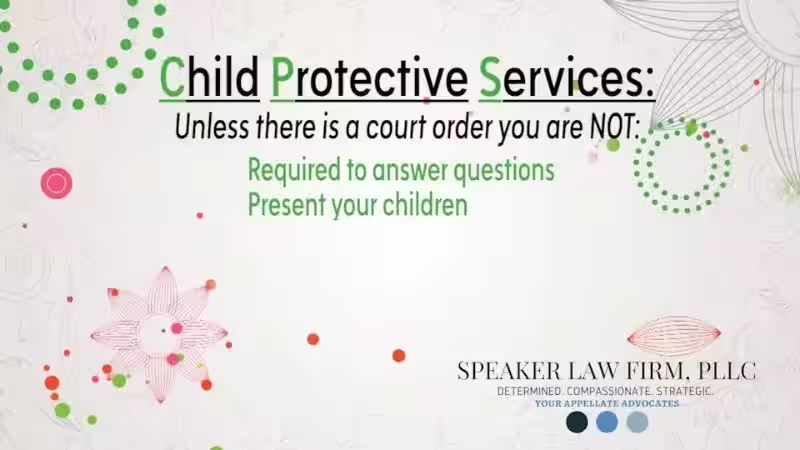
You are not obligated to answer all questions from CPS workers. While anything you say during the investigation can be used against you, you have the right to refuse to answer specific questions, and importantly, to contact an attorney before doing so. This is crucial. Refusal to answer questions, however, should be a strategic decision. It's vital to have a lawyer present to ensure your answers are in line with the facts and legal standards. Your attorney can advise you on how to navigate the interview process while protecting your rights. You also have the right to refuse drug tests and medical examinations of your children without a court order. If a medical examination is deemed necessary, you should seek out a reputable medical professional trusted by your family.
In situations where CPS might request drug tests or medical examinations, you should consider alternative pathways if possible. This could involve seeking medical assessments from a trusted physician, who can provide an independent and potentially more comprehensive medical viewpoint on the child's health. A trusted professional assessment is sometimes more reliable than a CPS-directed examination.
The process can transition into Juvenile Dependency Court. This formal court proceeding determines whether the allegations of abuse or neglect are substantiated and if the child should be declared a "dependent of the court." Crucially, you have a right to legal representation in dependency court. While not guaranteed during the investigation stage, legal representation in court is a fundamental right. This means you should actively seek legal counsel if allegations move to a court proceeding. An attorney can guide you through the legal process, ensuring your rights are protected.
Negotiating Safety Plans and Agreements
Voluntary safety plans and family maintenance agreements can be offered as alternatives to formal court proceedings. This path can help families address issues, prevent formal court intervention, and maintain parental rights. However, these agreements are not without consequences. Before signing any agreement, consult with a qualified attorney specializing in family law to understand the implications and terms. An attorney can review the plan, ensuring it's fair and does not compromise your parental rights. They can help you understand the potential risks and limitations of such agreements. Be cautious, because non-compliance can result in negative consequences in a dependency court case.
Protecting Your Family's Confidentiality
Information shared with CPS during the investigation is generally confidential. This protection safeguards your family's privacy and prevents reputational damage. However, it's important to remember that complete confidentiality may not always be guaranteed. Understanding the specific details of confidentiality protocols in California is crucial, and a lawyer can provide guidance on what information is protected and what is not. This is critical to avoiding further complications.
Appealing CPS Decisions
You have the right to appeal CPS decisions. This mechanism allows you to challenge findings of abuse or neglect and decisions regarding child removal. Appeals provide a pathway to correct any errors or misunderstandings in the process. An attorney specializing in family law should be consulted for guidance on appropriate avenues for appeal and to ensure the appeal process is properly executed.
Seeking Support and Guidance
Naturally, navigating the complexities of a CPS investigation can be emotionally and legally challenging. Seeking legal counsel from an experienced family law attorney specializing in CPS cases is highly recommended. They can provide personalized support and guidance throughout the process, ensuring that your rights are understood and protected. Remember, you are not alone in this process. Support networks and legal expertise are available to provide the necessary assistance. This support can make a significant difference in the outcome of the case.
By understanding your rights, you can effectively navigate the CPS process, protect your family, and ensure a fair resolution.
Frequently Asked Questions about CPS in California
This FAQ provides general information about parents' rights during a Child Protective Services (CPS) investigation in California. This information is not legal advice, and you should consult with an attorney for personalized guidance.
What are my rights during a CPS investigation?
Parents have several rights during a CPS investigation. You have the right to:
- Request identification from investigators: You have the right to know who is investigating you.
- Demand details about the specific allegations: You have a right to know the nature of the abuse or neglect allegations against you.
- Refuse entry to your home unless a valid search warrant exists or an emergency is declared: You do not have to allow CPS investigators into your home without a court order, except in situations where there's an immediate danger to the child.
- Refuse to answer questions: You are not obligated to answer all questions posed by CPS workers, and you can consult with an attorney before answering any questions, especially those about the circumstances of the allegations.
- Remain silent: You are not required to incriminate yourself by answering questions that may be used against you in a court proceeding.
- Contact an attorney: You have the right to consult with an attorney at any stage of the process.
- Request interpretation services: If you do not speak English, CPS must provide interpretation services.
- Reasonable accommodations for disabilities: If you have a disability, CPS must provide reasonable accommodations.
- Be treated fairly: You have the right to a fair process, to present your perspective, and have your concerns addressed without bias.
What if I'm asked for a drug test or medical release?
You are not obligated to take drug tests or sign releases for medical examinations of your children without a court order. You can offer a medical examination by the child's trusted physician as an alternative.
What happens if the case goes to Juvenile Dependency Court?
If the CPS investigation leads to a petition in Juvenile Dependency Court, you have the right to:
- Legal representation: You are entitled to legal representation in court.
- Maintain parental rights: You maintain your parental rights, including decision-making on education and medical care.
- Maintain contact with the child: You have the right to maintain contact with your child.
- Understand the process: You have the right to understand the legal process.
Can I avoid a court case?
Voluntary safety plans or family maintenance agreements can sometimes be an option to address concerns raised by CPS. However, you should consult with an attorney before agreeing to any such agreements and carefully review the terms. Non-compliance could have negative consequences in court.
What about guardianship instead of dependency?
Guardianship proceedings are an alternative to dependency court, but they carry different legal implications and offer less parental protection. Consult with an attorney for guidance on this option.
What if I disagree with a CPS decision?
You have the right to appeal CPS decisions. This process allows you to challenge the findings of abuse or neglect and decisions regarding child removal.
What is the role of an attorney?
A qualified attorney specializing in family law can provide crucial guidance and advocacy throughout the entire process, from the initial investigation to court proceedings. An attorney can help protect your rights and navigate the complexities of the system. It's highly recommended to seek legal counsel as soon as possible.