
Understanding NACARA Eligibility: A Pathway to Permanent Residency
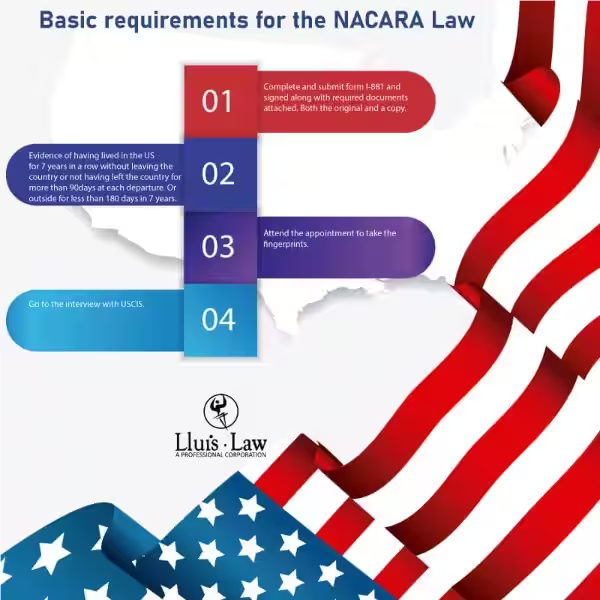
NACARA 2003, or the Nicaraguan Adjustment and Central American Relief Act of 2003, offers a unique avenue for individuals seeking relief from deportation and a path to permanent residency. But navigating its intricate eligibility criteria and application process can be challenging. This article will break down the key requirements to help you understand your potential eligibility.
- Key Eligibility Criteria for NACARA 2003
- Beyond Initial Eligibility: Maintaining Eligibility
-
The Application Process and Further Steps
- NACARA Eligibility - Frequently Asked Questions
- What is NACARA 203?
- Who is eligible under NACARA 203?
- What is the role of pre-existing deportation orders?
- What are the requirements beyond initial eligibility?
- What about specific criminal convictions?
- How do I apply?
- What if I am not in deportation proceedings?
- Can I get permanent residency?
- What should I do next?
Key Eligibility Criteria for NACARA 2003
This act is specifically designed to offer relief to certain individuals from Central America and the former Soviet bloc, recognizing their unique circumstances. These circumstances often stem from the harsh realities of their homelands, pushing them to seek refuge in the United States. Understanding these specific criteria is crucial for determining eligibility.
Eligibility Criteria: Central American Countries (Guatemala and El Salvador)
Understanding the specific entry dates, asylum application deadlines, and benefit registration requirements is essential. The act establishes a complex timeline for individuals from Guatemala and El Salvador seeking relief under NACARA. These dates are critical, and missing one can impact eligibility.
- Guatemala: Entry before October 1, 1990; ABC benefits registration by December 31, 1991; asylum application filed by January 3, 1995; and non-apprehension after December 19, 1990.
- El Salvador: Similar requirements, however, the dates are adjusted accordingly: entry prior to September 19, 1990; ABC benefits registration by October 31, 1991; asylum application filed by February 16, 1996.
These specific dates are crucial to determining if you fall under the NACARA eligibility framework. Crucially, there are separate sets of conditions for those who sought asylum before October 1, 1990 and the deadlines are distinct for each group. It's imperative to carefully review and verify your entry dates, application dates, and any associated documentation.
Eligibility Criteria: Former Soviet Bloc Countries
Another qualifying category under NACARA 2003 involves individuals from former Soviet bloc countries. They must have entered the U.S. by December 31, 1990, and filed an asylum application by December 31, 1991. These dates are equally important for this group of applicants.
These eligibility requirements are distinct from the criteria for Central American applicants, requiring a thorough analysis of your personal situation. Understanding these nuances is essential to determine your eligibility status. Naturally, if you don't meet these specifics, you likely won't be eligible.
Additional Eligibility Considerations
Family Members and Domestic Abuse: Family members of individuals who meet the above criteria may also be eligible for NACARA relief. Additionally, if an applicant experienced abuse or extreme cruelty at the hands of someone who falls under one of the eligibility categories, they may be eligible as well; however, it's absolutely necessary to seek counsel from an immigration attorney to evaluate these specific circumstances. This is crucial because the degree and nature of the abuse must meet specific legal thresholds.
Pre-Existing Deportation Orders: Applicants with pre-existing final deportation orders have an additional requirement. They must file a motion for reopening with the Executive Office for Immigration Review (EOIR) by September 11, 1998. Failure to do so or any uncertainty about the order's relevance strongly necessitates consultation with an immigration attorney. This is a critical aspect that must be carefully considered.
Beyond Initial Eligibility: Maintaining Eligibility
Meeting the initial eligibility criteria isn't the only hurdle. Several additional factors are essential to ensure success in the application process.
Maintaining Eligibility Post-Application
Continuous U.S. Presence: Seven years of continuous physical presence in the U.S. preceding the application date are required. This is a significant factor, and documentation of your presence throughout this period is vital.
Good Moral Character: Maintaining good moral character throughout this seven-year period is also critical to maintaining eligibility. Any criminal convictions or violations of law during this period can potentially impact admissibility.
Non-Removability: Applicants must be deemed non-removable due to certain criminal grounds. This involves a comprehensive review of your criminal history to determine if it disqualifies you from eligibility.
Extreme Hardship: Deportation must cause extreme hardship to the applicant or a U.S. citizen/permanent resident family member. Demonstrating this hardship is a key element of the application and often requires thorough documentation and supportive evidence.
Merit and Deservingness: The applicant must ultimately be deemed deserving of relief. This is a subjective evaluation considering all relevant factors throughout the application process.
The Application Process and Further Steps
The application process begins with filing Form I-881, Application for Suspension of Deportation or Cancellation of Removal, with USCIS. This document outlines and details the necessary steps and information needed for eligibility and the entire application process.
Crucially, understanding the intricate timelines, specific criteria, and the often-necessary involvement of legal professionals is crucial for applicants navigating this complex relief process. The application process can be complicated and potentially overwhelming without legal assistance. Seeking professional guidance is highly recommended.
Important Note: This article provides general information and is not legal advice. Consultation with a qualified immigration attorney is highly recommended to assess your specific situation and determine eligibility under NACARA 2003. The information provided here should be seen as a general overview and not a definitive guide.
20 Most Relevant Points Summarized (Based on the provided text):
- NACARA 2003 provides a pathway to relief from deportation.
- Eligibility depends on meeting specific criteria.
- NACARA targets individuals from Guatemala, El Salvador, and former Soviet bloc countries.
- Entry dates, asylum application dates, and benefit registration dates are crucial.
- Family members of eligible individuals may also qualify.
- Applicants experiencing abuse may also be eligible.
- Pre-existing deportation orders require a motion for reopening.
- Seven years of continuous U.S. presence are required.
- Applicants must demonstrate good moral character.
- Non-removability due to criminal grounds is required.
- Extreme hardship for the applicant or family member must be shown.
- Merit and deservingness are crucial factors.
- Form I-881 (Application for Suspension of Deportation or Cancellation of Removal) is used.
- Specific timelines and criteria vary by applicant group.
- Legal counsel is strongly recommended.
- Applicants must not have committed aggravated felonies.
- Eligibility hinges on various factors including asylum applications, and benefit registrations.
- The process often involves Immigration Court intervention.
- Applicants can apply directly to USCIS even without formal deportation proceedings.
- Successful application leads to permanent residency.
NACARA Eligibility - Frequently Asked Questions
This FAQ provides general information about NACARA 203 eligibility. It is not legal advice and you should consult with an immigration attorney for specific guidance related to your situation.
What is NACARA 203?
NACARA 203, the Nicaraguan Adjustment and Central American Relief Act of 2003, is a specific U.S. immigration law offering a pathway to relief from deportation for certain individuals who meet specific criteria. It focuses on individuals from Guatemala, El Salvador, and former Soviet bloc countries.
Who is eligible under NACARA 203?
Eligibility depends on several factors and varies by nationality. Generally, applicants must meet specific entry dates, asylum application deadlines, and prior status requirements. Crucially, they must not have been convicted of an aggravated felony. Some examples include:
- Guatemala/El Salvador: Specific entry dates prior to October 1, 1990, and September 19, 1990, respectively, and specific deadlines for asylum applications.
- Former Soviet Bloc Countries: Entry by December 31, 1990, and asylum application by December 31, 1991.
- Individuals with outstanding asylum applications (Guatemala/El Salvador): Asylum applications filed by April 1, 1990.
- Family members: Family members of individuals meeting the above criteria may qualify.
- Victims of abuse: Individuals experiencing abuse or extreme cruelty by someone who meets the above eligibility criteria may qualify, but require legal counsel.
What is the role of pre-existing deportation orders?
Applicants with pre-existing final deportation orders must have filed a motion for reopening with the Executive Office for Immigration Review (EOIR) by September 11, 1998. Consult with an attorney for clarification on the relevance of any such order in your case.
What are the requirements beyond initial eligibility?
Beyond initial eligibility criteria, successful application requires additional evidence:
- Seven years of continuous U.S. physical presence: Before the application date.
- Good moral character: During this seven-year period.
- Non-removability: Due to certain criminal grounds.
- Extreme hardship: Demonstrating that deportation would cause extreme hardship to the applicant or a U.S. citizen/permanent resident family member.
- Deserving of relief: The applicant must be deemed deserving of relief.
What about specific criminal convictions?
Specific criminal convictions may require a significantly higher standard of proof for eligibility. This might result in a referral to Immigration Court for a final decision.
How do I apply?
The application involves filing Form I-881, Application for Suspension of Deportation or Cancellation of Removal, with USCIS.
What if I am not in deportation proceedings?
NACARA 203 applicants can seek relief directly from USCIS even if they are not in formal deportation proceedings.
Can I get permanent residency?
A successful NACARA 203 application can lead to permanent residency status in the U.S., and the grant of NACARA 203 relief allows an individual to obtain a Permanent Resident Card (I-551), commonly known as a "green card."
What should I do next?
Understanding these intricate timelines, specific criteria, and the often-necessary involvement of legal professionals is crucial. Contact an immigration attorney to discuss your specific circumstances and eligibility. Information about the application process and subsequent steps is available on the relevant resource pages.