
Understanding Iranian Households: A Deep Dive into Family Structures
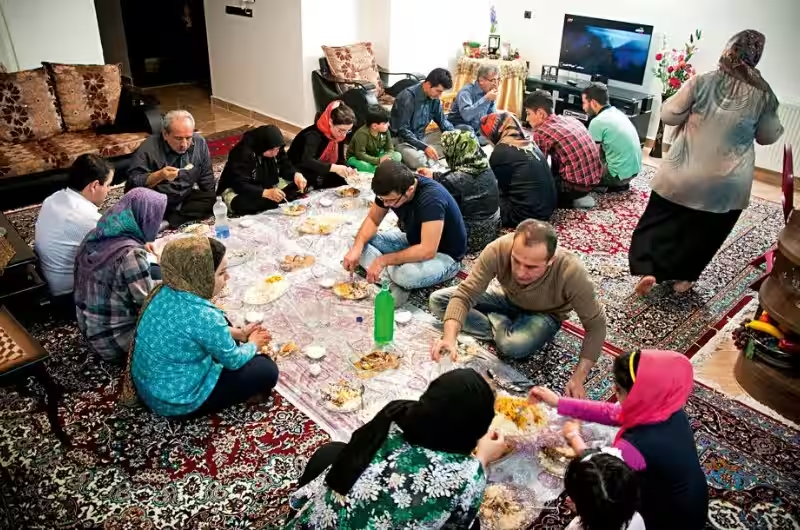
Iranian households represent a rich tapestry woven from centuries-old traditions, evolving social norms, and the impact of the Islamic Republic. This article delves into the multifaceted nature of Iranian family life, exploring the interplay between familial obligations, personal autonomy, and the broader societal context. We will examine the unique dynamics of Iranian households, addressing common concerns and providing valuable insights.
- The Centrality of Family in Iranian Culture
- Gender Dynamics and Public Restrictions
- Dating, Marriage, and the Balance Between Tradition and Autonomy
- The Economic Landscape of Iranian Households
- Navigating the Challenges: A Look at the Future
-
Frequently Asked Questions about Iranian Households
- What is the role of family in Iranian society?
- How does the separation of genders affect Iranian households?
- How are dating and marriage practices influenced by cultural norms?
- What is the typical family structure in Iran?
- Are there any financial expectations related to marriage?
- How do Iranian families typically resolve conflicts?
- How important is trust within Iranian families?
The Centrality of Family in Iranian Culture
Iranian society is deeply collectivist, placing a paramount value on the family unit. Honour and shame are shared within the family circle; success and misfortune are felt by all members. This strong family orientation is a cornerstone of Iranian culture, evident in the close ties maintained with extended relatives. While nuclear families are relatively small, the extensive network of extended family members often creates a robust support system. This network often plays a significant role in social and economic matters, and this aspect of life is particularly relevant in understanding Iranian households.
Families encourage individual independence, but this independence is always framed within the context of respecting familial values and maintaining close connection with relatives. The expectation of respecting elders is deeply ingrained, and the care of elderly parents is often a shared responsibility within the family unit. This inherent family-centricity significantly shapes the lives of Iranian individuals, influencing everything from educational pursuits to career choices and marital considerations. While the emphasis on family unity is a strength, it can also present challenges, particularly in balancing individual needs and desires with the expectations of the family unit.
Gender Dynamics and Public Restrictions
The Islamic principle of modesty, embodied in the concept of hijab, influences social interactions. The Iranian government's emphasis on gender separation creates significant restrictions on women's public participation, including dress codes, limitations on employment, and restrictions on freedom of expression. This cultural and legal framework often leads to a disparity in opportunities and authority for men and women in the public sphere. While many Iranian women achieve higher education, their opportunities in the public domain are often limited compared to men, who are frequently viewed as the primary financial and legal providers.
This disparity creates a complex dynamic where women face challenges and limitations, despite their contributions and aspirations. However, a burgeoning movement of educated Iranian women is actively challenging these traditional societal expectations, demonstrating resilience and a desire for greater equality. This ongoing struggle between tradition and progress reflects the complexities inherent within Iranian households.
Dating, Marriage, and the Balance Between Tradition and Autonomy
The cultural emphasis on family honour and the legal restrictions on public displays of affection considerably influence dating and marriage patterns. While romantic love is highly valued, arranged marriages are less common than in the past, but parental influence over partner selection continues to be a significant factor. Dating is often conducted discreetly, with young adults often concealing relationships from parents, especially fathers. This reflects the inherent tension between preserving family honour and the desire for personal choice in romantic relationships.
Dating practices in Iranian households vary greatly across different regions and social groups, highlighting the complex interplay between tradition and modern sensibilities. The changing dynamics in this area underscore the ever-evolving nature of Iranian society and the ongoing negotiation between traditional values and personal desires. The desire for personal choice in relationships often clashes with the strong emphasis on family expectations, creating inherent dilemmas for young adults.
The Economic Landscape of Iranian Households
The economic realities within Iranian households are significantly impacted by the country's systemic economic challenges. These challenges can lead to varying levels of financial security and stress amongst Iranian families. The interplay between economic realities, cultural expectations, and government policies creates a complex and often challenging environment for Iranian households. Limited economic opportunities can impact the ability of families to meet their needs and aspirations, particularly affecting women's financial independence and opportunities.
The ability of Iranian households to maintain their traditional values and practices in the face of economic adversity is remarkable. The resilience and adaptability of Iranian families in navigating these difficulties provide a fascinating insight into the strength and cultural richness of Iranian society.
Understanding the nuances of Iranian households requires a deep appreciation for the interplay between tradition and progress. While the emphasis on family unity and honour remains a cornerstone of Iranian culture, a growing segment of the population is actively seeking to reconcile these traditional values with modern aspirations. This ongoing dialogue between tradition and progress will continue to shape the future of Iranian households.
Key Considerations for Understanding Iranian Households:
- Respect for Elders: This is a fundamental value.
- Family Honour: This concept deeply influences decisions.
- Gender Roles: Evolving but still significant.
- Economic Challenges: These significantly impact family life.
- Cultural Sensitivity: Crucial for respectful dialogue.
Conclusion
The Iranian household, with its intricate blend of tradition and modernity, is a microcosm of Iranian society. By understanding the deep-seated values, the evolving dynamics, and the complex societal context, we can gain a richer and more nuanced perspective on the lives of those within these households. This knowledge fosters a greater understanding, respect, and appreciation for the rich cultural fabric of Iranian society.
Frequently Asked Questions about Iranian Households
What is the role of family in Iranian society?
Iranian society is deeply collectivist, prioritizing the family unit over individual needs. Family honor and shame are shared, and success or disgrace affect all members. While families encourage independence, children are expected to respect familial values and maintain close ties with extended relatives. This creates strong support networks, even though nuclear families tend to be smaller. The emphasis on family extends to financial and emotional support across generations and geographically dispersed relatives.
How does the separation of genders affect Iranian households?
Islamic principles of modesty (hijab) and government policies regarding gender separation significantly shape social interactions, especially between men and women outside of family or close friend groups. This leads to restrictions on women's public participation, including dress codes, limitations on employment, and restrictions on freedom of expression. While Iranian women achieve higher education, their authority and public opportunities remain more limited than men's, who are often seen as the primary financial and legal providers.
How are dating and marriage practices influenced by cultural norms?
The emphasis on family honor and legal restrictions on public displays of affection influence dating and marriage patterns. While romantic love is valued, arranged marriages are less common than in the past, but parental influence over partner selection remains significant. Dating is often discreet, with young adults sometimes hiding relationships from parents, especially fathers. This reflects the tension between preserving family honor and personal choice in romantic relationships. Dating practices vary across different regions and social groups.
What is the typical family structure in Iran?
Traditional Iranian families often have a hierarchical structure, with the father at the top, followed by the eldest son. The father is typically the head of the household and decision-maker. The eldest son often inherits leadership responsibilities upon the father's absence. Younger sons may have specific roles within the family business. Women traditionally have more limited roles, often focused on household management and maintaining family unity. However, mothers may play more active roles if the father is absent. This is a traditional view, and modern families are more varied in their structures.
The expectation for the groom to provide a furnished apartment, a car, and other necessities immediately upon marriage places significant financial pressure on him. Wedding costs can escalate rapidly due to the expectation for lavish displays and a large number of guests, influenced by the extended family network.
How do Iranian families typically resolve conflicts?
Families often handle disputes privately. However, legal recourse is available, and Iranian law stipulates conditions under which women can divorce. Divorce can be seen as a betrayal of family loyalty ("Khianat"), impacting the family's reputation and honor. While oral agreements are still common, written agreements are also recognized in legal matters.
How important is trust within Iranian families?
Trust is a vital social currency in Iranian families. Strong bonds exist between family members, particularly in close proximity. Constant communication and detailed sharing of daily events are common, fostering community but potentially causing an overwhelming sense of shared responsibility and expectations. Breach of trust can lead to serious consequences, including social isolation.