
Understanding the Transnationalizing World: A Complex Interplay of Globalization and Identity
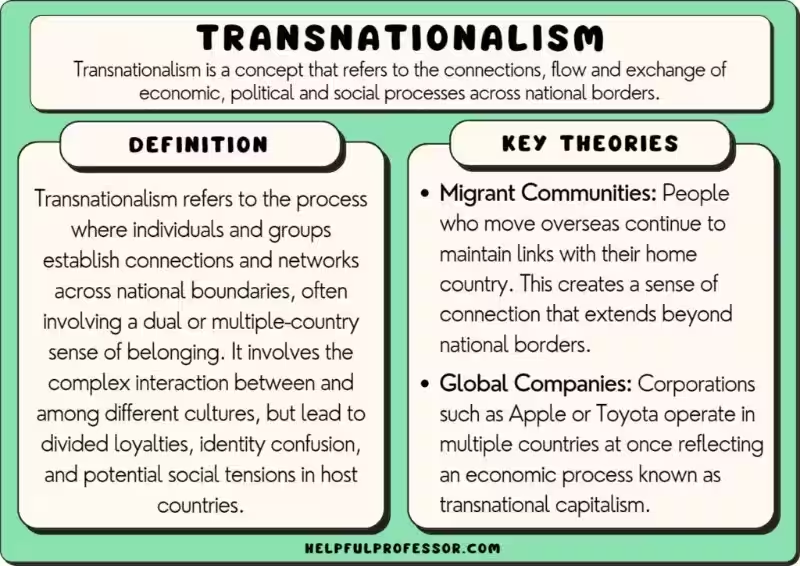
Transnationalism is a concept that grapples with the increasingly interconnected world, where national borders seem less significant in shaping individuals' and institutions' actions. This article delves into the multifaceted nature of transnationalizing processes, exploring their economic, social, and political dimensions. It also examines the impact of these forces on national identities and policies.
- The Economic Dimension of Transnationalism: Globalization and its Discontents
- The Social and Political Landscapes of Transnationalism
- The Driving Forces Behind Transnationalization
-
Critical Perspectives on Transnationalism
- The Uneven Distribution of Power in Transnational Processes
- What is Transnationalism?
- What are the key dimensions of Transnationalism?
- What factors drive Transnationalism?
- How does Transnationalism challenge traditional understandings of the nation-state?
- What are some criticisms of Transnationalism?
- What is the relationship between Transnationalism and Globalization?
- How does Transnationalism affect identity and migration?
The Economic Dimension of Transnationalism: Globalization and its Discontents
Globalization, a key aspect of transnationalism, highlights the global reorganization of production driven by technological advancements. The internet, improved communication systems, and containerization have enabled the dispersal of production stages across countries, allowing multinational corporations to minimize costs and maximize profits. This economic transnationalism, while generating wealth, also raises questions about its impact on workers, communities, and the environment.
The Rise of Multinational Corporations and their Influence
Multinational corporations (MNCs) are prime examples of economic transnationalism. They operate across borders, leveraging comparative advantages in different locations to optimize their operations. This approach, while boosting profits, has also been criticized for potentially leading to the exploitation of labor in developing countries and exacerbating economic inequalities. The control that MNCs wield over global markets raises concerns about potential monopolization and market distortion.
Unveiling the Uneven Distribution of Benefits
A crucial aspect of economic transnationalism is the uneven distribution of its benefits. While some countries and corporations profit handsomely from the free flow of capital and goods, others lag behind or experience negative consequences, such as job displacement or environmental degradation. This uneven distribution underscores the need for international cooperation and regulations to manage the potential downsides of transnational economic activity.
Transnationalism is not confined to the economic sphere; it also manifests in social and political interactions. Diasporas, such as the overseas Chinese community, serve as historical examples of transnational communities maintaining ties across borders. However, modern transnationalism encompasses a wider range of actors and activities, including migration, political activism, and even criminal networks.
The Impact of Migration on Transnational Communities
Immigrant communities, in particular, cultivate vibrant transnational social fields. These fields connect their home countries with their new locations through economic exchanges (remittances), political engagement (voting, lobbying), and socio-cultural interactions (social remittances). This constant flow of people, ideas, and resources across borders shapes both the sending and receiving communities. Migration, voluntary or involuntary, plays a significant role in shaping transnational relations.
Political Activism and Transnational Networks
Beyond economic and social exchanges, transnationalism also encompasses political activities. Migrant communities engage in transnational political activism, often advocating for their rights and interests in both their host countries and their countries of origin. Transnational networks facilitate this engagement, connecting individuals and groups across borders.
The Driving Forces Behind Transnationalization
Several key factors propel transnationalism. Technological advancements, particularly in communication and transportation, facilitate ongoing contact between migrants and their home countries. Demographic shifts in developed countries, often fueled by migration, further underscore the importance of transnational connections. Post-colonial shifts and the rise of human rights discourses have also weakened the state's absolute authority in defining individual rights, creating space for transnational interactions.
Technological Advancements: The Engine of Transnationalism
The internet, mobile phones, and video conferencing have drastically reduced the barriers to communication and interaction across borders. These advancements have empowered migrants to maintain close ties with their families and communities in their countries of origin, shaping transnational social fields.
The Role of Migration Patterns and Political Changes
International migration patterns are intrinsically linked to transnationalism. Migrants often carry with them cultural norms, values, and knowledge that can be transferred to their host countries, fostering cultural exchange and shaping social landscapes. Global political shifts, such as the rise of human rights discourses, have challenged traditional state sovereignty, paving the way for transnational interactions.
Critical Perspectives on Transnationalism
While transnationalism is lauded for its potential to foster interconnectedness and cooperation, critical perspectives highlight potential downsides. A neo-Marxist perspective, for instance, emphasizes the link between transnational class relations and technological advancements, arguing that these changes reinforce existing power imbalances and inequalities. A transnational psychology also emerges, challenging traditional Western psychology's focus and incorporating diverse perspectives.
The Uneven Distribution of Power in Transnational Processes
A key concern is the uneven distribution of power and resources in transnational processes. While some actors benefit significantly from increased interconnectedness, others may be marginalized or exploited. This highlights the need for nuanced analyses that go beyond simple celebratory accounts of globalization.
Transnationalism is a complex and multifaceted phenomenon with significant implications for the global order. It encompasses economic, social, and political dimensions, challenging the traditional understanding of national borders and the role of the state. Recognizing both the opportunities and challenges presented by transnational processes is crucial for navigating the complexities of the 21st-century globalized world. Further research and critical analysis are needed to fully understand and address these challenges.
What is Transnationalism?
Transnationalism is a complex field of study examining how interconnectedness is shaping the modern world. It recognizes that individuals, groups, and institutions increasingly interact across national borders, creating a global space where national characteristics are intertwined with multinational activities. This interconnectedness is driven by globalization, technological advancements, and shifting political structures.
What are the key dimensions of Transnationalism?
Transnationalism encompasses economic, social, and political aspects. Economically, it's often tied to globalization, where the dispersal of production across countries minimizes costs. Multinational corporations are prime examples. Socially, it's evident in diasporas, migration patterns, political activism, and even criminal networks. Importantly, immigrant communities build connections between their home countries and new locations through economic remittances, political participation, and socio-cultural exchanges. Politically, transnationalism challenges traditional national frameworks for issues like migration, trade, and information sharing.
What factors drive Transnationalism?
Several factors contribute to the rise of transnationalism. Technological advancements in communication and transportation facilitate ongoing contact between people across borders. International migration patterns, particularly demographic shifts in developed countries, underscore the importance of transnational connections. Post-colonial shifts and the rise of human rights discourses weaken state authority, enabling independent transnational interactions.
How does Transnationalism challenge traditional understandings of the nation-state?
Transnationalism fundamentally challenges the traditional understanding of national boundaries and the role of the state in a globalized world. While proponents emphasize the benefits of interconnectedness, critics highlight potential inequalities and power imbalances inherent in these processes. The traditional focus on national assimilation is being challenged by the rise of dual loyalties and diaspora communities.
What are some criticisms of Transnationalism?
While transnationalism offers opportunities, critics raise concerns about uneven distribution of benefits and the potential for monopolization of capital by dominant forces within the global economy. Concerns also exist regarding the impact on national identities and policies.
What is the relationship between Transnationalism and Globalization?
Transnationalism and globalization are interconnected and mutually reinforcing. Globalization, facilitated by technology, intensifies global economic, cultural, and political interactions, while transnationalism is a key mechanism for these interactions. Transnational corporations and international agreements further contribute to this process.
How does Transnationalism affect identity and migration?
Globalization's economic forces and easier travel/communication create multicultural societies. Immigrants often maintain ties to their home cultures, potentially leading to dual loyalties. Economic dependence on migrant labor creates a reciprocal relationship influencing migrants' rights and participation. Liberalization of citizenship laws in some countries contrasts with more exclusionary policies in others, demonstrating the complex interplay of globalization and transnationalism in shaping evolving identities and national policies.