
Advantages and Disadvantages of Federal Versus State Court
Choosing the right court – federal or state – for a legal case can significantly impact the outcome. Understanding the advantages and disadvantages of each system is crucial for anyone facing a legal dispute. This article will explore the key differences in jurisdiction, procedures, potential outcomes, and compensation possibilities.
- Jurisdiction: The Defining Feature
- Court Procedures and Timelines
- Potential Outcomes and Compensation
-
The Importance of Legal Counsel
- Federal vs. State Court: Frequently Asked Questions
- What are the fundamental differences between federal and state courts?
- How are the court systems structured?
- What are the potential advantages of filing in federal court?
- What are the potential advantages of filing in state court?
- What are the potential disadvantages of filing in federal court?
- What are the potential disadvantages of filing in state court?
- Is one system inherently better than the other?
- What role does legal counsel play in this decision?
Jurisdiction: The Defining Feature
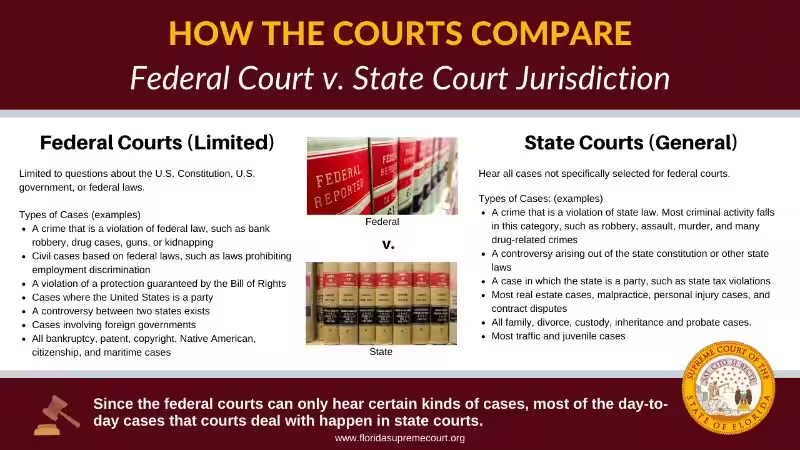
Federal and state courts have distinct jurisdictions. Federal courts handle cases involving federal law, the Constitution, and disputes between states. Critically, this means they deal with issues like federal civil rights violations, cases involving the interpretation of federal statutes, and disputes over patents and copyrights. State courts, on the other hand, primarily address matters of state law, including contracts, property disputes, and personal injury cases.
This division of responsibility creates a comprehensive legal system, ensuring that both federal and state laws are upheld. It also allows for a degree of flexibility and tailored solutions, as state laws can often address unique local circumstances and needs. This division, however, can present challenges. Navigating the specific requirements of each system is crucial and a clear understanding of the specific legal issue is necessary to determine the appropriate forum.
Court Procedures and Timelines
Federal court procedures may differ from state court procedures. Federal courts can, at times, have initial delays if the case has prior involvement from the Equal Employment Opportunity Commission (EEOC). However, federal courts may also offer access to more experienced judges and a broader pool of potential jurors. Furthermore, federal court procedures might expedite the case's progress, depending on the complexity and specific regulations.
State courts, while often faster than federal courts, may also have procedural differences. These differences can impact the timelines for discovery, hearings, and trials. The specific procedures and timelines vary significantly between states. State court systems are generally more adaptable to local needs and can be more responsive to circumstances, but this flexibility can also lead to unpredictability. This necessitates detailed legal consultation to understand the potential time constraints in both systems.
Potential Outcomes and Compensation
A crucial factor in choosing between federal and state court is the potential for different outcomes and available compensation. The type of recovery possible significantly impacts the choice. Federal courts, while potentially offering experience and expertise, may be limited in the scope of possible compensation.
State-level actions, especially those incorporating state and local laws, can sometimes lead to more extensive compensation for damages compared to federal claims. The combination of relevant state and city laws can often grant more comprehensive remedies than a strictly federal case. For example, product liability cases may find broader remedies available within the state court system. This aspect requires careful evaluation of the specific case facts and applicable laws.
The Importance of Legal Counsel
Ultimately, the decision of whether to pursue a case in federal or state court is not straightforward. The advantages and disadvantages of each jurisdiction necessitate individualized legal counsel. The differing procedures, timelines, and potential outcomes, including the availability of compensation, necessitate a thorough discussion with an employment lawyer or relevant legal specialist.
This discussion should comprehensively weigh the specific circumstances of the case to determine the most advantageous avenue. A legal professional can analyze the relevant laws, the potential legal arguments, and the possible outcomes of each option based on the specific facts at hand. Having legal guidance is important to appropriately assess the complexity of the specific case.
Key Considerations Summarized for Choosing Federal vs. State Court:
Federal Courts
- Jurisdiction: Federal law, Constitution, interstate disputes.
- Potential Outcomes: Access to experienced judges, potentially faster procedures (if pre-existing EEOC involvement is absent), broader jury pool.
- Compensation: Potentially limited compensation depending on the specific case.
- Procedures: Might have initial delays with pre-existing cases, but can expedite cases.
State Courts
- Jurisdiction: State law, most other legal disputes.
- Potential Outcomes: Potentially faster case management with more responsive courts, greater opportunity for specific state law remedies.
- Compensation: Potential for more extensive compensation, especially for cases incorporating state and local laws.
- Procedures: Often faster than federal court but also more variability between states.
Conclusion:
Carefully considering the nuances of both federal and state court systems' advantages and disadvantages is essential for effective legal strategy. Seeking guidance from experienced legal counsel is critical in making the best choice for a given case. No single answer exists as the 'better' choice. The 'best' court depends on the unique and complex circumstances of each case. A case-by-case analysis is essential, with strategic discussions with legal counsel to obtain the best possible outcome.
Federal vs. State Court: Frequently Asked Questions
This FAQ section addresses the advantages and disadvantages of pursuing legal action in federal versus state court. Please remember that this information is for general knowledge only and does not constitute legal advice. You should always consult with a qualified legal professional to determine the best course of action for your specific situation.
What are the fundamental differences between federal and state courts?
Federal courts derive their power from the U.S. Constitution (Article III), while state courts are established by each state's constitution and laws. Federal courts handle cases involving federal law, the Constitution, and disputes between states, while state courts handle matters of state law and most other legal disputes. This division of responsibility ensures a comprehensive legal system.
How are the court systems structured?
Both federal and state systems are hierarchical, typically involving trial courts, intermediate appellate courts (if applicable), and a supreme court. Federal trial courts are U.S. District Courts, appeals are heard by U.S. Courts of Appeals, and the Supreme Court is the final arbiter. Specialized federal courts, like the Court of Claims and Bankruptcy Courts, exist as well. State systems mirror this structure, with courts often called Circuit or District Courts, and their highest court varies by state.
What are the potential advantages of filing in federal court?
Federal courts may offer access to potentially more experienced judges and a larger pool of potential jurors. Federal procedures might potentially expedite the case process, though initial delays may arise if the case has already been addressed by the Equal Employment Opportunity Commission (EEOC).
What are the potential advantages of filing in state court?
State court actions, especially those incorporating state and local laws, may potentially lead to more extensive compensation for damages compared to federal claims. The combination of relevant state and city laws can potentially result in more comprehensive remedies.
What are the potential disadvantages of filing in federal court?
A crucial consideration is the type of recovery possible. Federal claims might limit the potential for compensation compared to state-level actions.
What are the potential disadvantages of filing in state court?
Cases in state court might not have the same access to experienced judges or a large pool of potential jurors as federal courts, potentially affecting the outcome. The case process may also not be as expedited as in federal court.
Is one system inherently better than the other?
No single system is inherently better. The best choice depends entirely on the specifics of the case and the desired outcomes. Careful consideration of the potential benefits and drawbacks for each case is essential.
What role does legal counsel play in this decision?
A discussion with legal counsel is absolutely crucial. The differing procedures, timelines, and potential outcomes, including the scope of compensation, necessitate a thorough discussion of the specific case circumstances to determine the most advantageous course of action. A case-by-case analysis, guided by strategic discussions with legal counsel, is essential for the best possible outcome.